Revival, Volume 2: Winter isn’t Coming; It’s already Here

The second volume of Revival is not quiiite as awesome as Revival, Volume One: You’re Among Friends, but some of that is just the inevitable settling that occurs when reading a series which starts with such a bang. Revival, Volume Two: Live Like You Mean It collects issues 6-11 of the ongoing Revival series, which details the travails of the town of Wausau, Wisconsin in the days and weeks after a discrete number of their dead get back up.

These reanimated people aren’t cannibal shamblers, and the reanimation does not appear to be contagious. Although the setting, art style and dialogue is naturalistic, there’s an edge of the supernatural: rural noir, Midwestern Gothic. While the revived seem mostly unchanged, some are still…twitchy, and everyone is on edge. The town is quarantined; various jurisdictions jockey; locals sandbag the Feds; religious leaders attempt to score points; scumbags attempt to profit. You know, the usual with a civic trauma.

This second volume sinks into the boredom and profiteering of the quarantine, with minor revelations punctuated by lots of wheel spinning, both literal and metaphoric. Winter is deepening. I wasn’t real enamored of the meth brothers and their theatrics – it felt like too much of a red line under a point – but the several conversations between two central sisters, the weird, dumpy religious lady lit up with her faith, the Hmong woman’s monologue – all of this worked in the strange, understated, deflected language of my Midwestern people.

comic panel showing cops talking at a roadblock

Fuck it, Tim Seeley is my new boyfriend.

You Can’t Take the Con from Me: The Last Stand of the California Browncoats

I am of the opinion that Mira Grant’s Newsflesh trilogy is perfect summer vacation reading. Even though those books are bloated by all kinds of Coke drinking, logistical chicanery, and wangst, the pages absolutely rip along, like finding a google hole of related self-important blog posts by a group of people who you kind of can’t stand, but also adore and want to have a drink with. I didn’t really track this while I was reading them, as I was too caught up rolling my eyes at the world mechanics – seriously, who is growing food or packing, shipping and delivering all the godamn stuff you assholes are ordering on the Internet – but Grant (possibly slyly) really captures the bullshit teapot tempest feel of the blogosphere. Only two privileged white kids who live with their parents can save us all! But, gosh, it was a lot of fun to read, and perfect for long summer evenings on the back porch. 

So I finished them up last summer, and in the last week of this summer, I discovered there are a bunch of enovellas set in the Newsflesh world. Sign me right up, gin and tonic in hand. San Diego 2014: The Last Stand of the California Browncoats feels a little like Hugo-bait (which I see worked, because this was nominated for the Hugo in the novella category for 2013). The Hugo is the more fannish of the sff awards, as it is decided by the participants in World Con, not SFWA or or other more trade-y organizations. Whether that sentence made any sense to you is probably a good indicator of whether this novella will work for you, as Browncoats is aimed pretty solidly at the nerd demographic. A novella about a zombie outbreak at a nerd con being voted on by nerd con participants is a good bet for the win. But hey, I’m a nerd and con goer, also for the win. 

But my nerdery aside, I think Browncoats minimized the things that bug me about the Newsflesh world: the tech-babble and less-than-punchy aphoristic intros and extros, the self-aggrandizement of douches, the shaky social architecture. The novella read much more like a lost chapter from World War Z: An Oral History of the Zombie War, with the whingeing, bloggerly interjections of the After the End Times staff kept to a minimum, and the wide ranging events of the Comic Con outbreak related though multiple perspectives and points of view. My favorite of the End Times staff, Mahir, has gone to interview the last known survivor of Comic Con 2014 thirty years later, and the proceedings have that same Studs Terkel retrospective sensibility which both dampens the immediate arm-wheeling and tinges everything with sadness – two things the Newsflesh world could use more of, imao. 

Con kid Lorelei goes off to sulk in her hotel while her parents set up the Firefly fan booth. A young woman is rescued by a Jedi when a zombie panel attacks. A blind woman and her dog get stuck in the booth. A starlet for a time-travel cop show – “My TV Guide interview was six paragraphs about my boobs and how they fit into my suit” – is abandoned by her handler with newlywed fans. There’s a lot of geek hat-tips to Who or the “fake geek girl” thing or – obviously – the Whedonverse, while pulling off a pretty good outbreak in a locked room scenario. 

Per usual with Newsflesh, I have some serious questions about Kellis-Amberlee, the disease that causes the zombiism, and why the zombies seem to hold off for a period other than narrative convenience and if they’re actually dead and stuff, but that’s not really no nevermind. One of the things I like about Grant’s novels is that the zombies are actually called zombies, not some coy new term. That a convention center full of geeks would leap to the term and start trying to hash out the “rules” for the outbreak based on fiction, even if they get it wrong, felt refreshing. Too often characters in fiction seem never to have heard of zombies, despite the zombie’s half-century of existence in its modern mobbing guise. 

So, my read of this was a perfect storm of situation and personality, aimed solidly at my demographic, fixing some broken things for me, and, ah, the drone of cicadas. It’s probably also the only of the novellas I’ve read so far that I might even recommend to people who haven’t read the trilogy, because as an episodic back story piece, you don’t really have to get into the whole thing. Fed is an alternate ending on Feed, and as such, is a major spoiler, and How Green This Land, How Blue This Sea occurs after the Newsflesh events, and is stupid. I haven’t read Countdown, but I will, Oscar, I will. It’s like 90 degrees and the first day of school, and for sure I can get it in before the leaves turn and the first homework is assigned. Allons-y! Rise up while you can!

Crying Shames: Reader’s Block by David Markson

Godamn it. I wanted to love this so hard, but it just fell flat for me. Fuck.

I wanted to tear up and roll around in Wittgenstein’s Mistress for the rest of my life. Everything about it did it for me – the post-apocalyptic locale, the odd, glancing humor, the damaged narrator, the throat-strangling sadness. You guys! I found my post-Modernist writer! A writer who can kick the shit out of me in about 200 pages, while being experimental and allusive and just plain fun? Jeesh, that’s not something you run across every day, no sir. In Autobiography of Red, Carson talks about the Gertrude Steinian piece of meat, left in the middle of the Modernist trapeze to stink and rot, a heart that isn’t so much beating as writhing. That was Wittgenstein’s Mistress for me: Steinian meat in a box of scraps, at the end of the world, with a bunch of cartons of books in the basement. It made me freak out so bad I ordered a used copy of Reader’s Block because my libs didn’t have it, nor any other Markson. Shame.

But, no. In terms of the feel of the prose and the choppy, Twittery sentences, Reader’s Block is very similar to Wittgenstein’s Mistress: all these gossipy anecdotes and listing, personal stories of the art-set instead of the art of the art-set, fuckery about voice and who and what blah blah. If that’s what you’re into with Markson, then this is going to be cool. But I loved the fuck out of Wittgenstein’s Mistress for its central coathanger of sadness, this quick charcoal sketch of a woman at the end of all things who tears up and rearranges the artifacts of culture and then rolls around in them for the rest of her life. I can’t get on with this Reader construct, writing a non-novel with a character called Protagonist who might live by the graveyard. The graveyard’s got no ghost, yo. More importantly, it’s got no meat. Shame, it’s a godamn shame. I wanted to love this so hard.

Wake by Amanda Hocking

I picked up Wake last week when I was up north. Amanda Hocking is a Minnesota writer, whom you might have heard of because she is a self-publishing superstar. I think her success story is just adorable, I kind of love everything about it, and I’d resolved to read something of hers eventually. I was under the mistaken impression that Wake was about mermaids living in Lake Superior, so this seemed like the logical place to start. You know, because I would read the crap out of a novel about mermaids in Lake Superior. Wake is about mermaids (sort of, more sirens than half-fish ladies) but the locale is the Maryland coast. Not that my disappointment about locations really has anything to do with anything.

The novel opens with a chatty, boppy little opening, establishing our two point of view characters, Harper and Gemma Fisher. The names are pretty indicative of tone. Gemma is our 16 year old protagonist, and clearly she was named first. Her name’s kinda chick-litty and unlikely – Americans don’t name their kids Gemma, and it reads as exotic/fancy – with a cute little metaphorical implication of someone named fisher being in a siren book, right? But then Harper Fisher? This is just straight up a terrible name, and I find it hard to imagine the kind of people who would saddle their kid with two occupations as monikers. Or if I can imagine them, they look very different from the parents here.

These are book names: romantic, lightly metaphorical, and also kinda girly milquetoast. Gemma Fisher is what you want to be named when you’re 14 and someone just mangled your oddball Celtic name for the umpteenth time and then asked you if you had a nickname. No, fool, I would have just given you the nickname instead of going through fifteen minutes of you acting like I made my name up to make your life hard. Well, that escalated quickly. Also, I never wanted to change my name, but I can totally see the appeal of names like Gemma & Harper to teens, who were named Jennifer and Kristen before there were 27 Jennifers in every class, and they want in on the new name that there will be 27 of in every class.

The opening of the novel sets up the sisters’ lightly sniping relationship, and a couple of boy love interests for the sisters, in addition to foreshadowing you with a two-by-four about a pack of mean girls. Harper and Gemma’s mom is packed away in a home because of a traumatic brain injury; their dad ain’t handling it so well; Harper more or less acts as Gemma’s mom in a caring but overbearing way, blah blah blah. This is going to be an uncharitable thing to say, but I thought of the writing advice attributed to Elmore Leonard: don’t write the parts people skip. So much of this was skippable, from reams of unnecessary dialogue – seriously, I did not need a whole run down of the breakfast options this morn – to the logistical wranglings – hey, I left my bike at the pool; can I get a ride – to the artless but inoffensive prose. It was nice that Gemma’s paramour was the sweet, nerdy boy-next-door, but, gotta say, their relationship had zero juice.

I ended up just giving up because I could just see this muddling on to its three-star conclusion. I’m going to dig parts of it because I can see that it focuses pretty strongly on female relationships, and that is something depressingly lacking in a lot of YA. (Hell, in a lot of fiction, period.) The tension is going to be about Harper and Gemma’s relationship when Gemma gets all siren’d up; plus, sirens are a pretty weighty metaphor about female sexuality, etc. But there’s going to be a half dozen things that make me bananas, like Gemma’s solo night swims in the ocean. Everyone’s on her for it because she’s a swim team star and shouldn’t waste her swimming at night or something? No. Do not swim alone at night in the ocean ever. Don’t swim alone. I don’t care how strong of a swimmer you are; they might never find your body.

Like the names, the night swimming is included because it sets up this romantic situation – ah, the water in the moonlight – but it doesn’t make sense that a swimmer wouldn’t have very basic water safety drilled into her by her coach, who would do more than sigh and shake his head if he found out about it. Oh, also, mama’s crazy, and I can see that going nowhere good. But! I can see why Hocking is so successful. It’s real mundane, but in a way that makes the mundanity just a little bit shiny. Gemma’s a good girl and Harper’s a book nerd, (I’m a good girl and a book nerd!) and they have pretty boring problems, (I have pretty boring problems!) you know, until dun dun (omg, college!).

I can also see the appeal of the girlishness of the whole package here. I showed my six year old daughter the cover – and my daughter is a damn fine barometer of girlishness – and she was pretty into it. But then I peeled the cover off and showed her the poster that’s secretly on the back of the book jacket.

two swimmers in a blue background holding hands

She more or less freaked out about it. What are they doing? I want to go swimming too. Wake isn’t going to be about saving the world or huge action sequences. It’s not going to culminate in fisticuffs or explosions. Instead, it’s going to be this chatty, actionless parable about not fitting in and growing up and female sexuality, which is going to resonate for girls on exactly the same tuning-fork frequency as Twilight. I honestly think that’s great, the whole girl pulp for girls thing, and Wake seems to be ahead of the curve in terms of not being regressive and reactionary about female relationships slash sexuality.

But I am, alas, old and cranky, and this just is way not for me. Frankly, Gemma and Harper are so muted, such nice people, that I had a hard time relating to them. (And that thing where girls can’t tell if they’re horny or just embarrassed – she wondered at the blush creeping up her cheeks, etc – is just weird. Can’t you tell that at a pretty young age?) I figure if I want to hear a story about a coven of mean girls, I’ll just re-watch The Craft.

The Days Grow Longer: The Age Of Wonder

I feel slightly apologetic about how much I loved reading The Age of Miracles by Karen Thompson Walker, because it would be easy to sit down and enumerate all the things that are going to bother other people. In fact, I’m going to go ahead and do that right now. But I still adored this, despite its occasional weakness, because I closed this book and wafted around the cabin for at least half a day, completely filled with this bittersweet nostalgia and a strangely pleasant sense of doom. I keep telling people about it like an albatross. Which doesn’t really work as a metaphor, but whatever. 

The Age of Miracles reminds me very strongly of the films Melancholia and Another Earth, which are both nominally science fictional, but have trained their interest on the emotional upheavals of the protagonists much more than on whatever scientific bunkum was used to hand-wave the scenario. Here, the scenario that the earth’s rotation has begun slowing, somewhat rapidly at first – each day adding on hours, then even the slowing slowing. The story is told retrospectively from the point of view of Julia, who was eleven at the start of the slowing. 

According to the interview in the back of the book, the idea for this came from the 2004 Indian Ocean Tsunami*, which was such a large geological event that it sped up the spin of earth by several microseconds and affected the tilt of the earth by a few centimeters. But, as the article I link to humanely observes, “The shortening of Earth’s day is no cause for consternation, particularly in light of the huge humanitarian crisis sparked by Sunday’s events. The death toll from the tsunami that lashed coasts across the Indian Ocean has now passed 100,000.” (The death toll would eventually rise to well over 230,000 people, with millions displaced.) The real story is not in wonky science facts, but in the lives affected the facts, which is why I don’t care about strict plausibility in why the slowing happened. If you’re the kind of reader who is bothered by the lack of scientific explanation in, say, The Road, then this isn’t the book for you. (Also, jeez, tin man.) 

The slowing isn’t devastating at first, more this tension of not knowing and disruption. There’s no looting and rioting – least not in Julia’s quiet suburb – more post-9/11-ish worry and can-hoarding and not going to work for a week until you decide that there’s nothing to be done, so you go back and live your life, even though everything is wrong and probably won’t be right again. Julia’s best friend – from a large, Mormon family, decamps to a settlement in Utah for some time, leaving Julia alone in the way only 11-year-old girls who have lost their best friends can be lonely. And when the bff comes back, she’s switched best friends and lets Julia know in the cruel way of the young that Julia was out. 

This never happened to me, but it did happen to my bff Christina, whom I picked up on the rebound from Annie. Annie had a new best friend every year, and while the friend-drop usually happened during summer break, in the fifth grade it happened inexplicably mid-year, and suddenly Annie was everywhere with Libby, freezing out Christina. I still remember Christina, in this weird bit of a shrug, identifying the fourth grade friend of Annie, the one she had replaced. She knew. God, that age is such a shitshow, and Walker captures it like fireflies in a jar, which you watch blinking in the darkness like wonder, and when you wake up, it’s just dead black bugs you shake out apologetically into the grass. Grass that’s dying, and then dead, and eventually you can’t remember the smell of grass because it’s extinct. 

And while I said there isn’t a real tight explanation for why the slowing is happening, the details of how people would react to the lengthening days and long nights felt true. People in the arctic go nuts during the white nights. My uncle worked for the National Health Service in Alaska – up in the crazy hard to get to parts – and his stories of the bleary, easy to upset children playing basketball in the bright midnight, their parents given up on porches with longnecks, would not be out of place. The authorities decide to put everyone on “clock time” – living according to a 24 hour clock, despite the sun or lack – because “real time” while Romantic, just keeps stretching and stretching into madness. But it’s all madness: the clocks, the sun, the dark, the slow, beautiful, horrible end of it all that doesn’t really end but just drips slowly. 

I bought a bunch of canned goods and water after I got screwed recently with a four day power outage after a storm downed trees and snapped lines all over the metro – which sucked, thank you – and I can see the water already evaporating, the expiration dates on the can ticking toward botulism. “That was the last day I tasted pineapple,” says Julia, the last day of whales, confused by the changing magnetosphere, beached and dying, the last day of birds. My husband and I have the “bigger problems” caveat when we talk about end of the world scenarios – who gives about the Internet or kissing boys or your parents slow, ugly implosion or whatnot when cannibal corpses are hungering for your flesh – but really, this is all smaller problems in the way that makes me think that smaller problems are only and ever the kind of problems to focus on. The water is going to evaporate. The bigger problems are so big as to be untouchable. 

I don’t know. Or, I guess I do know that The Age of Miracles will be dismissed as young adult literature for girls by some. As a woman who was once a girl who occasionally reads young adult literature, I can say this isn’t really aimed at teens: it’s too slow, too sorrowful, too retrospective. The Julia in the unknown future who is recounting this time period is a ghost, a mirage, and her reticence to explicate the details of her future existence shines the story into a welter of its own mirage, an oasis of all of the last things which are also first things. The first last things until the bigger problems came home, the time when everything slowed like lost summers. 

This isn’t going to work for a lot of people, I know, and that makes me a little sad. Sad not because I wish everyone could be like me, or have my childhood or my occasional despair which would make this work for them, but because my heart is somewhere in this mess, beating slowly in its real time, which is Romantic and untimely unworkable, but it’s the only heart I’ve got. Look here: my heart. Its days grow longer. But the days grow short here at the end of summer, the sky gone purple before it’s time to put the kids to bed. My daughter is asleep on the couch, and I will carry her to her childhood dreams. Amen. 

*Also, Karen Lord’s The Best of All Possible Worlds was based on some of particulars of Indian Ocean Tsunami – I hate to say “inspired by” because that’s a gross way to put it – just as a random fact.

Sow by Tim Curran

Tim Curran writes such wonderfully juicy tactile horror prose that it makes me wish Sow bit off more than it chewed. Sow starts with Richard realizing his pregnant wife, Holly, is not just pregnant with their unborn child, but with an unspeakable, nameless horror. Richard is only hastily sketched – he’s described as the kind of guy who bores the census takers – and Holly even less so – we get not much more than wistful descriptions of her summery smell before the possession turns her into a stinking baby bag.

Curran captures a lot of the male anxiety around pregnancy, which, as you might have noticed, has become an absolute political nightmare in the US of A. Richard’s wobbly mental state, and the ways he shifts between seeing Holly as Holly, and Holly as this fecund sow-witch that he vividly imagines murdering reminded me of the factoid I learned when I was pregnant myself with my first: American women are more likely to be murdered (usually by the father) when they are pregnant than to die from any other pregnancy-related condition. Spousal (or partner) abuse is more likely to start at pregnancy than any other time. But Curran’s not really interested in such psychological jibber-jabber, and Sow is instead a sticky, straightforward witch-possession story with a lot of gross-out fun, if you’re into that sort of thing.

Maybe this is just a gendered response on my part. I’m not even kidding when I say that the birthing sequence in Breaking Dawn is absolutely the scariest fucking thing I’ve ever read. It’s freaky for a lot of reasons, but one being the way it broke the mother’s terror into all these perspectives, all bearing down on her, this cacophony of people expressing all the things she cannot about how fucking gross and wrong the whole thing is, leaving her, the mother, smiling beatifically at a baby covered in blood with a full set of teeth. That’s possession, for me, but I admit I have my girl bias. This may work perfectly for dudes as an expression of procreative terror.

I did really like the almost off-handed descriptions of rotting, rural Midwest. I just drove through 200 miles of the Minnesota outback, and the half-caved farmhouse just klicks down the road from a sign for some shitty office-park in development (“Ask us about our signing bonus!” “Think Barnum for your headquarters!”) spoke to the bleeding rural landscape and its metastasizing suburbanization. There’s a land war out there, fought over the most fertile farmland in the world. That the abandoned piggery would spit forth horror into the mushrooming condos spoke to me.

So, a fun little thing, shot down in a sitting. I don’t think this is novel length, though I find it hard to determine length in the ebook format. The brevity is a selling point, as there isn’t enough here, in what Curran has decided to take on, for many more pages. More’s the pity, because I think there’s more here.

Thank you to Netgalley and DarkFuse for the ARC. Their novella series is just aces for horror shorts.

Vader’s Little Princess by Jeffrey Brown

This is going to be one of those reviews where I tell cutesy anecdotes about my kids. Fair warning. You can get off this merry-go-round at any point. 

So, my son has been pissed at me since Christmas, when I bought a copy of Darth Vader and Son for my brother-in-law, had it knocking around the house for a week, during which time I had to keep making sure the boy didn’t make off with it like he had with other Jeffrey Brown titles, and then mailed it off. I want that book so bad, he would say to me. You have to get me a copy right now. I’ve been doing the parental yeah, yeah for, like, eight months. I’ll get it from the library for you, and also, get your feet off the couch, now. 

So finally, after I kenned on the fact that there was a sequel, I sucked it up and ordered both. Both kids are ridiculous about Cat Getting Out of a Bag and Other Observations, constantly holding up the book and reading out the “dialogue”: pat pat pat pat Misty! Both arrived today before they came home from day camp, and I tossed them at the boy when he’d ensconced himself on the couch to watch some fact or fiction show on tv. His little freckled face lit up. You’re welcome, I said, and pointed at him, like you do. 

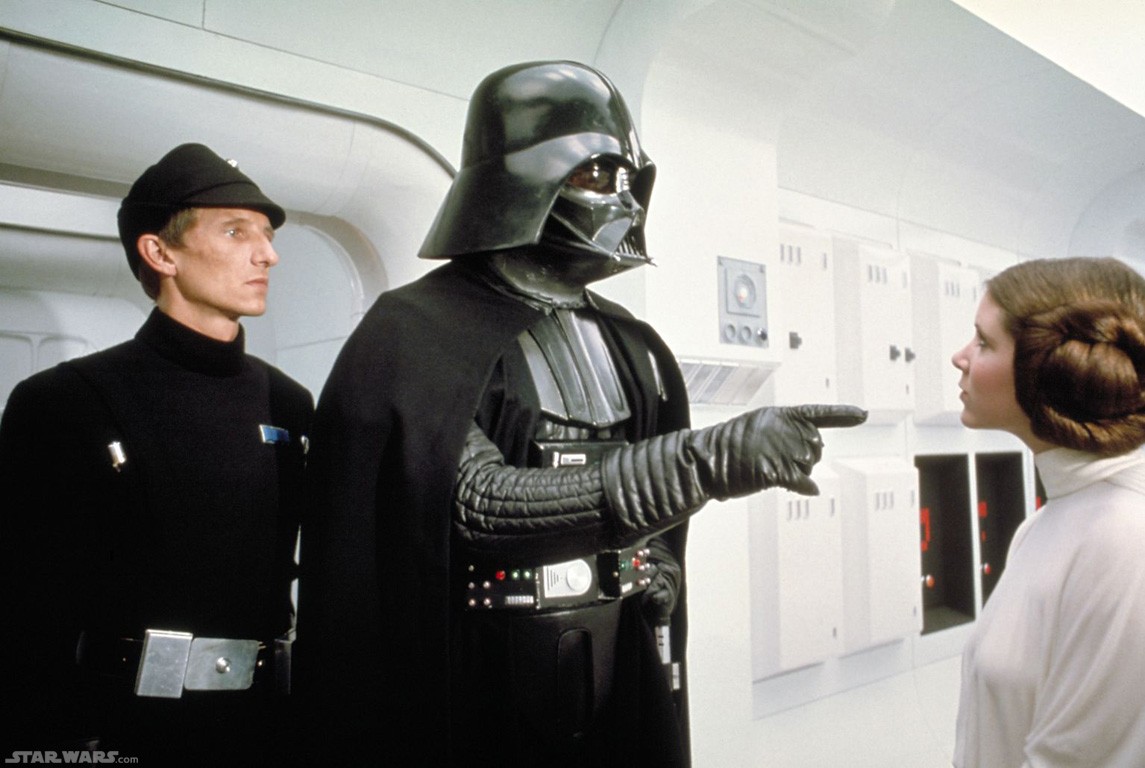
darth vader pointing at leia

Sure, Vader’s Little Princess is more of the same, and sure, maybe it looks like a cash-in, but Jeffrey Brown totally rules in the strangling nostalgia observational heart-based Gen Xer exasperated parent and child thing, and god bless him for it every minute of bedtime. It makes me a little bleary to have both kids hassle me trying to read out these books as I shove toothbrushes at them and order them to bed. I love that the girl has a Jeffrey Brown book too. They are both asleep with these titles at the moment, and that is a parenting win all around. 

leia having a tea party with stuffed ewoks

The Lives of Tao by Wesley Chu

I don’t feel great about this, but I’m going to abandon The Lives of Tao at the halfway mark. I don’t think it’s bad; I just think it’s not for me. The set-up is fun: it’s a man who knew too little slash buddy cop scenario involving the origin myth for Scientology. Millions of years ago, aliens called Xenu the Quasing crash landed on earth. Being sort of nebulous light-blob beings, they can only exist in the bodies of Earth creatures, kind of like the aliens from The Host. Unlike The Host, there isn’t a love triangle…no wait, just kidding, there totally is. It doesn’t involve the alien though, so phew. The Quasing been busy little alien beavers interfering in the cultural evolution of the human race, and have since split into white hat and black hat factions at war over some philosophical differences that I honestly didn’t track. 

Which is where we are when the novel starts bangingly with a jaded, hunky secret agent dude, who has a white hat alien symbiote called Tao inside him, gets into a big freaking shoot-out and chase scene with the black hats. Hunky agent is killed, and Tao must find another host, and fast. He ends up inside Roen Tan, a chubby IT drone with no real ambition. I was rubbing my hands here, because I can totally dig the whole arguing in your head angle of the symbiote relationship – like in Deep Space Nine when Dax ends up in a symbiote unprepared for such a thing. (It can also be dumb, like the Big Bad from Buffy’s season 5. I get that Glory wasn’t exactly a symbiote, but it’s in the ballpark, and it was mostly used as a goof when Glory’s host dude wakes up in a red dress. Waa waa waa waaaaaa.) 

But it takes six chapters to get Roen and Tao talking, during which I was watching my nails dry for the most part. They have pretty funny conversations, when they have them, and I enjoyed that. But it turns into Roen leveling up, complaining about wanting to eat pizza, and waaaay more confusing backstory than I’m interested in. I’m going to admit right here that I can be a really lazy reader, in that I will ignore complicated mythoses…mythos’s…what is the plural of mythos?…in books, assuming I’ll either get it when I have to, or not get it at all and just enjoy some ass-kicking. There was precious little ass-kicking to divert me from the nail-drying and mythology. 

I get the sense that The Lives of Tao is supposed to be comedy-action – comaction? worst portmanteau ever – but it was light on both, for me anyway. Again, I think a lot of this is me, in that a tech geek getting set up into a love triangle with two hotties doesn’t really ping my reader insert buttons. Also, I just read Dial H, Vol. 1: Into You, which also had an unambitious slob finding miraculous powers, but I felt like that owned some things about slobs and their wish-fulfillment that this didn’t? I may just have slob fatigue. I mean, I am a slob, don’t get me wrong, I just couldn’t find an entrance point here that I felt. It was too long cutting to the chase for me.

But, I did dig Tao’s (somewhat sloppily relayed) musings about Great Men in history, especially because he hits a lot of historical figures that I rarely see in SFFnal stuff. Everyone goes for the Greeks or the Romans, or possibly Persians if they’re feeling expansive, but here Tao hits Genghis Khan pretty hard, and some other foundational figures of various martial arts that I don’t know the names of right now, sorry. (Did I mention I’ve been drinking on this fine evening? Gosh, it is so beautiful out right now. I wish summer would last forever.) Also, and this is not related to the book in any way, but did you know Genghis Khan is a common ancestor for one out of 200 men? Whoa. I could do without some of the historiography, which felt sophomoric and silly, but whatevs. That’s not uncommon to have SFFnal views of history bug me – it can’t be as simple as whether “conflict breeds innovation” because seriously. 

And this is totally my problem, and I don’t expect anyone else to have this problem, but the names didn’t work for me. I get that there are a limited number of phonemes that can be arranged into a limited number of word-sounds that don’t already have meaning, but every.single.time I read the word Quasing, my brain turned it into quisling. And I didn’t read far enough along to get to where this might be thing, but Tao – in that exact spelling – has a meaning already. If it is a thing in the book, where Tao explains that he was inside Lao Tzu, I would freak the fuck right out. Alien symbiote fight-show is awesome, but it has zero to do with Taoism, and any shoehorn job making them relate would displease me. Again, problem with the DNF review is that I didn’t finish, so this might not be an issue. I’m just worried enough to stop before I freak out. 

So, this is one of those unfortunate things where I might have dug this book at another time, or been in more of a mood for it, or a different kind of reader, or something. It’s got back porch read all over it for me, but alas, not this time.


I received my copy from Angry Robot and Netgalley. 

Dial H for Hawt: Miéville Writes a Comic

Netgalley, y u never approve me on Miéville titles? Maybe if you had approved me for Dial H, Vol. 1: Into You, I wouldn’t be months down the road after twice unsuccessfully requesting this from the library, unsuccessful because they blew up my local library branch, and it’s sometimes tough to get down to Central. (See also: The Shining Girls, which just got sent back because I didn’t make it in time. Sob.) Anyway, once something turns into an epic quest, I’m half-expecting the payoff to blow my circuits, which this, alas, did not. 

I’m not saying I didn’t like it, just that it’s all over the place and uneven. In that, it reminds me a little bit of the first of the Sandman collections, The Sandman, Vol. 1: Preludes and Nocturnes, which spent a fair amount of time sorting out how Morpheus of Gaiman’s work was related to the Sandman of the 30s serial and hat-tipping a bunch of DC properties like John Dee and John Constantine. (Everyone to be named John, I see.) Which is one of the reasons I find comics so fucking frustrating: all these connections and referents, this huge world spanning decades with re-starts and blind alleys everywhere. How can the casual reader be expected to get into this sprawling inside joke at all? It’s very rewarding, of course, if you know all that stuff. So a little like the Western Canon, but, like, with more pictures and spandex. 

Some of my bitching being the point, undoubtedly, of Dial H, which takes a playful tone in regards to the powers of superheros and the like. Overweight, unemployed slob Nelson Jent is being returned home by a friend after a heart attack when he and his friend argue about his general lack of care towards his life and person. The friend takes off; Nelse follows to apologize; the friend is beset by knee-cappers. When Nelse goes to call the police in an old timey phone booth, he instead is transformed into Boy Chimney and saves the day, transporting his friend to the hospital. There’s a plot involving a bunch of people who didn’t make any sense to me, but it turns out any time Nelson dials H-E-R-O on the sketchy phone, he turns into a different comic hero, characters like Captain Lachrymose and Chief Mighty Arrow.

After a fair amount of confusion on my part in the beginning – who are these people, and how are they related? whatever, moving on – the plot shapes into your usual origin story with your usual surprises and the like. Maybe I’m being jaded, because maybe the usual reversals aren’t nearly as usual as I expect, superhero comics being the last refuge of the lame, heteronormative boyfest. Making the ersatz hero a big, bumbling bumblefuck maybe is a pointed commentary about the self-insert or something. I felt stronger about the reveal of Maneau’s true identity, because who she is a stranger animal to find in superhero comics, except as a wise aphorist. She’s still sometimes a wise aphorist though, straight up. Nelson has some real identity problems with his swirling changes into the myriad of oddball supes, and Manteau’s covering of her supe-identity with yet another mask was honestly a cool choice. There’s a baddie who has a typically Miévillain (get it? GET IT??) esoteric weirdness, and I dug the head-spin thinking about nothing fighting nothing. 

Later, when things begin to make more sense, and Nelse is kicking it sidekick style with Manteau, Dial H gets into some pointed criticisms of the racism and sexism that often punctuates superhero comics. Nelse turns into a hugely war-bonneted Indian chief, and Manteau is like, you are NOT leaving the house like that. Then the Hi-Yo-Silver-like horse eats her yard. Dang you, horse! I dug that immensely. The last episode has that what-the-fuck-is-happening vibe with a shift to an ancient Mesopotamish locale and a cuneiform dialer that was cute, but also began to deepen the mystery of how the dialers work, and what kind of universe(s) we’re living in. 

So, like Sandman, it’s possible this uneven plot will settle down into something truly game-changing, but for the moment, things seem a little…rote is the wrong word, but something like that. Comics are about mid-season payoff, once they’ve found their legs and start really messing around in earnest. Origin stories are necessary, I guess, but they feel, to me, like placeholders until the writers can finally get something done. And I wrote myself out of this observation, but I’m not sure that the comic format plays to Miéville’s strengths as a writer, as he tends to go in for verbose, profane sidebars, and, frankly, his abilities in the punchy humor department are lacking. So I’ll check out volume two, for sure, but I’m not overwowed at the moment.

Purgatory Chasm by Steve Ulfelder

So, I got a message from a friend of mine who lives out of town. “You, like, read, right?” My friend asked. (I’m being hugely unfair here in my characterization of Emily; she and I have swapped many a book.) Turns out, Steve Ulfelder is a friend of her husband’s from college, and he was going to be here in Minneapolis doing press for the newest book in this series, Shotgun Lullaby, and maybe I’d be interested in checking out the signing? Sure, I said, because even though mysteries are pretty far out of my reading interest, I’m game. I like playing desultory ambassador of my city. Plus, it gave me an excuse to visit in Once Upon a Crime, a mystery bookstore which is walking distance from the house I grew up in, but (because of my reading proclivities) I’ve never steeped foot in.

Boy, what a cute little bookstore: pin-neat, well-curated, with a large section of local mysteries festooned with signed stickers and little hand-written notes. It’s the kind of place that I suspect will close when the aging proprietors – who were incredibly chatty and informative – retire, and it will not be replaced. I would like us all to pour some out to the fading animal that are the corner bookstores. I’m still stinging from the loss of Orr Books, and I would like to extend a middle finger to the people who tore down and evicted that entire block so they could put in a piece of shit furniture store made out of tick-tack and coolness. They don’t make brownstones or bookstores like that anymore, and when they’re gone, they’re gone.

But before I start frothing at the mouth about city politics and preservation, I should probably remember I’m trying to write a book review. I ended up talking to the small collection of folk at the signing. There were the proprietors, and Ulfelder, a smattering of non-talkers, and a dude who might have been some kind of publishing flack? I demurred that I knew next to nothing about the mystery genre, which prompted pretty fantastic sermonettes from all and sundry about the various sub-genres, and some cool observations about genre jumping and the like. It sounded a lot like conversations I’ve haddelivering the sermonette about science fiction, but with wholly different referents and traditions. You may not be my people, mystery readers, but I pound my heart at you.

Conway Sax in Purgatory Chasm is one of those dudes whose wallets undoubtedly is emblazoned with the words bad motherfucker, who, I would not be surprised to learn, occasionally rode a shark into a volcano once or twice in his drinking days. He’s ten years into sobriety, a meeting-after-the-meeting member of an AA group known as the Barnburners. Started as a non-national-charter AA group for badasses and ex-cons, it’s since neatened up and gone national, but not entirely. Conway’s been an enforcer over the years for Barnburner business, and half-sketched kneecappings and even a manslaughter two conviction dot his past. When a Barnburner asks for help, Conway provides it.

So when Tander Phigg, congenital asshole and Barnburner, asks Sax with help getting his Mercedes back from a second rate auto outfit, Sax steps up. It’s all super sketchy, Sax doesn’t trust anything Phigg says for a second, and it all turns into a big mess pretty fast. Sax was a NASCAR also-ran – before the drinking ruined his career – and a mechanic afterwards, and one of the funnest parts of this novel, for me, was the industry insider observations about cars, customers, how the car trade works, and the like. I work in the building trades, and while my cast of characters is slightly different, there are still a fair number of anecdotes that sound like bullshit when I go to tell them.

I once knew a dude named Sean – and I swear on a pile of bibles this is true – who had an identical twin brother named Shawn. They pronounced Sean as seen to differentiate. Every day he listened diligently to KQ92 because he and his brother always put in for some daily contest thing. When I asked how he would know they were reading his name and not his brother’s, he was like, I don’t follow you. I didn’t rephrase. Good luck, Sean pronounced seen. There’s some folk like this, and some more ordinary folk, and they rub up against each other in a plot. It’s cool. I like the idiomatic style and the badassery.

I also liked the Boston / New Hampshire locale, which, given my limited dealings with the area, felt kinda accurate to the social milieu. There’s maybe way too much driving around, but then when you’re dealing with NH, state-shaped suburb of Boston, that’s probably accurate too. I spent some time laughing and shuddering about the NH survivalist brothers, as they were more or less my in-laws’ neighbors for a while in rural New Hampshire. Live free or die, man. I was less enamored by all the daddy crises in the book – Conway’s own deal with his dad felt…maybe forced is the wrong word, let’s call it shoehorned – but then, as I’ve noted, I’ve never had the bother of being a boy growing into a man and all. I did appreciate all the declensions of recovery – many of the players are alcoholics in various relationships to the wagon, and there’s this low-grade conversation about how that all works, or doesn’t.

Anyway, so I’m glad Emily dropped me a line, and I’m glad I read this. It turned out I can like this hard-boiled business, because I like profanity-laced choppy prose about fuckups and weirdos that isn’t trying too hard. It did me right fine for a Sunday porch read.