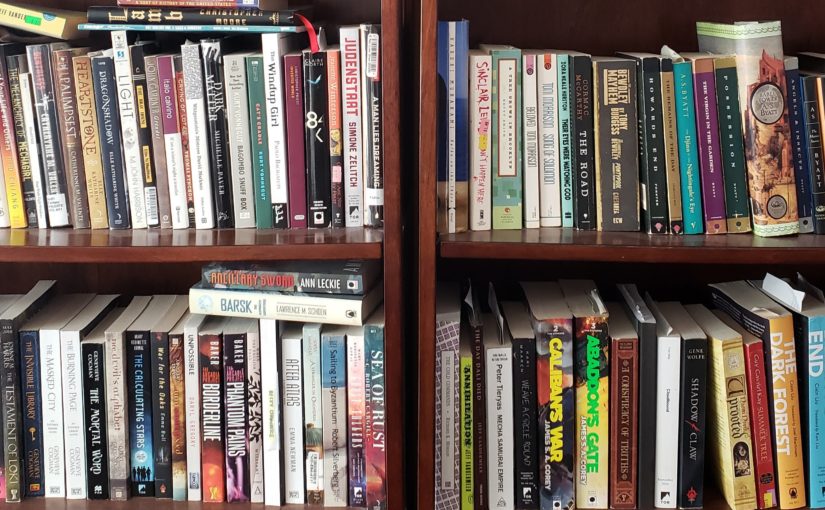
The Year in Reading: 2025

I always look forward to these little roundups — despite the work — because they give me the opportunity to get a meta-view on the stuff I’m putting in my brain. Reading and dreaming are similar for me, in a way: my conscious self is only rarely driving my choices. I can certainly try to assign myself reading, but the me that exists in the half hour between when I climb into bed and fall asleep is going to read what she’s going to read; ditto for the me on my commute. So last year was my rompy space opera year, the year before was the Year of Martha Wells, and the one before that the Year of Seanan McGuire.

This year was a little harder to categorize. I went back and read a lot of paranormal romance from the heyday: specifically, all of the Twilight Saga and the fifteen or so novels in the first “season” of Nalini Singh’s Psy-Changeling series. I also accidentally read five of Olivia Dade’s novels. I read a little more than a hundred books in 2025, so this is roughly a quarter of my reading. I also read a bunch of books with heists, almost all of them novellas or short stories, and continued reading rompy space opera at a much slower pace. Also, I read a lot of zombie books, per usual, because I don’t have a problem, I have a solution. Which is zombies, apparently.

So without further ado, my year in reading:

Zombies:

I’ll start with zombies because the year starts with zombies in Zombruary. This Zombruary was a little lackluster — frankly, I had a brutal depressive episode — but I’m always going to get to several more throughout the year. As usual, the books are a mix: some from the zombie heyday maybe 10-15 years ago which tend to be pretty classic outbreak-and-seige stories, and some more recent, are often more oblique, coming at zombies in odd ways. While generally I prefer the weird stuff to the more Romero-rules narratives, this year I dug the pleasures of the more classic zombie story. Which is to say, I didn’t think some of the more radical experiments worked, though I still enjoyed the attempt.

Revival by Tim Seeley, et al. I first started reading this comic series in 2013 when they were coming out in weekly (monthly?) installments, but, per usual, I wandered off maybe halfway through. I have a pretty serious problem finishing series, even the ones I like, so it was satisfying to go back and read the entire eight volume run from start to finish. The events in Revival are precipitated by a single event: on one day in Wausau, WI, all of the people who died that day get back up. These reanimated people aren’t cannibal shamblers, and the reanimation does not appear to be contagious. Although the setting, art style and dialogue is naturalistic, there’s an edge of the supernatural: rural noir, Midwestern Gothic. The twenty-odd revivers (that the authorities know about) are … mostly normal, but there’s an uncanniness that creeps. The town is quarantined and beset by various federal agencies, and there’s a fair amount of tension between the local podunk bullshit and the high-handed federal bullshit, in addition to the various bullshits of small time dealers, religious hucksters, and opportunistic attention whores.

I absolutely adore the Midwestern setting, and I feel like Seeley et al did a damn fine job of speaking the language of my people, one that relies on understatement and lacuna more often than is wise. While there were some episodes I didn’t enjoy — I thought the change of venue to NYC didn’t quite work in one of the middle volumes — the series has a more than satisfying ending, even if it got a little more operatic that I prefer at points. With a series of this nature, there isn’t ever a single protagonist, or the town is the protagonist. That said, the character of Em, a hidden reviver who basically has to solve her own murder, comes the closest. I really liked the way Em’s story wrapped up — really, the only way that could satisfy — and the decision not to punish the revealed villain with more than natural consequences was a good one.

American Rapture by C.J. Leede. My one-line review was “read the trigger warnings” because these zombies are seriously fucking upsetting. Zombies are generally understood as creatures of appetite, with the urge to consume decoupled from any moderating force. Now do that, but with sexual hunger in addition to the regular kind. Now do that, but have your religiously repressive parents get infected, so you have to run from the house or be attacked by your own father. Though these sexual assaults by the infected aren’t ever described gratuitously, it’s possible that’s worse, letting my imagination do the work of conjuring horror. The themes of the novel center on repressive fundy Christianity in the American Midwest — the title is an indicator — and Leede does an excellent job of sense of place. Like Revival, American Rapture takes place all through central Wisconsin: there’s a memorable sequence in House on the Rock, and I think the main character even passes through Wausau, where the events of Revival take place. Definitely thought about this one long after I finished reading.

Until the End of the World and So Long, Lollipops by Sarah Lyons Fleming. This series was published a dozen or so years ago in the zombie heyday, and it shows. Until the End of the World is pretty straightforward: a group of survivors escape from a zombifying NYC, and strike out to the main character’s parents house in the woods. A lot of people have tagged this as YA, which isn’t accurate but I can see why they do it. There’s a lot of petulant teen behavior that has no place in the zombie apocalypse, nevermind that everyone is in their late 20s. I did like the fact that our main character had been raised by preppers, so she legit knew what she was doing, and knew how hard it was to grow food and have safe water. The book drags because of it though, as there’s a lot of page time of garden tending and the like, so I’m apparently praising and dinging this book for the same thing. So Long, Lollipops is a sidequel novella, and while it was interesting to see what happened to that one guy, it’s def not standalone.

Dating After the End of the World by Jeneva Rose. Dating After the End of the World has more than a few character and plot beats in common with Until the End of the World, weirdly. The main character has to make it out with from a zombifying major metro to head to her parent’s prepper compound, whereupon she settles into some juvenile in-fighting with people who should be old enough to know better, until they’re attacked by a post-apocalyptic gang. I enjoyed Dating After the End more for a couple reasons. The fight scenes are better and they’re a lot gorier, which I thought was interesting for a book which is romance-adjacent. While the romantic pair had just the most cringe banter, the emotional background of the other main players was good, I thought. Dad became a prepper because of the very traumatic death of his wife, and the emotional fallout of that has worn pretty deep grooves in all of their lives. I also liked the ending, which might be a cliffhanger, or might just be really funny.

What Moves the Dead by T. Kingfisher. Maybe tagging this is as a zombie book is a bit of a spoiler, but I think you know pretty quickly that some serious fuckshit is happening with the uncanny rabbits. What Moves the Dead is a riff on The Fall of the House of Usher, and, like the Poe story, the novel follows the person come to visit the Ushers, in this case a soldier from an invented central European country. Per usual, Kingfisher’s narrator is funny and sly and entertaining, and the events more creeping dread and occult weirdness than bloodbath or cruelty. Tbh, I just didn’t connect to this one like I have with Kingfisher’s other horror. There were some nice bits — I am always down for some sporror, for example — but the overall tone bordered on flippant, which I don’t think works in Gothic horror so well. Not bad at all, just not quite for me.

Bloody Sunrise by Gwendolyn Harper. Honestly, if this hadn’t been an insomnia read, I might not have enjoyed it as much. Bloody Sunrise is a straightforward road trip through the zombie apocalypse, up to and including a pretty jaundiced view of human nature. The MMC was pitched to me as having Pedro Pascal vibes, which is kinda accurate, but also it’s tough to capture Pascal’s specific dorky delights on the page. I also didn’t love how this ends on a serious cliffhanger. I fully expected this to be published ten years before it was in that weird period when everyone was serializing everything, because it feels like an installment in a serialized novel. (Basically the only writers I’ll accept this from are Karen Marie Moning — grudgingly — or Mira Grant.) So was this amazing? No. Will I quit reading this series in a huff? Also no. 

The Z Word by Lindsay King-Miller. The pitch on this one made it seem right up my alley: a disaster bisexual has to ride out the beginnings of the zombie apocalypse perpetrated by the corporate sponsor of Pride weekend in a small town in Arizona. Oh, and her ex-girlfriend was working with the sponsor, so the ex is either a patsy or a collaborator. I’m into the criticism of corporate bullshit co-opting queerness as cynical “branding,” but it wasn’t very coherent here in the end. The tonal swerve between pulp and something like realism didn’t work for me either. Fwiw, I think Eat Your Heart Out (a zombie novel I read for last Zombruary) by Kelly deVos manages a similar sort of cultural criticism — with zombies! — in a much more adroit way. 

Zomromcom by Olivia Dade. Zomromcom is just what it says on the tin: a romantic comedy … with zombies! The romantic comedy part of the story worked for me, the zombie part less so. But I was in the mood for this kind of quippy goofiness, so I had a good time anyway. I also enjoyed the romantic pair. The vampire love interest is openly bisexual, but more than that, he’s also pretty femme. He has a fashion and makeup insta, and he’s more than a little vain about his dashing good looks. I don’t think you run into many femme bi men in mainstream romance, or even in not-mainstream romance. Edie is kind of a dingdong, which is pretty common for romcom heroines, but it never tips over into suicidal stupidity or clueless cruelty. (I’m just a sol bean who can’t help getting people killed being a dumbass uwu. This sort of thing happens a lot in zombie stories.) I get the impression this is the start of a series, and I’m into it.

Awakened by Laura Elliott. Thea Chares lives in the Tower of London with a skeleton crew of medical staff, engineers, and a couple other folk, people who were instrumental in developing a neural implant that would eliminate a person’s need for sleep. After the neural chip was widely adopted, something catastrophic happened with the programming of the chip, a shift which basically turned everyone into ravening monsters. Thea and her band of survivors while away their time trapped in the Tower half-assedly trying to come up with a cure and in-fighting, a tenuous status quo that is unsettled when they take in two survivors: a pregnant human woman, and a preternaturally self-composed one of the Sleepless. The plot of the novel, insofar as there is one, is pretty episodic. Awakened is laid out in an almost epistolary format, narrated by Thea. While this sort of musing, literary take on the zombie apocalypse usually makes me freak out, cf. It Lasts Forever and Then It’s Over by Anne de Marcken, another Zombrurary book I read last year, Awakened never quite clicked for me, and that despite some really great writing. Alas.

This Dark Earth by John Hornor Jacobs. I sort of fell into reading this again when I finished reading Jacobs’s most recent novel, The Night That Finds Us All, and wanted it to keep going. His writing is so fucking good. I read this when it came out, and even wrote a long review back when I did such things. I don’t necessarily have much to add to it, other than I really, really appreciate Jacobs’s attention to detail. This Dark Earth was the first of his novels I’d read, but as I’ve read down his oeuvre, I can tell how much research he puts into his books, but it doesn’t come out in a showy, flashy way. The doctor in This Dark Earth speaks both casually and professionally about the symptoms the infected exhibit — this looks like such-and-such syndrome, but that only affects people with a Y chromosome, wtf, &c — but it never turns into a lecture. I totally get the impulse to show off when you’ve done some good research, and the restraint Jacobs shows while still clearly knowing what he’s talking about is dope as hell. Hail to the king, baby.

Southern Reach by Jeff Vandermeer

I ended up listening to the entire Southern Reach series — original trilogy Annihilation, Authority, Acceptance, and the more recently published Absolutionbecause while I’ve read all four books before, I tore through them so fast that the mechanics of the plot didn’t register, other than a few bright, terrible moments. So the full impact of creeping dread punctuated by terrifying reveals was largely intact, hoorah. I had virtually no memory of Acceptance, for example, which became a problem when I read Absolution; there’s a lot of lore. The novels deal with an eldritch anomaly called Area X on the Forgotten Coast of Florida — something like a pocket universe crossed with a dreamscape. A governmental body called the Southern Reach has the administration of Area X as its mandate, such as it is. Vandermeer plays with storytelling styles, tropes, narrative voices, perspective, and so on, all in the service of some of the most quietly unsettling shit put to paper.

While I really don’t care what the explanation for Area X’s existence or behavior is — that does not matter to the viscera of the narrative — I did find myself thinking about the reader’s perception of Area X. So much of what we know is filtered through the Southern Reach, and the institutional wisdom of the SR is … institutional. All the spy machinations and siloing leads to paranoia, and that’s not even getting into Lowry’s arachnid fuckshit at the center of things. While a lot of horrible stuff happens to our characters, this time through I experienced the ending on the original trilogy this as almost a somulant letting go, the sleeper’s hand opening as dreams pull them under. 

A note on the audio: I wouldn’t have expected it from an actor I associate with 80s sitcoms and the asshole character in TV movies, but holy wow is Bronson Pinchot’s voice acting excellent. (Carolyn McCormick was lovely too, but I didn’t have preconceived notions about her.)

The Twilight Saga by Stephenie Meyer

Back in my Goodreads days, that site basically ran on Twilight reviews. I read Twilight at that time and then decided to be done with the series. But then I ended up reading Breaking Dawn because I’d been told Breaking Dawn was relevant to my interests (which it was.) Though this is reductive, the first three Twilight novels each misread a work of classic literature: Twilight alludes to Pride & Prejudice; New Moon gets Romeo & Juliet wrong; and Eclipse makes an absolute hash of Wuthering Heights. The mistaken asshole plot of P&P is so ubiquitous in romance that it doesn’t set me off, but I have a whole thing about R&J and an even bigger one about Wuthering Heights, so I knew it was best that I stay away. Anyway, this year ended up being the year that I read the entire Twilight Saga, including the gender-flipped version she put out for the 10 year anniversary. I did not read Midnight Sun, however, because everyone I know who read it says it was trash.

Twilight. I don’t have much to say about this one that I haven’t already said. I’ll just note that Meyer does do an excellent job invoking the absolute cringiest parts of adolescence, which is one of those good news/bad news situations. Well done! But now I’ve broken out in hives.

New Moon. Meyer’s depiction of depression is decent, like the run of blank pages used to signify her catatonia. Bella’s emotional emptiness and feelings of flatness resonated with me as well; depression can be numb instead of painful. However, having only seen the movies before, I was a little taken aback by how much book Jacob sucks. Like seriously, fuck that guy. And the Romeo & Juliet intertext is so much more pronounced in book New Moon, which isn’t a good thing: Meyer doesn’t have the best sense of what makes that work tick. (Spoiler: they have to die at the end.) So she does things like have both Edward and Bella profess they believe they are dreaming for pages and pages, which, in addition to being super embarrassing, also makes them look like ninnies.

Eclipse. In some ways Eclipse is better than New Moon — considerably more happens and the action sequence is well written — but Jacob Black is such a date rape piece of shit that, as a whole, the book is considerably worse. Also, Meyer gets everything wrong in the Wuthering Heights intertext: neither of those dipshits Edward nor Jacob can hold a candle to the majestic swath of fucking destruction Heathcliff wreaks in Brontë’s novel, and Bella doesn’t have anywhere near Cathy’s incandescent cruelty. I thought the Romeo & Juliet thing in New Moon was misguided, but at least R & J were teenage dumbasses, so same. On the other hand, the fact that Bella has to get into a sleeping bag with Jacob or she’ll freeze to death was hilarious, and I admire using such a hoary old chestnut without a hint of embarrassment. On the level that these novels work, they work because they are utterly, perfectly earnest. I know that sounds like a dig, but it isn’t. While these books aren’t my own personal heroin, I can see why so many people love them.

The Short Second Life of Bree Tanner. Maybe it was the mood I was in when I read Bree Tanner, but I thought it was so delightfully goofy. Bree was the newborn vampire that Carlisle spared at the end of Eclipse but the Volturi killed anyway, and this is her first-person account of the last maybe two weeks before her death. Victoria and Riley, who were responsible for creating this newborn army, let the new vampires believe they couldn’t go into the sun, so all the new vamps end up stuck in the basement every night. Apparently, that many vampires in one place is going to end in lots of fights, and I was so amused by how many people got their arms ripped off — don’t worry, it’s bloodless and they reattach them. At one point, Riley throws someone’s own arms chunks at him lol. Anyway, I enjoyed the tone of Bree Tanner because Bree does so much less moaning and bitching than Bella. 

Breaking Dawn. Like Twilight, I’ve already spilled more than enough ink on Breaking Dawn. I’ll just note that I didn’t have quite as strong a reaction to the horrific birthing sequence this time around, I think because I’m farther from my own horrific birthing experience with the older kid. That said, that is still one of the most disturbing depictions of pregnancy and childbirth put to paper. And in a freaking YA novel! Shudder.

Life and Death. Stephenie Meyer was so hurt by critics pointing out how weird and creepy she treats gender in the series — recall that multiple grown-ass men imprint on female infants, for just one disturbing example — that she wrote a whole gender-flipped version of Twilight. (Imprinting is a sort of one-sided soul mate bond, because women don’t imprint back.) And she doesn’t just flip the genders of Edward and Bella, here named Edythe and Beaufort (lol), she flips everyone’s gender, except for Charlie and Renee, weirdly.

The book is somehow both hilarious and tedious. It’s beat for beat with Twilight, down to identical dialogue in some places, which gets really old. But it also shows how horrifically bad she is at writing men, especially in the first person (which, I’m given to understand, is one of the many things wrong with Midnight Sun.) She inadvertently proves her critics’ points: absolutely none of the procreative terror and female-coded “protective” magic works if Bella is Beau, and the whole love triangle with Jacob/Julie doesn’t work if she can’t imprint her way out of it. But the whole thing is so utterly bonkers that I ended up having a good time anyway. Shrug emoticon.

Cities! Cities! Cities!

There are many things I adore in fiction: the post-apocalyptic mall, functioning sff bureaucracies, zombies, &c. Pretty high on the list is vibrant, complicated, fucked up cities. Like the kind of cities that have neighborhoods and aren’t a bare boards play set for the characters, but a character in and of itself. This year was really good for that.

The Rivers of London series by Ben Aaronovich. I’ve been listening my way through this series for the last couple years. I absolutely adore the architecture- and history-nerd stuff that’s all over this series, plus the reader for the audiobooks, Kobna Holdbrook-Smith, is so godamn good at all the accents, inflections, and innuendos of the languages of London, the UK, and all of its denizens. While I like Peter Grant, the first person narrator of this series, London itself is the beating heart of every book. I lived in London briefly in the late 90s, and while I’m not going to pretend I know shit about shit, I do know it’s a freaking cool place, a messy amalgam of Roman forts, Renaissance city design, post-War Brutalist infill, and a dozen small towns swallowed by urbanity, layered over with waves of fires, bombings, and gentrification. God save the queen, &c.

  • The Furthest Station. A novella set between the fifth and sixth books, something something ghosts on the Tube. I admit I’m not the most attentive when I’m listening on my commute, so I kind of have no idea how we got from ghosts to an abducted lady. General confusion aside, I love the reader and I love Peter, the main character’s voice, so I don’t even care.
  • The Hanging Tree. The sixth novel. This one was a little mythology-heavy, which which is kind of an issue because I’m a little hazy on some of the mythos, and also it seemed to crimp the more procedural aspects of the plot. One of these things is my fault, the other less so. Anyway, this novel is the one where the Faceless Man, something of a series antagonist, is unmasked (wocka wocka), and he’s somehow both politely charming and terrifying, which is a good mix. He reminds me of this video I saw once of protesters at the home of the CEO of Nestle — a corporation which is about as evil as it comes — being drawn in so completely by his avuncular politeness that they disburse. That’s what the devil looks like.
  • Lies Sleeping. The seventh installment. We finally get a showdown between Leslie and Peter, and it’s really good. I — and I think Peter — always kind of thought that even though she went to the dark side, Leslie wasn’t completely on the dark side. This was inaccurate! Yikes. I do like that Peter seems to be getting out of policing, because while policework is an easy way to have your characters trot around the city and meet all kinds of folk, the Met police are horrifically corrupt assholes, and anything that doesn’t acknowledge that amounts to copaganda.

Dead Things by Stephen Blackmoore. Maybe cheating a little because urban fantasy is gonna urban. Dead Things felt old school in a lot of ways: the story is one of those dude comes back after a dozen years or so cos something super shitty happened, and then the reunions range from awkward to horrific. Add in a John Constantine-ish magic user and an intimate understanding of LA, and you have some rollicking mid-2010s urban fantasy. Also the main character swears a lot. +1

The City in the Middle of the Night by Charlie Jane Anders. Good gravy, this was so far up my alley it was out the other side: not one, not two, but three cities which run on their own mix of ideology and blarney, like cities do. The setting is an alien planet close to inhospitable to human life: it’s one of those tidally-locked ribbon worlds with a side of eternal darkness and one of burning light; plus a whole fucktonne of generational trauma from the generation ship that brought them to said planet.

The City in the Middle of the Night is often mentioned in the same breath as Le Guin’s The Dispossessed, which makes a lot of sense. There are two main cultures with maybe not opposed but disparate ideologies, and the cli-fi angle is pretty front and center. Anders does gets down into the streets of how groups of people — how cities — define themselves and then enforce that definition, a messiness that makes The City in the Middle of the Night feels less didactic than The Dispossessed (which is not meant to be a criticism of either, but an observation). The City in the Middle of the Night is jam-packed with ideas and cultures and just cool stuff and I fucking loved it.  

The Tomb of Dragons by Katherine Addison. This is the third (final?) installment in the Cemeteries of Amalo series, which is set in the world of The Goblin Emperor. The main character, Thara Calahar, is a Witness for the Dead, a calling which is something like a magical coroner. He was grievously injured fighting an evil ghost thing last book — basically he loses access to the ability that makes him a Witness — so he begins The Tomb of Dragons even more hangdog and morose than he usually is (complementary). While I enjoyed the more procedural parts of the novel and I’m happy to get Thara’s backstory, I wasn’t all that satisfied with how things end up between Thara and Iana; basically their slow-burn relationship fizzles out and Thara ends up romantically involved with some rando. I genuinely do not understand that choice at all. But! Amalo, in addition to being a great city, also has just tons of bureaucracy, which makes me happy.

The City We Became and The World We Make by N.K. Jemisin. I kind of don’t want to make this comparison because fuck Neil Gaiman, but the supernatural mechanic in Jemisin’s urban fantasy duology isn’t so far from American Gods: once cities reach a certain complexity in their identities, they become alive. That consciousness is then embodied in (usually) a single person. São Paulo is a character, for example. When New York comes to be, it is embodied in six avatars: one for each of the five boroughs, and a sixth who is the entirety of NYC. The first novel details the six trying to come together, while being thwarted at every turn by a eldritch horror personified by the Woman in White. (She’s a city too, but one of those Lovecraftian jobs.) (Also, the reader of the audio, Robin Miles, should totally get together with Kobna Holdbrook-Smith from the Rivers of London series and create the most perfect audio reader; both navigate dozens of accents and dialects with aplomb.)

I loved the first book, which showcases Jemisin’s typically smart prose & deft character sketches, but the second is where things really get interesting. Judging from the pub dates, these novels were written during Trump 1 and the Biden interregnum, and it shows. Lots of urban fantasy minces around, taking place in some ahistorical no-time; The World We Make does not. The overt plot details a mayoral race between a Make New York Great Again asshole and one of our avatars. Reading this right after Zorhan Mamdani’s defeat of that grandma-killing sexual-assaulting piece of garbage Andrew Cuomo was very cool; Mamdani could honestly be one of Jemisin’s avatars, and Cuomo has more than a little in common with the MNYGA candidate. We live in dark times, but New York abides.

Heists! Murder! Mystery!

I’m going to throw together a bunch of books under this broad category because I feel like it. Also they sort of occupy the same part of my brain.

How to Steal a Galaxy and Last Chance to Change the World by Beth Revis. I know it’s not fair that I read How to Steal a Galaxy during a rolling coup of the American government, but: the antagonist, a trillionaire obviously modeled after Elon Musk, is evil because he’s built planned obsolescence into his technology. In real life, Musk’s evil goes significantly harder than that. Feels like a failure of imagination. But our heroine also thinks the government is bad because … I’m not entirely sure — they won’t do things the way she likes? Also, freedom fighters are bad because they all employ suicide bombers or something. Our only solution is a wiseass thief, a woman working alone. I don’t think the message of “only Ada can save us” is all that great, because I know for a fact mutual aid is the only way we’re getting through this. Look, I know this is unfair the ding this lighthearted space heist for [gestures at everything], but it’s just the bad timing of history.

Last Chance to Change the World is a perfectly cromulent ending to the trilogy (if indeed it’s an ending.) Ada and Rian end up back on Earth, to pull a reverse heist of sorts: they’re trying to reprogram the climate-cleaning nanobots that the evil Musk-like trillionaire has designed to fail at an important and expensive moment. I’m a huge fan of how Ada uses mutual aid to achieve her goals, alleviating one of my criticisms of the series, though I’m less of a fan of Rian’s cop nonsense. He’s a cop, Ada, c’mon. She keeps her eyes on the prize tho, which is not capitulating to a badge who’s more obsessed with bringing a woman who hurt his ego to justice, instead of destroying the stupid and evil rich asshole who is willing to let a whole planet rot for more money. Money which he doesn’t need, of course. Relatable content.

Run with The Hunted by Jennifer R Donohue. I read Donohue’s witchy Hamlet retelling, Exit Ghost, last year, which was fucking fantastic. So I thought I’d try her cyberpunk heist novellas, which I think are eight or nine and counting. The main character has Ada Lamarr from Full Speed to a Crash Landing vibes — which is the first in the Beth Revis series above — but even girlier, which I like. (I have a whole thing about how heroines aren’t allowed to be girly, like if you wear dresses and know how to match your shoes to your lipstick you can’t be a real badass. This is bullshit.) A good outing, but I’m sure I’ll get more out of the next now that I know who’s who.

Murder on the Titania and Other Steam-Powered Adventures by Alex Acks. Fun collection of rompy steampunk short stories, most of which involve murder and/or a heist. The setting is an alt-America which has been divided into duchies; also there are airships and zombies. Acks has a light touch with exposition, which I honestly appreciate, but I also wanted so much more information on the zombie situation. (I admit this is a me thing.)

Death by Silver by Amy Griswold & Melissa Scott. A consulting detective and a metaphysician are hired by one of their bullies from public school (the British kind) to figure out who killed his father in a steampunky Victorian England. The alchemist and detective, Mathey and Lynes, were lovers in school and have something of a situationship going on. I loved the magic system because while it was clear the authors had worked it all out, they didn’t show off or bore you with a primer. And they took into account how useful skills — like cooking, or sewing, or magic — are expressed differently by class, gender, or culture. The pace felt deliberately slow, which I think is an interesting choice, but sometimes I felt like I didn’t need to get all the details of their transport about London and such. I admit I’m not much a mystery person though, and I suspect some of this might be convention, giving the reader a sense of place or the layers of society and class. I plan to read the next.

All of Us Murderers by KJ Charles. Kind of an odd mix of Knives Out and Northanger Abbey: a family of assholes is bidden to the family manse out on the moors in order to determine who will inherit the ill-gotten family wealth. Our protagonist is the youngest son who is utterly uninterested in both the wealth and what he’d have to do to get it, namely marrying a cousin from the wrong side of the blanket. (It’s Edwardian England; that’s not so odd.) There’s a lot of fun Gothic trappings and potentially supernatural shenanigans, though I think most readers can identify a Scooby Doo haunting pretty quickly. In fact, I was having a perfectly lovely time up until the third act when it was revealed how truly horrible this family is/was. One of the keys to Gothic, I think, is a sense of comedy that never lets on that it’s funny. There is a fair amount of humor, but in the end, everyone was so awful that humor was well and truly shattered. When it was fun it was fun, but when it wasn’t it was still ok. 

The Supersonic Phallus by Steven Key Meyers. I admit I downloaded this from Netgalley because of the title, obviously. As the title indicates, though this novel has some sword fighting, The Supersonic Phallus is not a romance novel. Nor is it a comedy, somehow? Two cub reporters are sent to investigate reports of UFOs in a small town in Colorado in 1947, same year as the Roswell crash. The narrator has a wife and a kid and another one on the way, while his counterpart is much more obviously queer-coded. They begin a largely unspoken affair while Scooby Doo sleuthing their way to the truth of the unidentified aircraft. The Supersonic Phallus felt like a historical fable, but it also put me in mind of The X-Files, oddly. This is neither a tragedy nor a comedy, though it is both rueful and funny in equal measures, which is a very complicated tone and one I don’t feel like I encounter often.

Otherworldly: Ghosts! Vampires! Demons! Magic!

Collected fantasy novels, in various modes. Some are high fantasy, some urban fantasy, some Gothic, some set in unique fantasy worlds. I spent some time trying to find a haunting that felt like the ghost stories my mother has collected for decades, but I never did. I suppose this is because actual ghost stories can be chilling, but they’re also usually discrete, something that happens to the house’s occupants a couple times but doesn’t ultimately affect their lives all that much. I had a good time anyway. I’m also tossing in some vamps, demons, and even a little cthulhu as a treat.

The Other Wind by Ursula K Le Guin. Last year I read through all the Earthsea books, but technically didn’t finish The Other Wind, the sixth and final installment, until early 2025. The Other Wind, more than anything, feels like Le Guin breaking her wand. Made me cry.

Black Hellebore by Grace Draven. Grace Draven’s Wraith Kings series starts as a really thoughtful slow-burn romantasy between a couple in a political marriage in Radiance — a book I love and reread every year — but then plays with various fantasy modes: doomed company on a quest, court intrigue, even a mermaid tale. Black Hellebore feels like a set up for dealing with the fallout from mess at the end of Eidolon, the second novel. But then also some stuff happened in Black Hellebore that freaked me out so bad I had to read the last page to make sure. It turns out, sort of, if you’re worried too. I also reread Master of Crows by Draven, which is about a powerful mage who is also a subsistence farmer, which is the coolest thing. You can’t eat magic.

A Fae in Finance by Juliet Brooks. This is another book I actually wrote a review for. Short form review: corporate drone Miri gets stuck in Fairyland, where she has to continue being a corporate drone. There’s lots of bureaucracy, send-ups of corporate culture, and hijinks involving cats, all of which I very much enjoy.

Moonflow by Bitter Karella. I first encountered Bitter Karella in the web series (is that what this is?) called The Midnight Society, which is a bit that started on Twitter wherein various horror writers sit around talking about stuff. It’s funnier than it sounds, promise. Anyway, when I learned their first novel was going to be published, I pre-ordered the shit out of it. It did not disappoint. Moonflow is extremely goopy sporror which is somehow gross, hilarious, and horrifying all at once.

Small Miracles by Olivia Atwater. It was when I saw that the pub date for this was 2022 that I realized that this is a Covid book in the vein of Legends & Lattes: low-stakes fantasy that is sweet, full of baked goods, and gently — not broadly — comedic. Most reviews note the Good Omens vibes, which I get. The main character is a fallen angel whose purview is minor temptations; she’s not going to damn you, just get you to take the last cookie. He ends up in a deal with an angel to tempt a woman who is so virtuous — largely due to crushing feelings of obligation to her dead sister’s child — that she’s grinding herself down. (I did a pronoun switch because angels are genderqueer, and Gadriel switches sexes regularly.) It’s not quippy, which I like, more gently slapstick with some minor theological jokes. So. Not going to blow your mind, but a nicely affirming little story. Enjoyable.

The Undermining of Twyla and Frank by Megan Bannen. I read the first of this series last year for Zombruary, but this one doesn’t have zombies in it. I felt this one in my bones. Twyla and Frank are both marshals who patrol Tanria, which is like a national park and a pocket universe had a baby. They’re both in their 50s with grown children, Twyla widowed and Frank divorced. They’ve been best friends for going on a dozen years. Things start to get messy when Frank has a baby dragon imprint on him — not unlike what happens in Robin McKinley’s Dragonhaven — and gets stuck in Tanria with a toff draconologist for a bit. Their relationship becomes strained when she goes on a date with said toff, the first one she’s gone on since the death of her husband. 

The way Twyla reflexively cares for everyone while also sometimes seething with resentment for the thoughtless ways she’s sometimes used by her family reeeeaally got to me. The hot flashes, the utterly necessary sensible shoes, the way you sometimes pee a little when you sneeze: I felt seen in ways I haven’t in a long while. Which is not to say Twyla is mistreated or her family sucks or anything — far from it — it’s just the quiet needs of a lot of menopausal women are often backburnered and then never seen to at all. Jfc. Also, Frank gives off really decent Pedro Pascal vibes. Rwrrr. I also read The Undercutting of Rosie and Adam, the third and final book in the series. I liked this one the least of the trilogy just due to my own predilections, but it nonetheless sticks the landing. I loved this world a lot and I’m kinda bummed there won’t be more.

Thirst by Marina Yuszczuk. At some point during my time on Goodreads, I created a shelf called “tragic hair-brushing” for a certain kind of Gothic novel, the kind that likely has a sylph-like female character who haunts her habitation wearing diaphanous dresses. The first book to go on the list was Flowers in the Attic. I’m making a little fun, but also I love this so much. Thirst is definitely a tragic hair-brushing book. The opening epigraph is a quote from The Bloody Countess: The Atrocities of Erzsebet Báthory by the surrealist poet Valentine Penrose, which details the depredations of Báthory not so much academically as emotionally. The old saw goes that a novel teaches you how to read it, and this epigraph definitely points to a rubric more psychosexual than historical. I’m a big believer that Gothic runs on vibes much more than other genres, so this is an auspicious opening. There’s a retrospective quality to Thirst that makes me hungry for the parts of the story not told, the continuations and explications. It is fitting, in a way, for a novel called Thirst that the reader is never quite sated. 

A Voice Calling by Christopher Barzak. A short story of a haunted house — and the screwed up family producing the haunting — told from the perspective of the town. The anecdotal quality was just aces.

The Secret Casebook of Simon Feximal by KJ Charles. Less a novel and more related short stories, in the vein of John Watson’s documentation of Sherlock Holmes’s cases. Here, Simon Feximal is the Holmes character, and Richard his Watson, though their romantic relationship is less subtext and more text than Sherlock & John. Simon is a ghost hunter, of sorts, and the milieu is England in the late 19th C up to the run-up to WWI. The cases often use British folklore or history, which is neat. The ghosts were often more … pyrotechnic than I prefer, but I’m not dinging the book for that, of course, just making an observation. Anyway, I really enjoyed the episodic nature of the book, because I could down what was functionally a short story at bedtime and not get sucked into staying up too late or falling asleep mid-page. 

The Night That Finds Us All by John Hornor Jacobs. Our hilariously awesome hot mess of a narrator, Sam Vines, signs on as crew to take a huge Edwardian sailing ship from the west coast of the States to England because the ship was sold. From the first, things don’t seem right. The ship is … uncanny, and Vines can’t tell if it’s the comedown from the last several months at the bottom of a bottle, or if the weird stuff is actually happening. There are three rich guys cosplaying as crew who begin to go missing, one by one, and no one knows if they went on a bender at a stopover, or something more sinister. The novel uses tons of Gothic tropes, but they’re delivered through such a likeably screwed up & deadpan narrator that I didn’t even clock them at first. Jacobs is so good; you should read all of his books right now.

Prosper’s Demon by K.J. Parker. Nasty yet entertaining little morality tale, in the medieval sense of the term, with demons and those who fight them vying for spiritual dominion. This one plays out like a trolley problem where you want the train car of people dead, which is bonkers. Nice narrative voice too.

Dead Harvest by Chris F. Holm. Urban fantasy from the heyday. The main character is a reaper, tasked with retrieving souls destined for the hot place. He’s sent to retrieve the soul of a girl who seemingly brutally murdered her entire family, but whatever spidey sense he has tells him she’s an innocent. Which kicks off a proxy war between heaven and hell focused on the reaper and the girl. This kind of story is so action-driven you sometimes feel exhausted for the characters. I really liked it and plan to finish the trilogy.

Romance/Adjacent

This is not to say that a bunch of the books I’ve stuck in other categories don’t have romantic themes, but here’s where I’m going to sweep up the novels that have a strong romantic thread — if they’re not just straight up romance novels — because they don’t fit anywhere else. As will be the theme, most of them are genre in one way or another: space opera, science fantasy, romantasy, etc.

Chaos by Constance Fay. This series, about one of those cobbled together spaceship crews of fuckups and weirdos, continues to be a whole lot of rompy fun. The author apparently works in biotech so a lot of the technobabble is next level. It’s still pretty pulpy though, which I don’t hate at all. I’m pretty much into this sort of thing to see space dudes get themselves into a pickle and then make up a bunch of nonsense to get out of it. There are also killer floofs.

The Secret by Elizabeth Hunter. This is the culmination of a story arc which began two books back about a group of people, the Irin, who are the children of angels before they left the world. I don’t think it’s amazingly plotted or anything, but the way the various themes come together for the series as a whole is pretty great. Also, Hunter does something with the concept of the mate bond that I have literally never seen anywhere else, and it’s fascinating. 

Olivia Dade. I read a lot of Olivia Dade this year, almost by accident. I stored her zombie novel, Zomromcom, in the zombie section; here’s where I’ll put the rest of it.

  • At First Spite. Jilted woman moves into the spite house next to her ex’s brother, which is awesome because spite houses are the coolest. While I get why this was written this way — there’s a parallelism between two eavesdropping conversations that bookend the plot — the crisis in the second act is an annoying overreaction which I didn’t love. But! There’s a harrowing depiction of descent into a depressive episode which rang horribly true, and I appreciate when writers show that depression can happen to anyone, even bubbly extroverts. Not all of the comedy worked for me, but there’s a lot of genuinely funny stuff in At First Spite. Also, I 100% want to be part of a monsterfucking book club.
  • Second Chance Romance. Sequel to the above. It’s got Dade’s sense of humor and body positivity — including for the dude, which is even less common — and the characters have lives and interests outside of each other, which is great. I even liked how thoughtful the romantic lead was with our heroine: giving her space, paying attention to her wants and needs, and most importantly, respecting her boundaries. But I got more and more annoyed that our thoughtful and grownup main characters absolutely refused to say anything out loud to one another, leading to one of those bullshit third act misunderstandings which I cannot abide. The annoying thing is that they had a real conflict! They lived on separate coasts, and while that’s more or less waved away, that is a genuine impediment to a relationship. Anyway, I don’t want to end on a grumpy note (and this is more grumping than bitching). This series is still a lot of fun.
  • Spoiler Alert. This and its sequel, which I also read, seem like Covid books, steeped as they are in AO3 culture and communities (specifically the BriennexJaime fandom). A fanfic writer and cosplayer of a popular show that seems an awful lot like Game of Thrones with the serial numbers filed off falls into a romance with an actor on the show. The wrinkle being said actor is ALSO her writing partner and longtime online friend, but she doesn’t know that. He doesn’t clue her in on this identity because his career would be over if the shitty showrunners found out he was writing fix-it fics, plus he’s got some serious imposter syndrome. Cute.
  • All the Feels. This is the sequel. Dade is, as usual, funny with lots of body positivity. The love interest is an actor on Game of Thrones Gods of the Gates playing Jaime Lannister Cupid. His mom has a history of spousal abuse so he’s furious that the showrunners, who are assholes, had Jaime Cupid return to his abusive relationship with Cercei Venus instead of ending up with Brienne  Psyche. The showrunners assign him a minder, our heroine, who is there to try to keep him from blowing up his career over that disastrous final season. The relationship was cute, but the real satisfaction was having someone go after Game of Thrones showrunners D&D for being such fuckwits. 

Defender by Michelle Diener. I read the absolute shit out of Diener’s space opera-y books last year. (I tried her fantasy but it didn’t click for me.) Anyway, Defender is the latest installment, published this year, in the Verdant String series, and it was a godamn treat to slip back into this world. While Diener’s books almost always have a romantic thread, they’re crazy action-driven, like the kind of story that keeps throwing absolutely terrible stuff at our heroes and then watching them be resourceful or clever or kind — especially the last — in order to get out of the mess they’re in. Super fun.

Delay of Game by Ari Baran. Read this because of all the Discourse on Heated Rivalry, and one of the people I follow recommended this series as better than Reid’s Game Changers. Of course I ended up reading #2 first. Situations that are a result of people not talking to each other kind of drive me crazy, but I thought they were mostly justified here. (Except for the last big one.) They’re both on the same team, have been friends for ages, and the consequences of their relationship going to hell are tangible. Plus, both are filled with a fair amount of anxiety, self-loathing, and impostor syndrome — some due to the pressure cooker of professional sports, some due to upbringing — which makes it hard for them to understand themselves, let alone another person. Hooray, horny hockey players! 

Pride & Prejudice by Jane Austen. Look, I know this isn’t a romance novel, but it’s definitely a formative work for latter day romance, so. Pride and Prejudice continues to be a delight, just this unbelievable mix of gently domestic and utterly savage. I was not in love with the audio reader, Rosamund Pike, who played Jane Bennett in the 2005 adaptation. I thought her straight reading was fine, but I hated her voices for Mrs Bennett and most of the men. Much sport is made of Mrs Bennett in the text, which is fair enough because Mrs Bennett is ridiculous most of the time. But honestly, Mr Bennett’s poor planning is the reason the girls are in such a precarious position in the first place, an ugly reality he deals with largely through aloof, sardonic bullshit and belittling his family. Mrs Bennett is basically the only parent taking that seriously, even if her temperament makes her bad at it. Always a rewarding book to revisit.

I Think I’m in Love With an Alien by Ann Aguirre. The set up feels a little similar to Spoiler Alert, but a more science fictional version: a group of alien aficionados who’ve been chatting for years on a subreddit or something decide to finally meet in person at an Alien Con in Roswell. Of course, some of the people are actually aliens, which is kind of an issue when they finally have an opportunity to act on their online crushes. Although this was cute and funny and the cover is an absolute banger, I didn’t enjoy this as much as Aguirre’s Galactic Love books, which are also alien romances. But it is still cute and funny!

Oddities

This is where I’m going to store all of the books that don’t fit neatly into any of the (admittedly capricious and inexact) categories I have for my reading. All of them are genre-adjacent: they all have some bit of weirdness in their settings that renders the familiar strange. This is what I said about one of the books on this list, but it really could go for all.*

I finished reading and floated around the house in a pleasant sense of ecstatic despair. I’ve felt this hard to define emotion after some of my favorite novels: The Age of Miracles by Karen Thompson Walker, The Mad Scientist’s Daughter by Cassandra Rose Clarke, or Composite Creatures by Caroline Hardaker. There’s something about stories of domestic upheaval foregrounded by intrusive technology that just utterly get to me.

*Except for the last on this list, lol. You’ll see when you get there.

I Who Have Never Known Men by Jacqueline Harpman. A group of women and one child are taken from their homes and deposited into an underground prison patrolled by silent men. They are not allowed to touch each other; the light and dark cycles appear to be random; their food is rough ingredients and they have few amenities. The girl — our narrator — grows up in this environment: untouched, almost shunned by her fellow inmates, in a prison. When they are freed, the whole situation gets a lot bleaker, which is saying something. Reminded me in a lot of ways of Wittgenstein’s Mistress: the loneliness, the sere quality of the environment, the reflection. But I Who Have Never Known Men is definitely not trying to be clever, which, for better or worse, Wittgenstein’s Mistress is. Completely fucking devastating.

On the Calculation of Volume, vol 1, by Solvej Balle. This is the first installment in a seven-volume novel by Danish writer Solvej Balle about a woman who begins to repeat November 18th, Groundhog Day-style. Three have been published in English so far, with a fourth coming out this April. It took me a while to get through this because it is so, so sad. My experience of Groundhog Day fictions is largely through comedies — though check out Two Distant Strangers if you want to see a serious treatment about racial violence in America — but I had never really understood the sadness inherent in being the only one awake in a repeating day. Gutting. Beautiful. Endless. I’ll be reading the rest.

Sunset at Zero Point by Simon Stålenhag. I completely lost my shit over everything Stålenhag a couple years back. I can’t think of a good analogy for his work, except for maybe illustrator/writer Shaun Tan: both use beautiful, arresting paintings in the service of narrative, something like a children’s picture book for adults? And even though their stories are told both with and told through illustrations, they’re not so much like comics. Anyway, I did actually write a long review of Sunset at Zero Point, but the bullet review is thus: this might be his finest work yet.

The Starving Saints by Caitlin Starling. The setting is a Medieval castle several months into a siege, at the time when there are no living animals but people and skinny rats, when hungry thoughts begin to turn to the unthinkable. But this isn’t quite Medieval Europe: there is a religion of bees, of the hive, in addition to unthinkable powers in the land itself. The prose is almost overwritten, which ends up feeling voluptuous when set against the scarcity and famine of the characters’ situation. Beautiful in a gnawing, hungry way.

Telluria by Vladimir Sorokin. Sorokin is Russian, but of a grand tradition of the ex-pat Russian writer who excoriates the current admin, which in this case is Putin. Telluria was written in 2013, but there are odd parallels with Russia’s invasion of Ukraine all over this mess of an alt-Europe. The fifty chapters of this novel are all narrated by different people, in disparate parts of a Europe which has shattered and balkanized into dozens of countries. Then also add in oddities like a drug — the titular telluria — which is administered through trepanning, or donkey and dog people, or other science fictional details which rear up in the middle of what seems like an otherwise legible recounting of events. It’s very Bulgakov, a writer who I can appreciate but don’t love. Which is to say: I don’t love Telluria, but it also gave me tons to think about.

Mean One by Ab. Cynthe. Mean One is an absolutely unhinged erotic horror retelling of The Grinch, which is exactly right. Banger of an ending, even if getting there gets a little repetitive with all the murder/fucking. Which is a sentence I didn’t expect to write.

Psy-Changeling by Nalini Singh

I’m putting this section last, in case you don’t want to read through bullet reviews of fifteen books in the same series. For whatever reason, this year I decided I was going to read through the entire Psy-Changeling series in publication order. I don’t remember when I started reading Psy-Changeling, but for sure only a half dozen or so novels and novellas were out at the time (there’s over 20 now) and, because I’m kind of a dilettante, I just read around in no particular order. Which is fine because the novels are technically standalone — it’s a romance series, so each installment focuses on a new couple, and they may or may not have any connection to the previous one — there is definitely an evolving story going on in the background. And that evolving story is so fucking cool. Once I kenned to this larger arc, I completely lost my mind and have been in the tank for this whole series. Sure, there are individual installments I don’t love, and I have the kind of criticisms one has when one loves something and wants it to be better — the biggest being the gender essentialism everywhere — but I love it both despite and because of its flaws.

Slave to Sensation. The very first Psy-Changeling novel, published in 2006. This was fun to reread because Singh hasn’t quite worked out the mechanics of everything yet, and there were a couple moments when I thought, boy, that’s not like that now. The world is thus: a hundred years before the events of the novel, in 1979, the Psy, a psychic race, decided to institute something called the Silence Protocol in the hopes of protecting themselves from out of control psychic abilities. Silence is functionally child abuse on a global scale: all Psy children are “conditioned” using pain not to express any emotion. The plot of the novel involves a Psy who must have enormous power — there are physical tells — but because that power is based in emotion, no one around her recognizes it. She ends up in a courtship with a Changeling, who are shape-shifters, in this case a big cat (maybe a jaguar? I don’t remember.) Ended up being better than I remembered.

Visions of Heat. This one, however, ended up being significantly worse. There are some things going for it: Singh introduces both the NetMind, a Gibsonian neo-sentience born out of the PsyNet which all Psy must connect to to stay alive, and Kaleb Krychek, one of the Psy world leaders and hands down my favorite character in the series. A lot of people note how similar this book and its predecessor are — high powered but unstable Psy falls in with a dominant predatory changeling, with a dated-feeling serial killer plot to act as “stakes”. But there’s a ton wrong with how our leading dickhead treats his lady love. I’ve always said that Singh typically does a great job of showing individuals working their way through trauma, and the Psy are a deeply traumatized people. Singh doesn’t use bullshit shortcuts to recovery — aka application of magic vagina — nor does she minimize the reality of that trauma. But this was the first time her traumatized Psy character read to me as neurodivergent, and the way Vaughn tramples over Faith’s clearly marked boundaries made me furious. Fuck Vaughn.

Caressed by Ice. There is some weird nonsense here which managed to sour my reread somewhat. This is saying something, because normally I’m super into a plot involving an emotionally reserved dude losing his shit over a lover. So, broad strokes: wolf-shifter Bren was abducted and brutalized by a Psy Councilor in one of the previous books. It’s been six months-ish since then, and her brothers are being overbearing about her “safety” in lieu of actually helping her heal from the trauma. (Her brothers can all go kick rocks.) She gets all fixated on Judd Lauren, one of a family of Psy who dropped out of the PsyNet and threw in with her changeling pack. Their relationship worked for me as two traumatized people learning to experience simple human pleasures, and the parts of the plot which focused on them were enjoyable. Unfortunately, there’s a lot of casually gross stuff about gender roles in this novel, plus some real bile about people who suffer from addiction being “weak.” Not great.

Mine to Possess. These early ones continue to be mid to bad. I like all the backstory we’re getting about the Psy Council, the PsyNet, the Forgotten, etc, but Talin is a dish rag and Clay a fucking dick. For example, Clay gets mad that Talin, due to the effects of sexual abuse when she was a child, was promiscuous as a young woman. Like I get why she would feel bad about that a little — it’s all wrapped up in shame and trauma — but the fact that she keeps apologizing to fucking Clay makes me furious. Fuck you, Clay. So this series continues to be bananas because I still adore the big Psy Revolution thing going on in the background, even while I want to throat punch various predatory changelings. Also, much as I hate Clay, Singh does accurately depict the effects of trauma at points, down to the ways people rely on real maladaptive behavior, and recovery is a difficult and often incomplete process. Clay sucks, but he also takes Talin’s fear of the dark and enclosed spaces seriously and doesn’t expect her to magically get over a phobia just by thinking about it, so.

Hostage to Pleasure. This one starts to cook! The main guy is annoying because he’s a predatory changeling and all the “feral protectiveness” that implies (I swear Singh uses that phrase dozens of times). The book itself is pretty mythology-heavy; just ignore Dorian’s bullshit. (Also, there’s a scene here where he prematurely blows his load because she, like, pokes his penis, which made me laugh so hard I had to put the book down for a minute.) The Psy half of the couple has a deeply disturbing relationship with her twin sister, and coming out of that looks a lot like decoupling from an abuser. Singh also builds out how the PsyNet works and gets into Psy Council politics, which is why I’m here.

Branded by Fire. Singh doesn’t go in for enemies-to-lovers all that often, so Branded by Fire is notable in that regard. So a little backstory: through the course of the series, the changeling packs DarkRiver and SnowDancer — leopard and wolf packs, respectively — more or less fuse into one big super-pack. Though they’ve been moving closer together due to the various Psy-expats in their ranks, the romance between Mercy and Riley, who are sort of military enforcers for their own packs, cements this alliance. Basically, they bang it out after a big wedding that both packs are involved with, and then angst for the next 300 pages about dogs and cats living together, mass hysteria! Branded by Fire lurches between being a bunch of gender essentialist nonsense and fine character work, which is how these middle books roll.

Blaze of Memory. Blaze of Memory is a perfectly cromulent outing, even if I felt a little squirmy at points, and really pushes the mythology along in satisfying ways. Devraj Santos, the leader of the Forgotten — Psy who left the PsyNet rather than submit to the brutal emotional conditioning called Silence — is pretty much a classic incel. His love interest is Katya, a woman specifically and obviously sent in to be the kind of spy a misogynist expects. Their interactions are … not always great. But Singh knows how to show recovery from trauma well, and I love the way it’s both based on community action, and sometimes incomplete. When people heal from trauma, they don’t get better on their own or due to a lover’s devotion, but because communities of people care for both their bodies and minds. Blaze of Memory definitely leans romantic suspense, which I have limited success with but, again, all the stuff with Net was so compelling I don’t even care. Something is very wrong on the PsyNet, and it’s getting worse.

Bonds of Justice. While I like this installment — Max Shannon is a lot more affectionate and thoughtful than most of Singh’s heroes — I really noticed how weird Singh’s attitude to criminal justice is. The plot involves a J-Psy, psychics who have useful powers for the criminal justice system. Having to go into the minds of murderous psychopaths isn’t good for their health though, so Js end up used up by their mid-30s. Max works for Enforcement which is like the … FBI maybe? (Honestly, nothing about the governments and bureaucracies in the Psy-Changeling world make any sense.) J-Psys often push already incarcerated murderers to kill themselves as a form of “justice”, which all the main characters endorse. Extrajudicial murder by the ostensible good guys shows up often in Psy-Changeling books, and it’s often directed at addicts. Needless to say, I’m super uncomfortable with this, especially i/r/t addicts. I feel like this endorsement of vigilantes tones down a bit in later books and there is some acknowledgement that addiction is a disease that should not be treated with a death sentence, but it’s still there.

Play of Passion. I had mixed this one up in my memory with another Psy-Changeling novel with a similar conflict: the woman is more “dominant” than her boyfriend, which is obviously a huge problem for fragile male egos and other gender essentialist nonsense. The other novel “solves” this by having her actually be a maternal, a category of shifter that exists in the universe but is there largely to be a punchline: haha, the alphas are so scared to go see the mommies. She’s not really dominant, she’s just such a mama bear, etc. Which means I was braced for that appalling conclusion most of the way through Play of Passion, which is too bad. The main couple here are good friends and colleagues, and the way they navigate their conflicting roles and responsibilities is actually pretty great.

Kiss of Snow. I remembered this one fondly because I <3 when Singh addresses the whole concept of a mate bond and fated mates and all that jazz head on. Because while I understand why the concept is appealing — it makes a relationship as difficult and fragile as one based on romantic love unbreakable and enduring — the whole idea of being eternally bonded to someone who will inevitably change, and not always for the better, gives me the screaming fantods. Like what if they join an MLM? What if they get super into crypto? (same/same) My massive and enduring issues aside, Kiss of Snow is about the Alpha of the San Francisco wolf pack, Hawke — which, I might add, is the silliest name for a lupine changeling — and the oldest Lauren kid, Sienna, who is part of a family of Psy taken in by the pack. Hawke lost the girl who was his fated mate when she died at five years old. So Sienna and Hawke dance around each other for the book, with Hawke being high-handed and emotionally withholding, while simultaneously not respecting boundaries that Sierra keeps trying to impose. I did ultimately respect what Singh was doing here, even if I didn’t see why she was doing it that way at first, so the middle act was harder sledding for me. Good outing tho.

Tangle of Need. This is the one with the dominant maternal that I was worried about. It ended up being better than I remembered, even if the whole dominant maternal thing makes my ass twitch. Lots of mythology, which I love, but the main couple still did significantly more meaningless wheel-spinning than I prefer. I did like that Singh addresses couples who can’t or won’t have a mate bond. She’s done this before with Sienna and Hawke, but he had an easy out in that his potential mate was deceased. Here the guy’s potential mate was alive and well and happily married, and he still chose the person he loved over the one that some bullshit magical mate bond chose for him. Love is ultimately a choice, and I like that Singh underlines that here.

Heart of Obsidian. The next three Psy-Changeling novels are very good — and it’s notable that they’re a dozen novels deep into a series — but Heart of Obsidian is my favorite by a country mile. Kaleb Krychek has been around since the second book as a unthinkably powerful Psy — he could literally crack the planet in half — with utterly opaque motivations. He was raised by another Psy Councilor who was a serial killing psycho, and no one knows if he shares his mentor’s predilections. He’s been searching for a girl who gave him kindness and affection when he was a vulnerable and abused adolescent, and he finally finds her in this novel. As a romance, this is fascinating stuff: Kaleb is deeply flawed (I think shrinks would call it an attachment disorder) and while he finds love, he remains deeply flawed. I think it’s notable that love doesn’t erase his character flaws, nor does it undo the effects of a childhood of abuse. Singh lets Kaleb heal one part of himself and stay otherwise messy, which is so very cool.

Shield of Winter. Singh doesn’t always do the best job having her romance plot and the overt plot work together. She relies on dated-feeling serial-killer machinations (so 90s!) or random violence by poorly-reasoned guerilla groups as plot-drivers a lot, and irrespective of what her lovers are going through. Shield of Winter, however, is perfectly balanced. Vasic is an Arrow, one of a Psy paramilitary group devoted to maintaining Silence. Now that Silence has fallen, they have to adjust to the new realities. Ivy Jane is an E-Psy (that’s the emotion one, like Sascha Duncan in the first book) one of a dozen the Arrows bring together to try to figure out why the PsyNet is dying. Vasic is also dying, due to a malfunctioning bio-mechanical gauntlet he had installed in an almost suicidal gesture. Here Singh starts addressing head on how horrific the eugenics practiced under Silence was, which I am 100% here for. I am also a sucker for the way Singh focuses on the small pleasures her Psy characters experience as they come out of Silence: the softness of clothing, the warmth and sweetness of hot chocolate, the joys of caring for a pet.

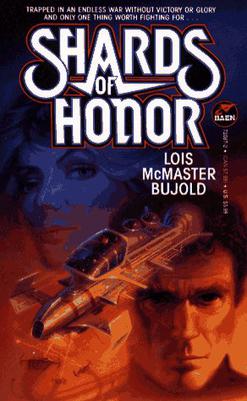
Shards of Hope. This one leans romantic-suspense, which I normally have limited success with (so much copaganda!) but it works here really well. Aden and Zaira are both Arrows, part of that paramilitary group I mentioned in Shield of Winter. Arrows are largely taken in as children because they have powerful, often lethal psychic powers which result in them killing or endangering their families of origin. (I have a whole thing about how utterly bonkers the conception of government is in the Psy-Changeling books, which I will not get into here, but know that I have at least an hour long cassette tape on the subject.) In Shards of Hope, Aden & Zaira wake up in some remote facility after unknown persons have abducted them and stuck chips in their brains for god knows what purpose. They escape out into a snow storm, and then have to do things like brain surgery under a tree in the middle of nowhere. It’s nail-biting stuff.

Allegiance of Honor. Allegiance of Honor is the fifteenth and final book in what Singh calls the “first season” of the Psy-Changeling novels. Silence has fallen, and a tentative way forward has been forged in the Trinity Accord. Unfortunately, the book sucks beyond the telling of it, and that after three of the best books in the series. I’ve taken a run at it a couple times, but always get stopped when I realize it’s the romance equivalent of a clip show: basically we check in with literally all of the couples from the previous fourteen books and get to watch them canoodling and congratulating themselves on how perfect their lives are. Gag. There is a romance but it has zero stakes, which is fine because it’s maybe 5% of the page count. I pushed through this time in the interests of completism. While I’m kind of glad I did — there were a number of instances where Singh introduces characters who become the subject of later books, and I liked seeing the origin stories — I will never read it again.

Final Thoughts

So! That’s my reading for the year. The list isn’t complete: there were some rereads I didn’t bother to note, some books I read at the beginning of the year and don’t remember enough to say, and a couple books I hated, but I’m trying to practice restraint throwing stones on the internet. Also, I’ve gotten pretty good at tossing books I’m not grooving on before I make the mistake of reading to the end. Life is short, &c.

It was notable to me how much 2010s urban fantasy I read — everything from zombie novels to more paranormal romance. I should probably read more weird genre litfic, because, judging from the Oddities section, that stuff turns my crank. It’s also hard reading, in way, not to be undertaken when tired or on the commute, so I get why I don’t read more of it. I read for many reasons: because I can’t sleep, the joy of language, to pass the time, to learn something, to feel something. These reasons aren’t mutually exclusive, necessarily, but they also don’t always conjoin.

Happy reading! We’ll see what I get up to this year.

The Year in Reading: 2024

I’ve been doing these year-end roundups of my reading for a couple-few years now. It’s always illuminating to see what my aggregate choices are because it’s not like I have a plan starting in January. I’ve largely stopped writing reviews beyond the tossed off observation nor do I get much in the way of ARCs anymore, so this is me left to my devices. I feel like I’m still kinda coming out of my pandemic slump when I couldn’t read anything but historical romance or real light fantasy. Apparently I’m now deep in the rompy space opera phase of my years long depressive episode. I’m still reading a fair amount of fantasy, urban or otherwise, but the regressive politics of a lot of historical romance have put me off the genre for now. There are exceptions, but I’m sticking with well-vetted authors for the time being.

Zombies

Obviously I’m a nutbar about zombies, and I presume every year I’m going to have a half dozen or more zombie novels on the list. I did Zombruary, as usual, but then worked my way through the bonus books as the year went on. We’re well past the zombie heyday of 10-15 years ago, so in general the stuff being published now tends to be odd and oblique, coming at the metaphor of the undead in unusual ways. There’s some zombie books I read this year that were published earlier, when zombies tended to be more Romero-style shamblers, but it was the more recent narratives which strayed from that style that I found satisfying.

Domino Falls by Tananarive Due and Steven Barnes. I read the first in this series, Devil’s Wake, last Zombruary, and really enjoyed it. It’s YA with a diverse cast of characters road-tripping through the zombie apocalypse. They have the opportunity to stop running for a bit when they’re taken in by Domino Falls, a seemingly zombie-free town. The little bit of safety and normalcy they experience there is such a temptation, because it’s obvious there’s something completely sus about the compound out of town run by an L. Ron Hubbard-y cult leader. Domino Falls doesn’t reinvent the wheel or anything, but the revelations about the source of the zombie plague are surprising. I will die mad that no one saw fit to publish the third book in this trilogy.

Silent City by Sarah Davis-Goff. I also read the previous book, Last Ones Left Alive, last Zombruary. Silent City takes place 6 years later. The main character (and narrator), Orpen, is now about 20, living in the titular silent city — which used to be a neighborhood in Dublin — and working as a Banshee, a fighter in an all-female paramilitary group. There aren’t many post-apocalyptic stories which take place decades after the cataclysm, and the slow pan of modernity being swallowed by relentless nature was very powerful — the sequence in the airport was gorgeous. Orpen continues to be kind of a stick, but I like that the damage in her narration is caused by naivete more than anything.

Eat Your Heart Out by Kelly deVos. My complaints: too many point of view characters with same sounding voices and a strangely plausible but squishy ending (especially given the swerve into somewhat pulpy territory in the second act.) Otherwise this YA novel is a delight: snarling, funny, and occasionally poignant with a plot that positively zips. The set-up is wonderfully subversive: a bunch of kids at a fat camp have to fight a zombie outbreak. Eat Your Heart Out is absolutely furious about how much bullshit fat kids — and especially girls — have to endure. While there is a somewhat didactic message to the novel, it never sacrifices forward momentum and harrowing sequences for the cause.

A Questionable Shape by Bennett Sims. I think one’s enjoyment of this musing literary take on zombies hinges on how much daylight you think there is between the main character and the author. Like if Sims thinks, yeah, this dude is amazing and insightful, that’s all insufferable. But I don’t think he does, and therefore A Questionable Shape is something like a satire, but not as aggressive. There’s def a DFW philosophy major vibe to the proceedings, complete with endnotes, though — and this me being kinda bitchy — DFW is significantly funnier. 

I do think it’s notable — again — how accurately zombie fiction written before the pandemic captures the pandemic. Sims captures the worry and interpersonal conflict of people in lockdown so well, and I feel like this is the most naturalistic zombie outbreak I’ve ever read: there’s not a lot of arm-wheeling and violence, more wearing, anxious boredom cut with strange pleasures. One of my strongest memories of lockdown, for example, was driving to work in an empty downtown, cresting the hill and watching the sun rise over the water, and the feeling of both wonder and desolation. Just like that.

Grievers by adrienne maree brown. Probably unsurprising that something called Grievers ended up being intensely sad, but I was still both filled and emptied by how sorrowful this novel ended up being. Dune’s mother one day just stops in place, standing over the sink. Dune takes her to the hospital where they declare her catatonic but not in a coma, with the implication that she’s kinda putting it on. Dune takes her home, where she withers and dies. A week later there’s a knock on the door: Dune’s mother was patient zero for an unknown illness, and all over Detroit, people just stop. The illness only affects Black people, and the novel follows Dune through Detroit’s accelerated emptying while she grieves her mother, her family, and the city itself.  

I believe it would be customary at this point to call Grievers “a love letter to Detroit”, which is as true as any such facile observation goes. But it felt to me more like the visitations I went to as a child, with the dead on display while the garrulous and sometimes fractious family carries on living, peeking into the casket to remark on the states of the body. Grief often feels like anger, just as fury sometimes results in tears. Grievers is sad, yes, but it’s also furious and hopeful and resigned and guilt-ridden, all bound together like the bones of Dune’s mother, cremated in her own back yard by her daughter. Amen. 

Roadtrip Z series by Lilith Saintcrow (Cotton Crossing, In the Ruins, Pocalypse Road, and Atlanta Bound.) Saintcrow is one of those journeyman writers I’ve noticed but never read, and this was the year to give her a try. I started with The Demon’s Librarian, which I didn’t like: Felt like a tent pole for a series that never got written. The mythology is both over-complicated and under-explained, but the thing I really disliked was the constant rapey thoughts of our ostensible love interest, a weird choice for an otherwise quite chaste novel. I figured I’d give her one more go with the Roadtrip Z series, because zombies.

Roadtrip Z must have been published during that minute when everyone was serializing everything, so each book is more installment than coherent narrative. As such, the books feel padded at times, drawing out the proceedings with same-y seemingly zombie attacks and scavenging. (This is a common feature of serialized fiction, like, you know, Dickens. Though replace zombies with Victorian capitalists. Same/same.) But the padding affords a more languorous journey to and through the actual zombie apocalypse, which gives room to Saintcrow to write some hella character studies of more minor characters. But occasionally her hero still seems like a panty-sniffer? He does improve as the series goes on, for sure. Anyway, totally cromulent insomnia read for me.

Death Among the Undead by Masahiro Imamura. Death Among the Undead enlivens the shin honkaku genre by adding zombies to the mix, wocka wocka. The set up is thus: a bunch of college-aged sex pests and the women they prey on go on a retreat in the country. This same group of sex pests did this retreat the year before, and clearly messed up the women on that retreat so bad that there was at least one suicide. Zombies attack; the group gets trapped in the dormitory; someone starts picking off the sex pests in impossible locked room scenarios. All of that is delightful, of course, but I’m just not much of a mystery reader, and this is a mystery first and foremost. Like it seemed insane to me that everyone was standing around playing talking dog detective when there were FUCKING ZOMBIES OUTSIDE what is wrong with you. Anyway, not to be a drag. If you like clever locked room mysteries, this is a fun little novelty, but that’s ultimately all it is.

Revival, Vol. 1: You’re Among Friends by Tim Seeley, et al. I don’t think I ever finished out this comic series because I have a bad habit of wandering off midway through a series, so I thought I’d have another go at it. In the town of Wausau, Wisconsin, all the people who died on one specific day get back up. They’re not classical zombies — shambling, decomposing killers — but they’re still occasionally uncanny and the whole situation disturbing. The town is quarantined and then the real fun begins. I absolutely adore the whole Midwestern Noir vibe of this series. Super good.

It Lasts Forever and Then It’s Over by Anne de Marcken. For a genre that often includes the sudden, violent end of a person’s loved ones, zombie stories often don’t address grief all that well. I can think of a couple. The aforementioned Grievers, fittingly, is suffused with sadness, while Zone One by Colson Whitehead considers loss through the eyes of a depressive, which is its own kind of sorrow. Though it is lightly, carefully touched, grief is the burnt frozen center of It Lasts Forever and Then It’s Over, the kind of thing seen out of the corner of the eye and in confusing circumlocutions, as the very language breaks down. What even are you talking about? The zombie’s hunger, its sense of cold emptiness, can work a wonder as a metaphor for the hard shocking losses that find you putting one foot in front of the other, watching from outside yourself as you continue on. There you go, you think, but you’re still sitting right here. 

The Undertaking of Hart and Mercy by Megan Bannen. Not quite fair to tag this as a zombie novel, because while there are undead, the story is more an epistolary enemies-to-lovers set in a truly strange fantasy land. The setting is this odd mix of modern — like there are phones and something like cars — and magical, with a central religion that is just neat. Mercy, who works as an undertaker in the family business falls into a courtship by letters with Hart, who is something like a forest ranger, if instead of trees there are zombies. I thought the opening was rough — Bannen doesn’t handhold too much, which I appreciate, but then the world is very weird and I could have used a little more explanation — but! it tightens up considerably in the second half. I was really into it by the end, which is great, because I just figured out this is the first of a series. Would read more in a second.

Space Opera

I haven’t been super into space opera because so much of the early stuff is, what, often imperialistic in ways I find unpleasant? Especially the books that lean more military sf — those stories can get downright jingoistic. But I feel like there’s been a lot of writers taking the societal microcosm of the space ship and doing some cool shit with that. Like Rivers Solomon in An Unkindness of Ghosts addressed chattel slavery on a generation ship, beautifully, awfully. In the other direction, Becky Chambers’s Wayfayers series is shot through with an ordinary sort of kindness in extraordinary circumstances. (Honestly, sometimes ordinary kindness feels extraordinary, especially given the current political climate.) Anyway, so I read a lot of rompy space opera this year.

Only Hard Problems by Jennifer Estep. I read the previous two in this series, Only Bad Options and Only Good Enemies, last year. They’re the kind of books in which there are things that drive me straight up a wall — the world-building ranges from clumsy to downright convenient, and the in-world neologisms hurt my feelings — but they have a pulp energy I really dig. (I’m not so much of an asshole I’ll hate-read an entire series, so know that if I say something annoys me in a series I’m still reading, I mean it affectionately.) They also feature a sort of science fictional mate bond which is depicted as mostly a nightmare, and I love when writers go after that trope. (This will become a theme in my reading.) Only Hard Problems wasn’t that great though: It’s a novella acting as a bridge to the next novel, which is fine, but I’m almost always better off reading this sort thing after I read the next novel. (This will become another theme.) Oh well.

Finder by Suzanne Palmer. I feel like fans of the Expanse series by James S.A. Corey might enjoy this. It has a similar, if smaller, vibe, maybe with a little early William Gibson thrown in. Furiously paced space adventure that leans into the gee whiz tech while still being pretty grubby. Our main character is the ridiculously named Fergus Ferguson, who comes to a backwater community to steal a space yacht back from a local gangster. The locality is made up of variously sized space junk and habs, and many of the smaller communities are actively at each other’s throats. Fergus’s interventions end up upsetting the balance, and everything goes spectacularly to hell. There’s weird (and terrifying) aliens, jury-rigged IEDs made of sex toys, crawling through Jeffries tubes, space roaches, Saudukar-like religions, and so much more.

Calamity and Fiasco by Constance Fay. I wasn’t over-wowed by Calamity or anything — the main character is a little bit of a boo-hoo rich girl — but it’s the kind of story that has a secret underground weapon in a volcano, and the main characters are delighted to keep saying “volcano-weapon base,” lol. I really appreciated the way world-building worked as foreshadowing in Fiasco, which isn’t as easy as it looks. Plus the world was just cool, with a floating city circumnavigating a planet. Real care was put into how the inhabitants of such a place would interact with their environment. I’m also very amused by Fay’s invented insult “priap” which obv comes from the Greek god Priapus, who was a fertility god known for his huge dong. Lol, nice.

Warrior’s Apprentice by Lois McMaster Bujold. I read the Cordelia books in the Vorkosigan series (Shards of Honor and Barrayar) absolutely ages ago and totally dug them (hat tip to my friend Elizabeth for turning me onto them) and then never read on because I have a problem wandering off. This spring when I went to a local con, I had the opportunity to have dinner with Bujold (I’m brutally name-dropping here; there were like eight of us at dinner) and she was lovely, so I finally started the Miles books. This is a lot of fun! Miles is a precocious but disabled rich kid who manages the most incredible mix of falling upwards and getting in his own way. Bujold also does the thing where she lulls the reader into the sheer fun of the goings on, and then casually rips your fucking heart out.

Red Mars by Kim Stanley Robinson. Red Mars follows the first 100 colonists to Mars, starting from the 2 year space journey to Mars up to the original 100 being almost overwhelmed by the colonizing Earthlings. I feel like KSR generally does an excellent job of mixing hard science with actual characterization, and while that’s generally true here, I did occasionally get a little antsy with the science stuff slash descriptions of landscape. Which is funny, because I don’t think the novel would be better at all if that was redacted. It is important that we get a real sense of the scope, scale, and difficulty of colonizing Mars. I think my problem might have been listening to the audio during the commute, which doesn’t do much for leisurely descriptions of the Martian landscape spooling past.

Steal the Stars by Ann Aguirre and P.T. Maylee. Sorry to say I actively hated this, because I really, really like Aguirre. I dig her books because while they’re not showy, her novels are well constructed and often quietly subversive. And this is a harder thing to put my finger on, but I get the impression she really enjoys writing? Like there’s a joy under her prose? Obvs most writers do it because they love it, so I’m not sure what I’m trying to get at, but there is a sort of enthusiasm that feels very soothing to me. Alas, I found Steal the Stars clumsily written with a whole raft of characters I found annoying. I will not be continuing this series.

Full Speed to a Crash Landing by Beth Revis. This one is kind of a redemption arc for me like Road Trip Z, because I didn’t like the first Revis book I read ages ago called Across the Universe. (It hit too many of my pet peeves, which isn’t necessarily its fault.) I loved Full Speed to a Crash Landing. While the setup is something you can find in just scads of space fiction — loner captain wiseass decides to work with potentially terrible colonial-space-fleet types to do space fuckery — I thought the main character was just great. So many of these loner captain types are eaten up with their tragic backstory. While Ada Lamarr may have a tragic backstory, she’s not going to let that get in the way of being awesome. Also, and this may be a spoiler, it turns out the whole thing was a heist, and I fucking love space heists.

Michelle Diener gets her own line item because I read a lot of her stuff.

Class 5 series by Michelle Diener. I finished off last year reading the absolute shit out of Diener’s Class 5 series. They’re not particularly inventive — the aliens all have a single defining trait, and the universe is Star Trek lite — but I found them so compulsively readable. The kind where you’re like, just one more chapter, and then curse yourself the next day for staying up until 2am reading. The sixth book in the series, Collision Course, came out just a couple months ago, and when I went to read it, I realized there was some stuff that tied back to a novella I’d never read, Dark Ambitions. So I went back and read that. It was fine, but like Only Hard Problems, I probably could have skipped it. In Collision Course, Diener moves away from the standard plot of the first books — abducted Earth woman makes friends with a potentially evil AI, a plot which was frankly getting tired — to good ends. Also, there’s a believably pregnant woman as the protagonist, which you never see.

Verdant String series by Michelle Diener. I began this year by reading the absolute shit out of Diener’s Verdant String series: Interference & Insurgency, Breakaway, Breakeven, Trailblazer, High Flyer, Wave Rider Peacemaker, and Enthraller. I didn’t vibe on this series as much as Class 5 at first. The characters are very similar to the ones in Class 5 — Diener excels at a certain kind of competent but not overpowered woman who doesn’t spend too much time either self-indulgently crying about her tragic past or preening about how she’s not like other girls — but the series isn’t as space opera-y, tbh. The titular breakaway planets are corporate-controlled hellscapes outside the jurisdiction of planets ruled by, like, representative democracy or whatnot, which I can dig because I get to froth at the mouth about capitalism. They do steadily get more intense as the evolving plot going on the background of each largely standalone installment ramps up. I think my favorite is Wave Rider, which made me literally gasp out loud when one of the assholes trying to kill our heroes took a shot at some alien whales. That’s the kind of sentence that will indicate to you whether you’ll like this as well.

I also read The Turncoat King and Sky Raiders by Diener, both of which are the first book in their respective series. The Turncoat King isn’t even space opera; it’s more generic high fantasy than generic science fiction. I thought a magical system based on traditional women’s work — needlepoint, in this case — was interesting, but everything else was kind of blah. Not bad, but also not great. Sky Raiders depicts a clash of high- and low-tech cultures, with a little bit of indistinguishable-from-magic thrown in. Basically space-faring aliens have been abducting people from a world with Renaissance-level technology. The whole set up has similar vibes to The Fall of Il-Rien series by Martha Wells which I read last year and really enjoyed, but, and I don’t mean this meanly, The Fall of Il-Rien is significantly cooler.

Various Series…es that I Started/Continued/Finished/Reread

I always have dozens of series that I’ve started and never completed, meant to get back to, whatever. Then there’s the series that are still being published, which I occasionally have enough forethought to keep up with. I’ll also revisit stuff when I feel bad for a comfort read. So this will be that.

The Earthsea Cycle by Ursula K Leguin. Y’all know my thoughts about Le Guin, so you can imagine how satisfying it’s been to revisit a series that has etched itself in my bones. Last year I reread the first two Earthsea novels, A Wizard of Earthsea and The Tombs of Atuan. Those two novels almost function as a dialectic between traditional concepts of gender: A Wizard of Earthsea is a classic hero’s journey about a gifted but arrogant young man; The Tombs of Atuan is that, but in reverse, so it’s not like that at all. The thing I love so much about Le Guin is how she can so perfectly express something, but then come back to that expression over and over, in ways that find that expression changed, and both the origin and the change can be true.

So I read the next three Earthsea books — The Farthest Shore, Tehanu, and Tales from Earthsea — which were an interesting mix. I didn’t groove on The Farthest Shore as much as I remembered. The antagonist felt remote, and the divine right of kings messaging felt a little off, given Le Guin’s oeuvre. Tehanu is still the absolute banger I remember it being, and possibly more so. I think it’s the kind of book one appreciates as one gets older, which is the neatest thing to find in a series that started life as young adult novels. I wasn’t that into Tales From Earthsea when I read it first, but it’s grown on me, especially given the excellent afterword that I don’t think I’ve read before. This year I’ll finish up with The Other Wind for sure.

The Grief of Stones by Katherine Addison. The Grief of Stones is a direct sequel to The Witness for the Dead, which I read last year, and shares a world with The Goblin Emperor, which I read long enough ago that I’m not sure what the connections are. I’ve enjoyed this series so far: it has an attention to bureaucracy that I love, and is a procedural with something like a psychic coroner as the lead. The real thing I love is that the main character is a nuclear hot mess — like white hot — but he’s also super competent in a quiet, unflashy way. Or I guess that happens a lot in detective fiction, but he’s also not an abusive addict slash dickhead and his hot-mess-ness is grief-based more than anything, which is much more rare. I also love the slow burn thing with that one guy. Like I’ve been in this world long enough that when that one person switches from the formal you to the personal one, I gasped.

Psy-Changeling by Nalini Singh. I will forever be on my Psy-Changeling bullshit. Forever. So this year I reread both Heart of Obsidian and Shards of Hope. Heart of Obsidian is easily my favorite of the whole series. Singh is always good at writing lovers recovering from serious childhood trauma — the Psy are a people traumatized on racial and generational levels — but it’s especially well done here. Rereading Shards of Hope, which I also dug for its suspense/thriller stylins, ended up being fortuitous. That’s where we’re first introduced to the characters in Primal Mirror, the most recent novel in the series, which I also read this year. I did not dig Primal Mirror. Even though the degradation of the PsyNet is accelerating and its collapse imminent — which would effectively genocide the Psy race — the events of Primal Mirror feel remote and disconnected. Which lead me to believe that there was going to be some 11th hour nonsense pulled out of thin air, which duly happened. I tend to find Changeling alphas insufferable, and while our romantic hero Remi Denier isn’t near the worst (*cough* Lucas Hunter *cough*) he still is what he is, which is utterly basic.

The Rivers of London by Ben Aaronovitch. I continued this series largely on my commute on audio. The reader for the series, Kobna Holdbrook-Smith is just stupid good, with a facility for the fine gradations of the accents in the British Isles. I am also here for the architecture porn. I finished three novels — Whispers Underground, Broken Homes and Foxglove Summer — in addition to a novella — What Abigail Did That Summer which takes place concurrent to Foxglove Summer. Whispers Underground is the third in the series, and still a romp for the most part. It’s at the end of Broken Homes — which features so much brutalist architecture <3 — when shit really goes pear-shaped. Aaronovitch retreats to the country in Foxglove Summer which I was initially apprehensive of: the stories heretofore were so embedded in London that I didn’t know if decamping to Surrey was going to work. It did, often because of murderous unicorns, but I am looking forward to getting back to London. What Abigail Did is another interstitial novella, and switches protagonists to the main guy’s cousin, Abigail, which I both was and wasn’t into. I thought she was often funny in the way kids are funny about the olds, but then sometimes the boomer behind the character shone through. But I do love a carnivorous house, so.

Crowbones by Anne Bishop. If you’ve read much Bishop, you know how infuriating her books can be: when she’s good, she’s good, and when she’s bad, nngggghhh, and you never know which you’re going to get. Written in Red, for example, takes a stock Bishop character — the gormless ingenue whose helplessness inspires devotion — and makes her work so well you don’t even notice how fucking annoying that kind of character is. Furthermore, the world of The Others (which both Written in Red and Crowbones take place in) is the kind of alternate present that I groove on: recognizably modern, but with a large scale disordering element, like the introduction of magic or something similar. (Sunshine by Robin McKinley is a good example.) But sometimes Bishop’s bad habits and writing tics overwhelm everything, and you end up with Crowbones, a novel in which everyone’s motivations are so stupid it’s insulting. She’s also got it out so hard for academics it makes me wonder if a PhD candidate killed her dog or something. I would normally chuck something like this pretty quickly, but I kept hoping it would improve like the previous Others book, Wild Country, which also started out annoying to me, but then improved drastically as it went on. Alas. 

Bitter Waters by Vivian Shaw. I have enjoyed the other Greta Helsing books, and I’m still looking forward to the newest installment coming out this year, Strange New World, but this novella feels inert and inessential. (My dissatisfaction with sidequel novellas has been such a theme this year I will probably stop reading them going forward, something I only figured out writing this list.) The Greta Helsing books are about a descendant of Dracula‘s van Helsing acting as a doctor for the supernatural instead of hunting them. This story kicks off with a newly turned child vampire coming under Greta’s care, a child who was turned against her will in what feels like a coded sexual assault. But then much of the focus of the novella was on Ruthven’s emotional crisis. Honestly, I didn’t get why he was having a crisis in the first place, because it wasn’t about what happened to that child, and immortal children are like the worst thing I can think of (e.g. Claudia et al.). Fine but not great.

Subtle Blood by K.J. Charles. It had been a hot minute since I read the first two books in the Will Darling trilogy set in post-WWI Britain, so I was occasionally a little confused by the overarching plot, but it wasn’t a problem in the end. We get an up close view of Will’s lover, Kim’s horrific family, as the mystery plot concerns Kim’s brother, the heir apparent, being charged with a murder he all too plausibly could have committed. The real meat of the story is Will coming to terms with what the war did to his emotional capacity: Kim quite desperately needs Will to make their relationship a bit more than unspoken, while Will had the ability to plan for the future knocked out of him in the trenches. The last of the Will Darling novels pretty much sticks the landing.

The Liz Danger series by Jennifer Crusie & Bob Mayer. I listened to all three Liz Danger novels — Lavender’s Blue, Rest in Pink and One in Vermilion — on the commute, and they were perfect for it. Crusie is one of the few people who writes contemporary romance that doesn’t make me break out in hives, and Mayer (apparently) writes military thrillers. (I’ve never read his stuff.) Together, they are magic. The series follows one Liz Danger, who breaks down outside of the shitty small town in Ohio she escaped from 15 years previous, and then gets sucked right back into all that bullshit. Even though there’s a lot of quipping, borderline absurdity, and hijinks, there is some deep shit going on under the surface. Like Liz’s mom has collected close to 400 teddy bears, and though dealing with the bears is a funny motif, Liz’s mom is actually awful. When Liz finally confronts her, I felt the terrifying rush of that in my bones. Plus there’s a crooked land deal, and I love a crooked land deal. (As my Dad would note: you don’t have to say crooked.)

His Majesty’s Dragon by Naomi Novik. This series has been on my list for a long time because I find the idea of Napoleonic Wars + dragons to be delightful, but it took me a while to get into this. The main character, Capt Laurence, is a total stick, and I got sick of how prissy he was through the first two thirds. But he has a couple humbling experiences and loosens up considerably as the novel progresses. His dragon, Temeraire, with whom he bonds in a way reminiscent of the mechanic in Dragonflight, is the freaking best, and I love how he constantly challenges or punctures Lawrence’s (and Georgian England’s) dumb ideas. While I think the middle drags a little, with Temeraire and Laurence grinding and leveling up, the final dragon battles are thrilling as hell. 

Absolution by Jeff VanderMeer. Per usual, Vandermeer is a godamn master wordsmith. In the first novella — Absolution is three novellas stacked in a trenchcoat — I kept having to go back and reread sentences because there’s something subtly and persistently off about where they end up. It’s not a mistake or bad grammar or something, but deliberate weirdness that enhances the more overt weirdness of the situation. (I read this with two other people, and they had this experience too, so I wasn’t just tired/menopausal. Plus, I could not read this anywhere near bedtime, lest the screaming fantods infect my dreams.) I enjoyed the first and last section better than the middle, which I thought dragged a little. And this is on me, but while I’d listened to the entire Southern Reach trilogy not that long ago, the details had drifted enough that I was occasionally at sea as to the import of various events. I strongly recommend brushing up on anything that intersects with Lowry and Whitby, and you’ll get more out of Absolution. 

Historical Romance I Could Handle

As I mentioned earlier, I’ve had a hard time with historical romance recently. So mostly what I read was books in a series I was already following.

The Earl Who Isn’t by Courtney Milan. Enjoyable conclusion to the Wedgeford Trials series, about a small town in Victorian England people by a significant population of Asian ex-pats. While I liked the main couple and all, Milan really excels at writing complicated relationships between parents and their adult children. Nice asexual rep, if you’re into that sort of thing.

The Beast Takes a Bride by Julie Anne Long. The Beast Takes a Bride catches up with a couple five years after their estrangement, a break which happened on their wedding day. The story moves forward and backward in time quite adroitly, uncovering the initial conflict and working towards rapprochement at the same time. I continue to love the found family themes in The Palace of Rogues series, as well as the space given to minor characters to have their own lives and interests, irrespective of the romantic plot. We get to attend a donkey race in this novel, for example, something alluded to as a most beloved pastime of the often crass and flatulent Mr Delacourt. As usual, Long’s prose is top shelf stuff. She knows how to build a theme and just slay you with a tiny, careful observation. (I also reread Beauty and the Spy which was a little overstuffed as the first in a series, but still enjoyable.)

Riffs, Updates, & Intertexts

A number of the books I read this year were based on or heavily alluded to a classic. These are they.

Exit Ghost by Jennifer R Donohue. Gender-flipped contemporary Hamlet that leans hard into the witchery underneath the play. Juliet Duncan was almost killed by a ricochet when her dad was assassinated. Six months later she gets out of the coma, and promptly performs a ritual to call her dad’s ghost, in an altogether badass version of the battlement scene. While not narrated by Jules, the story is a close third person, and the effects of her traumatic brain injury make events feel strange and wiggling sometimes, in addition to all the witchery. Very similar vibes to Scapegracers by H.A. Clarke, which I read last year and highly recommend — the magic, the queerness, the scrabbling youth — but an older iteration: maybe just out of college (or that age), and competent enough to be fucking dangerous. Really good.

Ghosted by Amanda Quain. Well-considered modern take of Jane Austen’s Northanger Abbey, one which doesn’t aim to capture Austen’s winsome comedy of manners and affectionate satire, but instead mines the source material for themes not explored in text. To wit: the haunting of grief, and the way belief creates ghosts when it dies. The adaption is also gender-flipped, narrated by a girl version of Henry Tilney, who, when you think about it, is a much more complicated character than the lovely milk-fed Catherine Morland. I’ve gotten too old for most YA, but this worked for me, and not just because of the intertext. Good.

Exit, Chased by Baron by Aydra Richards. This almost strays into sentimental novel territory, in that the main girl is a virtuous woman who suffers undeserved persecution with noble silence … but then eventually she drops the martyr act, thank God. The titular baron, the one both doing the persecuting and the romantic lead, also sees the error of his ways and settles into a satisfying amount of groveling. I love a good grovel. There’s also a somewhat questionable but nevertheless coherent intertext with Shakespeare’s The Winter’s Tale, which is def one of the Bard’s very minor works. (I think it’s his last play, and most Shakespeare types believe he didn’t write the second half.) Not essential reading, but good for what it was.

Graphic. No, not that way. Ok, maybe a little that one time.

As I mentioned last year, I feel like I’ve lost whatever thing it was that kept me semi-current with comics, so it’s another poor showing this year. I should probably pick up some of the manga the kids are always entreating me to read.

Trees by Warren Ellis, et al. I read the three collected volumes of TreesIn Shadow, Two Forests, and Three Fates — because I started this series a million years ago and wandered off. Apparently, everyone else wandered off on this series too, because there are only three volumes, and it feels very unfinished. At some time in the recent past, alien megastructures have landed all over earth, shifting the climate both literally and politically. The trees work as a decent metaphor for climate change in the first two volumes, but the third hares off to a loosely connected plotline. Which would have been fine if this series continued, but as it stands, it’s disappointing and unresolved.

Square Eyes by Luke Jones & Anna Mills. While I love a dystopian cyberpunk hellscape — is there any other kind of cyberpunk landscape? — and I understand why this choice was made, the disjointed storytelling style was sometimes too opaque. The plot is a sort of PKD-style wigout, with characters moving through a kaleidoscope of memory and identity, which is already pretty disjointed. Still, the art was right up my alley and I bolted it down right quick.

Nils: The Tree of Life by Jérôme Hamon. A riff on Norse folktales in a high-tech/low-tech post-apocalyptic setting. The art is lovely. but the story itself felt a little shapeless. I don’t think the world-building was very good, because I was often perplexed by how things are supposed to work, and the cli-fi messaging felt loud? Or simplistic? But it was still a nice read. I’ve been chasing graphic novels which feel like Simon Stålenhag’s work, and this occasionally did.

Fine Print by Stjepan Šejić. The antics of lust demons and the heartbroken are the subject of this graphic novel. (Get it? Get it?? Phew.) I kinda wish I knew how this ended up in my holds, because I have no memory of putting it there. A lot more fucky than my usual tastes, Fine Print was nonetheless more wholesome and affirming than all the sex might imply. Šejić plays with the distinction between love and desire without prioritizing one or the other, a distinctly sex-positive take — so often sexual desire is treated as degraded. Better than expected, but there were still issues with samey looking people and a looser plot than I prefer (though that’s pretty typical with comics, so).

Punderworld by Linda Šejić. You’ll notice the same unpronounceable-by-me last name between this and Fine Print, so for sure I learned of one from the other. Cute retelling of Persephone and Hades, which doesn’t seem like it should be possible, given the various wretched aspects of the Greek myth: abduction, rape, incest. (And there are a lot of terrible dark fantasy takes on that myth, boy howdy.) Here, Hades is an adorable dork & Persephone effusive and sunny, and their descent into Hades is an almost slapstick tumble and not a gross violation.

Fantasy

Still reading a lot of lighter fantasy, which I assume will continue through the second Trump administration. I just don’t always have the bandwidth for harder stuff.

The Witch’s Diary by Rebecca Brae. Cute little epistolary number. It took me a minute to get into this, I think partially because the opening drags as our heroine fucks up job posting after job posting: she’s a post-college witch who has a big deal board accreditation in like a year, so she has to have a union-approved job for however long. But once things settle into a non-magical plane, aka modern America, I got a lot more invested and shot right through the last half. Sometimes a bit goofy for my tastes, it nevertheless had enough bureaucracy, casually well thought out magic, and genuinely funny slapstick to keep me happy.

Consort of Fire by Kit Rocha. Neat to see super queer romantasy with an emphasis on consent, but the first three quarters or more is so slow I struggled to stay engaged, and all the plot is back-loaded on the last couple chapters. This disengagement might be me, because this kind of high fantasy just isn’t my bag, and I don’t mean to ding the book for my predilections. I never did pick up the second in this duology, Queen of Dreams, but I might.

Books & Broadswords by Jessie Mihalik. Two cheerful but unremarkable fantasy novellas obviously written after the smash success of Travis Baldree’s Legends & Lattes. Both novellas included could be described as very loose retellings of Beauty & the Beast, but without a lot of danger. They both have dragons. I like dragons.

A Study in Drowning by Ava Reid. This YA novel is a cross between a Possession-style literary mystery and a haunted Gothic, which I’m 100% on board for. Especially because the Gothic was turned up pretty high: there were ghosts in diaphanous white dresses, a crumbling mansion, sins of the father, creepy townsfolk, etc. And the writing is very ornamented, just the right kind of overwritten for the subject matter. The pacing is slow and I didn’t feel the antagonistic heat between our leads, but this is one of those books which starts rough but ends well, which is way better than the reverse.

Bride by Ali Hazelwood. I feel like everyone read this book this year so you don’t need a plot synopsis, but here goes: A werewolf and a vampire have to marry to seal a treaty in a world where humans, weres, and vamps are at each other’s throats. It also manages to address a fantasy trope that I don’t see interrogated enough, namely the mate bond and what a huge nightmare being biologically obsessed with someone could potentially be. As I mentioned before, I’m into that. The dialogue is a lot of fun and I enjoyed the characters, even if it was occasionally aggressively trope-y. Oh, and I’m absolutely convinced Hazelwood thought to herself, “I am going to write a really tasteful knotting scene. Let’s mainstream that shit!” If you don’t know what I’m talking about, don’t google it.

A Matter of Execution by Nicholas & Olivia Atwater. The name of this novella is a pun because it opens with our hero being rescued from execution by his quirky shipmates, which should give you an indication of the general tone. After the rescue, it turns into a heist, yasss. Though this is solidly steampunky fantasy, it has peripatetic space opera vibes, which I may have mentioned I’m into. This novella is clearly a set-up for a series, and you can bet your ass I’ll be reading more.

One-Offs

Sometimes things don’t fit into neat categories. I would say most of these are on the literary end of things, so even if they have fantasy or science fictional elements — my tastes being what they are — I wouldn’t feel comfortable, exactly, calling them sff.

Escape from Incel Island by Margaret Killjoy. That title slays, right? Fun little ditty about an Escape-from-NY style prison island populated by incels lured there by the promise of free women. Five years later, two AFAB folk are sent in to retrieve something important left behind when the island was left to the neckbeards, resulting in a completely goofy pilgrimage through the various fiefdoms which coalesced in the intervening years. A lot of fun for an exploration of misogyny, which is generally not fun at all.

The Dreamers by Karen Walker Thompson. Like her debut novel, The Age of MiraclesThe Dreamers will leave you with a pleasantly reflective sense of beautiful despair. The Dreamers details an epidemic of deep sleep caused by a virus and localized on a sleepy northern California college town. The novel had the unfortunate luck to be published in 2019, so there’s things in the plot that don’t quite ring true — the town is put under cordon sanitaire, for example, which would never happen in post-Covid America — but the tone is so musing and thoughtful, without a lot of over the top nonsense, which I really appreciate.

Depart! Depart! by Sim Kern. A Jewish trans kid ends up in the Dallas arena after Houston is functionally destroyed by a hurricane. A little bit cli-fi, a little bit apocalyptic, a little bit Jewish, and a whole lot queer. Normally I’m a bitch about this, but it’s third person present tense, which is fucking hard to pull off, so good job there. Kern uses ghosts — which are often avatars of our embarrassing, angry pasts — to very good effect, and I loved the main character.

Sleep Over: An Oral History of the Apocalypse. In a reverse of The Dreamers, Sleep Over is about an epidemic of sleeplessness, but the effect is universal, not localized. The story is told in the Studs Turkel-style format of books like World War Z. Like Brooks’ take on the zombie wars, the raconteurs sound pretty samey, but then the effects of profound sleeplessness seem well thought out. I read it on a flight after not getting enough sleep, which was also perfect. Also like WWZ, there were a couple sections I really didn’t like, but then the whole thing goes down pretty fast, so.

Corey Fah Does Social Mobility by Isabel Waidner. Something like both a satire and a po-mo farce, Corey Fah will have you saying “what the fuuuuuck” roughly one million times. The novel/la opens with the titular Corey winning a literary prize for the Fictionalization of Social Evils. In order to get the prize money, Corey must go round up a neon-beige blimp which remains stubbornly out of reach. That’s just the beginning of the weirdness. You know, I’m not going to pretend I got even half of what was going on in Corey Fah Does Social Mobility, but I know enough to say that ending was a banger. 

The Reformatory by Tananarive Due. As it happens, I’m going to start and end this list with a book by Tananarive Due. The Reformatory, which just won a raft of well-deserved awards, is a lyrical, brutal, essential novel about reform schools in the Jim Crow south where many young Black men were incarcerated and then murdered. It’s the kind of horror novel, like Toni Morrison’s Beloved, where the stomach-turning horror is historical fact; the supernatural elements — ghosts, in both novels — might occasionally startle, but they’re not going to form a mob and burn your fucking house down with you in it. The best book I read last year.

Final Thoughts

There’s another dozen or so novels that didn’t make it on this list, for various reasons. I didn’t note a bunch of rereads — like Grace Draven’s Radiance or Colson Whitehead’s Zone One — which I tend to turn to when I’m not feeling great. I’m also working back through a couple Elizabeth Hunter series, most notably the Irin Chronicles, because I know she does something nuts with the concept of the mate-bond in one, but I can’t remember how she got there. I also read some stupid stuff that I don’t have much to say about, and I don’t feel the need to be a dick about on the internet. (Weird, I know.) There’s also a handful of books I started and couldn’t finish, sometimes because of me, and sometimes because of the book. Like I stopped reading Tananarive Due’s My Soul to Keep at about the halfway mark. In some ways, the story is like Anne Rice’s vampire books: a morally ambiguous immortal does a lot of fuckshit, has feelings. But I knew it was going to end badly, and I just wasn’t up for it. That one was 100% on me.

So! That’s my reading this year. God knows what I’ll get up to in 2025. Happy reading!

The Year in Reading: 2022

I rounded up the books I’d read for the year a couple years back, which I hoped to make into something of a tradition. Alas, I’ve never done well when I assign myself homework, so last year went by without a roundup. But I guess I’m back! We’ll see how this goes. I’m still pretty focused on lighter fare, like I was at the start of the pandemic, but I’ve managed to slip in some horror here and there, mostly stuff I’d read already. In fact, I did a lot of rereading this year; I’m just not interested in surprises. So, without further ado:

Stuff I read for class:

The Collected Works of T.S. Eliot. If you weren’t aware, I finally finished up the English degree I started eleventy million years ago. The class itself was a senior seminar style class — where your grade is based on a single, bigass paper — and the class was called “T. S. Eliot and War.” We started with the WWI poets — Siegfried Sassoon, Wilfred Owen, Rupert Brooke, &c — and then worked our way into Prufrock, The Wasteland, and the Four Quartets. It’s been a hot minute since I seriously read poetry, so it was very rewarding to get hip deep in the one of the most important poets of the 20th Century. I’m not sure who this is attributed to, but one pithy take on Eliot goes: Modernism begins between the second and third lines of “The Love Song of J. Alfred Prufrock.”

The Midwich Cuckoos by John Wyndham. A small town gets knocked out by an unidentified force, after which it turns out all the women of childrearing age are knocked up. A comedy of manners that ends on a bang.

Day of the Triffids by John Wyndham. This novel defies the wisdom that you shouldn’t have too much weird stuff going on in a novel, because first up, almost everyone on earth is blinded by a celestial event, and then, while society is breaking down and everything is a mess, giant, ambulatory, carnivorous plants start preying on the survivors. Fun fact: Alex Garland lifted the opening of Triffids, which follows a patient who was convalescing in hospital & who doesn’t know about the recent cataclysm, for 28 Days Later.

The War of the Worlds by H. G. Wells. O.G. alien invasion narrative, which reads really weird now. Published in 1897, it pre-dates both world wars, and it shows. My paper ended up being on what Wyndham took from Wells when he wrote his own alien invasion narrative, fifty years and two world wars later.

Hidden Wyndham by Amy Binns. As far as I know, the only biography of Wyndham available, published in the last few years. I feel like Wyndham is experiencing a little bitty renaissance, because he is so much more interesting than many of his peers. Hidden Wyndham publishes just scads of his letters to the love of his life while they were separated by the war, and I admit I cried.

The History of Science Fiction by Adam Roberts. I also read a lot of academical stuff for the paper, but I’m not going to bore you with psychoanalytic takes on mid-century scifi or whatnot. I mention The History of Science Fiction because I read around for sections which dealt with my specific topics, and hit a three page analysis of The Midwich Cuckoos which was better than every other bit of criticism I’d read about that novel by a country mile. I made a mental note to get back to his fiction when I remember; Roberts is also a science fiction writer himself. I recommend following his twitter if you’re into extremely erudite dad jokes and multi-lingual puns.

Zombies!

Most of my zombie reads were rereads, so we’ll start with the new stuff.

Love, Lust, and Zombies: Short Stories edited by Mitzi Szereto. Short story collection about people banging the undead. Look, I know. Would you believe I read it for the articles? I do think it’s notable, given the burgeoning subgenre of monsterotica, that zombies almost never are portrayed as fuckable, a paradox of the zombie’s curious detachment and their voraciousness. Something something, quip about the little death and the big one.

The Down Home Zombie Blues by Linnea Sinclair. Turns out, not actually about zombies, which I found incredibly disappointing. Buddy-cop alien-invasion narrative with hive-mind space chthulu, set in Florida. Make of that what you will.

Everything Dies by T. W. Malpass. I read the first “season”; this is apparently some kind of serial. Decent, but it’s got the wordiness of serials and the tendency to jump around in a way that works when you’re consuming something episodically, but not so much in a binge. I’m on the fence about whether to continue.

The First Thirty Days by Lora Powell. Self-pub with the requisite typos and infelicities, but stronger than most. Kinda not into the fact that a vaccine is responsible for the zombie apocalypse. Given the pub date, this isn’t Covid vaccine denialism, just the regular kind, but it still rankles. I liked the slow collection of survivors; I didn’t like the cartoony bad guys in the third act. I also enjoyed that these zombies were fast zombies initially, but as they decomposed, they got more like the shamblers of yore. Not that physics exists in zombie stories, but I liked that these zombies decomposed like bodies would.

This is Not a Test by Courtney Summers. YA novel about a young woman who is suicidal when the zombie apocalypse hits, and ends up riding it out in the high school with a collection of frenemies. There’s a real thing that depressed people tend to do better in crisis situations, because they’ve been catastrophizing the whole time so sure, why not zombies. Beautifully written and worth the reread.

Severance by Ling Ma. Legit, I reread this almost exclusively because I watched the AppleTV series, Severance (no relation). This novel definitely cemented my opinion that zombie novels more accurately capture the experience of living through a pandemic than fiction about pandemics. This lappingly memoirish novel follows a post-college millennial through a global outbreak of Shen fever, which strips its victims down to one rote action until they die of exposure or malnutrition. She keeps working her publishing job as New York empties, masked and Zooming with a smaller and smaller group of people.

Zone One by Colson Whitehead. This is maybe the third time I’ve read this, second time I’ve listened to the audio, which is very good. Once you get past the 50c words and the complex syntax — not to mention how aggressively deadpan the narrative voice is — Zone One is seriously freaking funny. It’s honestly become one of my favorite novels. Zone One is also elegiac about a lost New York, like Severance, and is probably best understood as a 9/11 novel, of sorts.

The Dark Earth by John Hornor Jacobs. Another super rewarding reread. Jacobs isn’t reinventing the zombie wheel here — they’re pretty standard shamblers — but this book really cemented a lot of my early ponderings about the American instinct towards fascism, what zombie stories tend to say about domesticity, etc. The way the story is told through interlocking perspectives is absolutely aces, and there’s a sequence with a steam train which rules.

Seanan McGuire

The InCryptid Series. McGuire is seriously seriously prolific, so if you’re looking for three dozen novels or so because you’ve got a long weekend, look no further. I read the first four InCryptid books — Discount Armageddon, Midnight Blue-Light Special, Half-Off Ragnarok, and Pocket Apocalypse (I was today years old when I got the pun the title; the novel takes place in Australia), but I bounced off the fifth, Chaos Choreography. This is notable, because it usually takes me two books to run out steam with a series and have to take a break. InCryptid features a sprawling family of cryptozoologists (some of whom happen to be cryptids themselves). The first was published in 2012, and it isn’t so different from the glut of urban fantasy published in the 2010s, but they get weirder and more McGuire-like as they go on, which is cool to watch happen.

Wayward Children. I continued my read of Wayward Children with Down Among the Sticks and Bones, Beneath the Sugar Sky, and In an Absent Dream. I can’t recommend this series enough. It’s a sort of meta-portal fantasy, and the plots have the logic of dreams and nightmares. In an Absent Dream is absolutely gutting so I had to take a break, but I’ll be back.

Mira Grant. I also read a couple of her novels published under the Mira Grant name, which I think largely she uses for her more science horror stuff, but who even knows. Alien Echo is a YA novel set in the Alien universe. Olivia and Viola are the twin daughters of xenobiologists whose colony gets overrun with xenomorphs. Totally decent tie-in novel. Kingdom of Needle and Bone has a similar vibe to the Newsflesh books, which I enjoyed greatly despite my often loud bitching. Unfortunately, the book is about a pandemic, and I am not capable of reading about pandemics right now. I suspect this was supposed to be the start of a series, but Covid put an end to that, along with so much else. Oh, and speaking of that, I am absolutely dying for another killer mermaids book, like Into the Drowning Deep, but I think there might be some fuckery with the publisher? I really hope they get that nonsense worked out.

Ann Aguirre

Galactic Love. I’ve found my way working through Aguirre’s back catalogue because she’s a rock solid journeyman writer who is often quietly subversive as hell, especially when it comes to toxic genre tropes. Like in the first of her Galactic Love series, Strange Love, Aguirre takes on alien abduction romance, a sub-genre which is often a trash fire of dub-con and dudes with weird dicks. Strange Love is instead a charming, funny story with a talking dog and a Eurovision-ish contest, and the alien doesn’t even have a dick. This year I read the third, Renegade Love, which isn’t as great as Strange Love, but is still pretty great. It’s about a froggy dude in a murder suit, what more could you possibly need to know?

Mirror, Mirror. Mirror, Mirror is the second in her Gothic Fairytales series, after Bitterburn. I really enjoyed the Beauty & the Best retelling in Bitterburn, even if the end fizzled a bit, but I feel like Mirror, Mirror, which takes on Sleeping Beauty (sort of), was a misfire. The novel’s protagonist is the step-mother, and while I appreciated the attempt at inverting the tropes — it’s the mother that’s evil, not the step-mother — I don’t think the novel really gets under the hood of what those tropes say about motherhood, etc. The novel instead just relabels the good mom and the bad one.

Grimspace. The first in the Sirantha Jax novels about an FTL pilot who gets pinned as the patsy in some galactic political fuckery. Peripatetic space opera which moves pretty fast. The main character sometimes annoyed me with the gormlessly naïve thing that is common to this kind of protagonist, but still a totally decent novel.

Witch Please. Bounced off this hard, but then I have close to zero patience for contemporary romance, which this is. Just including it because Aguirre writes in a lot of different genres, which I think is nifty, even if they’re not to my taste.

Jessie Mihalik

I discovered Mihalik some time in October, and I’ve been tearing through her books. Incredibly fast-moving space operas, often with labyrinthine galactic court drama and some light kissing. The Consortium Rebellion series — Polaris Rising, Aurora Blazing and Chaos Reigning — just keep getting better, partially because I think she stops relying on tropes and types so hard. (Like one of the characters in Polaris Rising is 100% Riddick with the serial numbers filed off). Too be clear: tropes and types are what makes a genre, so I’m not slagging this, just observing. The first two of the Starlight’s Shadow series, Hunt the Stars and Eclipse the Moon, have a Vulcan-y psychic race which I am totally into, but I think the books are occasionally hamstrung by their first person narrators, especially the first. I’m reading The Queen’s Advantage, the second of the Rogue Queen series right now. The first, The Queen’s Gambit, has an Amadala-type elected queen, which is silly, but then mostly she’s queen so the title works, which is whatever. They’re all superfun books, and if you’re looking to while away an attack of insomnia, don’t pick these up because you will never go back to sleep. Just one more chapter.

Various Series I Continued Reading

Kiss of the Spindle by Nancy Campbell Allen. Steampunky take on Sleeping Beauty, and the second in a series begun with Beauty and the Clockwork Beast. The previous novel had a really cool protagonist, but the mystery plot was almost offensively stupid. Kiss of the Spindle improves on this by having a cool protagonist, and then also the whole locked room mystery was fun to watch play out. The antagonist ended up being the most compelling character by far, and I was bummed to see the next novel in the series wasn’t about him.

Raven Unveiled by Grace Draven. The last (?) of the Fallen Empire series didn’t quite work for me. We’ve met both main characters before — Gharek of Cabast and Siora — and the novel is supposed to be a redemption arc for the former. Alas, I felt like he was too much of a jerk to be redeemed, so I was ambivalent about the novel. I will always love Draven’s prose style, but I just can’t love Gharek. (I also reread all of the Wraith Kings series, of course.)

Irin Chronicles by Elizabeth Hunter. I read the first three of the Irin Chronicles series ages ago, when PNR was in its angel phase. I loved how Hunter dealt with the concept of a mate bond. Hunter addresses a specific fucked up situation which would inevitably happen if indeed the mate bond existed in book 2 or 3 of the Irin books — can’t remember exactly. I’ve only seen one other writer address this situation (but not this well). I never continued on with the series because of my aforementioned need for series breaks, but I finally got around to reading books 6, 7 & 8, The Silent, The Storm, and The Seeker. (I skipped #4, The Staff and the Blade, because I find Damien and Sari kind of annoying.) They were all enjoyable in their own ways, but The Seeker rises to a crescendo which could serve as a series ender, if she decides not to go on.

Ruby Fever by Ilona Andrews. Perfectly cromulent conclusion to Catalina’s arc in the Hidden Legacy series. The husband and wife team behind the pen name have this tendency to rely on eugenics in their magic systems, which can flower into full-on magical fascism. (The Kate Daniels books especially are guilty of this, most egregiously in Blood Heir, which I also read this year. I did not like Blood Heir.) Fortunately, in Ruby Fever they seem to be aware of how screwed up a system based on heritable magic would be, and there’s some direct critique in the novel. Ruby Fever also showcases their trademark ability to begin a novel with three totally screwed up but seemingly unrelated situations, and then have them escalate and entwine into a massive disaster. Even if I’m not into a book of theirs, they are very, very good at what they do. (Oh also, apparently I read Fated Blades, their most recent novella in the Kinsmen Universe, a series which they started and abandoned over a decade ago. I didn’t love it, but it was fine.)

Fugitive Telemetry by Martha Wells. The sixth Murderbot Diaries book, Fugitive Telemetry takes place before book 5, so the timeline was a little confusing at points. I thought we were going to get a road trip with ART after the last? Anyway, fun little locked room (locked space station?) mystery, full of Murderbot’s trademark kvetching. For a series based on a bot what murders, the Murderbot Diaries are surprisingly cozy reads. Murderbot just wants to get back to its stories when other peoples’ horseshit gets in the way. Big same, Murderbot.

Last Guard by Nalini Singh. I reread a few Psy-Changeling novels this year, to better and worse results. I invariably enjoy the books which focus on two Psy as the romantic leads, because all the growling and posturing of the changelings gets real old fast. The Psy are dealing with massive trauma, on a society-wide level, and Singh never defaults to the love of a good woman (or shape-shifter, whatever) to heal the damage. Her characters are going to have to work for it. Anyway, Last Gaurd has for its protagonists two Psy with disabilities — one physical and one mental. This is notable, because the Psy have practiced an incredibly nasty form of eugenics for last 100 years. We also get a closer look at the first gay couple I’ve ever seen in the Psy-Changeling novels. I think this is probably the best of the Psy-Changeling Trinity books to date.

Dukes are Forever and From London with Love by Bec McMaster. Dukes are Forever is the conclusion to McMaster’s London Steampunk series, and it absolutely sticks the landing. The series takes place in an alt-Victorian England where the upper classes have turned into literal blood-sucking parasites due to a communicable disease which is basically vampirism. It’s not a particularly careful alt-history — if you want that from your steampunk, read Meljean Brook’s Iron Seas series instead — but it is incredibly pulpy and energetic. From London with Love is an epilogue novella, which isn’t required reading or anything, but it was a nice denouement to a series I followed for whatever dozen books.

Various One-Offs

A Lush and Seething Hell by John Hornor Jacobs. Two novellas in a cosmic horror vein. While I liked The Sea Dreams It Is the Sky, a post-traumatic wig-out set in a South American country’s slide into dictatorship and its horrific aftermath, it didn’t quite get me like My Heart Struck Sorrow, about some librarians collecting the textured horror, sorrow, and folklore of the American south. There’s an alt-history where I became a folklorist, and I deeply appreciate the porousness of the collector and the collected. Also, while there’s some eldritch stuff going on in the center of both novels, the real horror is other godamn people.

Half a Soul and Ten Thousand Stitches by Olivia Atwater. Gaslamp fantasies set in the Regency period, and really very good. Atwater has a delightful way of shifting the perspective just enough so that somewhat tired tropes become interesting again. The main character in Half a Soul reads to me as non-neurotypical, and the protagonist in Ten Thousand Stitches is a servant, of all things. Both act as pretty furious indictments of the class system — far beyond the more anodyne “it sucks to be a penniless relation” kind one can find in this sort of thing.

Legends & Lattes by Travis Baldree. Baldree pinned the coziness slider all the way up on Legends & Lattes, a fantasy novel about an orc mercenary putting up her sword and opening a coffeeshop. If you’re looking for a comfort read with a focus on simple, sensual pleasures, this is the book for you. Also, there’s a huge, adorable dire cat.

Titus Groan by Melvyn Peake. Technically finished this in ’21, but I never did a round up last year, so. Tolkien’s Lord of the Rings is almost always invoked alongside the Gormenghast trilogy, and I can see why that is to a degree: they are both essentially English in a way I can identify but not define, and both describe a world on the knife’s edge. Both Gormenghast and Middle Earth are close to, if not wholly, a fantasy of manners, describing worlds circumscribed by the weight and the import of tradition and legend. Both end with this tightening sense of change introduced into a system which has been essentially (purportedly, nominally) changeless. Peake uses the language of apostasy to describe this coming cataclysm: the concepts of both heresy and blasphemy permeate those last chapters which detail the young Titus’s earling: the world of Gormenghast is as rule-bound as any horror novel, and often more obscene. It’s completely legible to me that someone born at the burnt end of the Edwardian era and who lived through the second world war would produce something as strange as Gormenghast — born as the old world falls away and the new one burns. All hail Titus, the 77th Earl of Gormenghast. God save us all.

Midnight Bargain by C. L. Polk. Probably the best read-alike to Midnight Bargain would be Shades of Milk and Honey by Mary Robinette Kowal: the setting is Regency-ish, but the situation is complicated by a tiny bit of magic. Beatrice Clayborn comes to Bargaining Season with her family mortgaged to the hilt to fund whatever alliance can be made through her marriage. She’s also practicing magic in secret, a magic which will be severed and suppressed by a marital collar. The metaphors at play could absolutely be too on the nose, but Polk has a Regency-level restraint and never overplays the obvious gendered (and class) dynamics. 

We by Yevgeny Zamyatin. I could probably put this in the “books I read for class” category, because I peer reviewed a paper about this, Brave New World and 1984. I’d already read the other two, so I thought, what the hell. And I’m glad I did, because this book ended up being an absolute banger. Written in the Soviet Union in 1920-ish, We is THE classic dystopia; both Huxley and Orwell cribbed from Zamyatin. D-503 is an engineer in a city made of glass and organized by scare quote “rational principles” un-scare-quote. The novel itself is an epistolary, of sorts: the One State is building a generation ship to colonize and proselytize aliens, when they find them; he is writing to the as yet undiscovered aliens. He kinda reminded me of the narrator in “The Horla,” a short story by Guy de Maupassant, the way he gets more and more unhinged as the narrative progressive, the difference being that We is a satirical comedy and “The Horla” is not.

So that’s it! I probably read some other stuff I can’t remember, but this is definitely the high notes. Another year, another teetering TBR.

My Nebula Predictions (2014)

I managed to pull this stunt off last year where I accurately predicted which book would be awarded the Nebula in the novel category. I’m not sure I can do it again, but I’m going to give it a shot. Unlike last year, I haven’t actually read all of the books on the list (though I’ve hit samples of all of them), but handicapping who will win the award isn’t about my preferences as a reader. I think it’s a dead heat between Neil Gaiman’s Ocean at the End of the Lane and Ann Leckie’s Ancillary Justice. When I started writing this, I predicted a Gaiman win, but in the process of writing, I think I’ve changed my mind.

I almost just went with Ancillary Justice for the win — the novel just won the Arthur C Clarke, BSFA and a whole raft of other awards — but I flinched when I learned it was a debut novel. Very few debut novels have won the Nebula, though there is some recent precedent with 2010’s Windup Girl. Nebula voters are professional writers, and I think there’s a preference for writers who have paid their dues, so to speak. (A joke, you see, because you don’t actually have to be a member of SFWA to be nominated. Bad joke.)  Ancillary Justice really has Nebula written all over it. It’s solidly science fiction, but isn’t wanking about tech too much, letting the reader experience the futuristic dislocations as the character does. It’s got the right mix of conceptually interesting science fictional ornament, with dazzling near fantastic explorations of culture to charm the New Wavers and the fantasists. It’s a strong novel with a broad appeal to very different kinds of science fiction readers. Plus it’s fun and cool.

I adored A Stranger in Olondria, which set off all the heart fireworks I have for Ursula K Le Guin. If I had a vote, this would be mine. But this is also a debut novel, again. Nebula voters also seem to have a clear preference for science fiction over straight fantasy, unless your name is actually Le Guin or Bujold. (Which goes back to the debut author thing, somewhat circularly, because both Le Guin and Bujold were well established writers of both sf & f when their fantasy novels won. ) The other fantasy novels that have won are set contemporary, like American Gods, or Among Others. This will become a refrain of sorts in this essay, but as much as I loved Olondria, I just don’t think it has broad enough appeal to the more science fictionally minded of the voters.

Two of the nominees are historical fiction of a sort: Helene Wecker’s The Golem and The Jinni, which is set in turn of the 20th Century New York, and Hild by Nicola Griffith, which is about a 7th C British abbess. I enjoyed The Golem and the Jinni, partially because I have some unhealthy obsessions about the Gilded Age and the rise of labor movements and the like — ask me about the Panic of 1893 and I will bore. you. to. death. — but that’s ultimately a boutique interest. Fair or not, I also think The Golem and The Jinni will be dismissed by some as “just a romance.” My two cents: the inclusion of romantic elements is less worrisome to me than the rushed and unsatisfying conclusion.

I haven’t read Hild, so I went rolling through reviews to get a feel for reader response, and this line in an io9 review struck me as ominous for its chances: “Call it skeptical fantasy, or an epic that treats magic as politically-charged superstition rather than an otherworldly power.” Now I happen to think that’s really neat — a twisting of the genre conventions — but I think it’s going to result in readers wondering how this story is fantasy at all. Either way, I think historical fantasy is a long shot to win the Nebula. Historical science fiction, sure, like Blackout/All Clear which won in 2011, but not fantasy. Again, the bias towards science fiction novels is clear when you look through the past winners. Throw in historical fiction as well, and I think a fair number of readers are going to nod off.

The question of how the novel fits into the science fiction genre dogs We Are All Completely Beside Ourselves as well. Set in contemporary America, with a set up that, while unusual, is not unheard of, the book more explores the intersections of scientific theory, culture, and the family. I would argue that it is science fictional, in that it’s fiction about science, but not everyone is going to agree. The familiar is sometimes the most alien thing we know. That I feel compelled to make this argument means Fowler’s book is likely too much of an edge case to win. It is a really lovely novel, by a well established writer in clear control of her craft, just not science fictional enough.

There are two more space opera-ish jaunts like Ancillary JusticeFire With Fire by Charles E Gannon and The Red: First Light by Linda Nagata. Fire with Fire is kinda cozy in a way: conventionally plotted, with a Golden Age sensibility from prose style to its philosophical concerns. That will invoke a lot of nostalgia for many voters. But, as I’ve said before, the Science Fiction and Fantasy Writers of America is a coalition government, and I don’t think Fire with Fire will resonate for people who prefer fantasy. It’s conventionality is also a mark against it; Fire with Fire feels like a period piece, which is weird considering it’s set in the future.

When I went to order The Red: First Light, I was surprised to discover it wasn’t stocked in my library. This lead me to the revelation that The Red: First Light is an indie title. I didn’t even know you could do that! While I don’t think there’s a real war going on between indie and traditionally published writers — Tor.com, for example, posted a glowing review of The Red: First Light — but the SFWA membership leans heavily to the traditionally published, and a lot of writers know each other from their professional ties under the same imprint. (And it should be observed that Nagata started out traditionally published.) I’m bullshitting here a little, because I haven’t read The Red: First Light. That it isn’t even stocked in my (very good public) library makes me think it’s pretty well screwed though.

I’m sure there’s some complicated formula which would account for The Red: First Light’s indie status versus the debut novel status of Ancillary Justice, but then when you throw in yet another science fiction novel set in the future with space ships and a lot of military/politics like Fire With Fire, the math gets too complicated. Part of the problem here is that there are too many novels that I think fit into the same broad sub-genre, and I think it’s going to diffuse the voters that are inclined towards that sub-genre in the first place. In other words, it’s going to split the vote. (People haven’t been throwing awards at either Nagata’s or Gannon’s novels though, so I’m thinking they don’t stand a chance, just that they’ll draw away from Ancillary Justice.)

Maybe that gives Ocean at the End of the Lane, which is not so closely matched with other nominated novels, a leg up. (And I’m not trying to imply that the writers of SFWA are all huddling in their narrow sub-genres or something, but the heart wants what it wants.) Even though Ocean at the End of the Lane is a fantasy, it’s the kind of fantasy that Nebula voters seem to embrace: set in the here and now, but with a fantastic twist on the everyday that disrupts the readers perceptions. Gaiman is clearly at the height of his powers as a craftsman of words, and his prose is tight as a drum. Like Among Others, which won two years ago, it’s also got a nostalgic component, as the main character reminisces upon his childhood with a dewy sense of wonder. There’s also a lot of fan service to readers and nerds, like long descriptions of the main character reading and panegyrics to the wonders of literature.

I actually found this fan service somewhat tiresome in The Ocean at the End of the Lane. I wouldn’t go so far as to call it calculated, but there was definitely a part of me that thought, how easy it is to make your readers (who are, after all, by definition readers) love your main character by having him perform obeisances to the act of reading. The Ocean at the End of the Lane’s protagonist is also an artist of some stripe — writer, maybe — and I think all the ruminating on art and memory and storytelling is going to play to voters who are artists themselves. Writers writing about writing is always a good bet when writers vote on writing awards.

I’ll be clear: I don’t think Gaiman is pandering, even though I’m making fun a little here. The themes of The Ocean at the End of the Lane, including Gaiman’s tendency to insert characters who are artist-observers, are right in line with the themes he’s been exploring his entire writing career. I think Ocean at the End of the Lane sits quite merrily with Graveyard Book (which won the Newbery) and Coraline (which won the Nebula for the novella) in a triangulation of the themes of violence and childhood and memory and matriculation, traversing the uneasy border that separates us grown ups from our childhoods. This has heretofore been a winning mix of themes for Gaiman.

I think my real reticence to call it for Gaiman comes from the slight what the fuck angle to what all happens in Ocean at the End of the Lane. The crisis of the novel is real…let’s say metaphorical, and I would be hard pressed to tell you what exactly that all meant. I’m assuming someone with a more writerly perspective might appreciate this more than I did, but it’s entirely possible that the opposite is true. (Or both; whatever.) The fact that this novel reiterates common themes to Gaiman’s work is also a strike against it: Ocean is sleepy, safe, and treading familiar ground.

Ancillary Justice, by contrast feels energetic and ambitious. Even if it has the occasional first-writer misstep, the book feels like a leap into the black. No, of course Leckie isn’t reinventing the wheel here — nerds more exacting than I can create the list of antecedents (like the Culture novels) — but she is inventing her wheel, and it’s just a kick to be along for the ride. Nor was Ocean nominated at all for the Hugo, which indicates there isn’t this critical whiteheat around it like Ancillary Justice. Given that voting closed last month, maybe that’s not quite a factor, but I do think it’s an indicator.

So, anyway, there you have it. I’m predicting Ancillary Justice for the win. I won’t be a bit surprised if Gaiman wins, just to hedge a little.

Now I’ll have to start reading the novels up for the Hugo.


Just kidding, we all know Wheel of Time is a cincher.


The Star Thief by Jamie Grey

The Star Thief by Jamie Grey is a hugely silly and energetic romp around a space opera playset of no particular note, and, as such, was utterly charming to me. Just about every single trope of the genre is deployed with extreme prejudice – the MacGuffin (actually, several), technobabble tech, mercenaries (with or without hearts of gold), tough but caring sergeants, mad scientists, bad childhoods, indistinguishable same-language speaking planets, aliens, empaths, slums, the Fate of the Universe, etc etc. The plot is pure Scooby Doo, with Bad Guys and Red Herrings playing a game of idiot poker with the reader; I can see the cards you have, friend. But it starts fast and does not ever slow down to whinge about, like, politics or needless exposition or, god help us all, philosophy, which I actually count as a good thing. There’s a lot of cut-rate philosophizin’ going on in space opera, and reading one that wasn’t fussed about that jibber-jabber felt like a breath of fresh air. Just set the reactor to explode and haul ass.

Renna Carrizal is a 23 year old master thief who’s pulled off the most famous heist in the ‘verse (of course). She’s on one last job which will give her the money she needs to retire (of course) when it all goes wrong. She’s to pick up some technonanablasterthing, and (of course) is sidetracked in the rescue of a young boy she finds locked in a cage (of course). She has no particular maternal feelings (of course), but this kid is Different Somehow. Of course. From then on it’s all bew bew as she’s more or less blackmailed by some kind of military slash secret government outfit (?) to go get this one thing and bew bew bew. Also, there’s a Captain Tightpants with whom she has a history. Hubba hubba.

Frankly, there are a lot of things that don’t make a lick of sense about the plot. The somewhat snort-worthy named MYTH is an organization which is somehow both a Star Fleet-ish governmental agency and a secret organization with terrorist-style cells who don’t know one another because…? How does that work, exactly? Generally terrorist-style cells are used by terrorists, and all the military boy-scouting and honor of the soldiers just felt weird and wrong. People who are supposedly hardened mercs are a lot more gormless and guileless than I would expect. But whatever. The prose is just gleefully patchwork, tossing in all manner of hat-tips and allusions to other space operas, from the Doctor’s sonic screwdriver to BSG’s frakking. It’s not particularly well synthesized, but then it’s also hilarious and awesome.

It is my understanding that The Star Thief is an indie title, and it shows. I didn’t notice any copy editing errors, but it did have some rough edges on it that a story editor would have ground off. Lines such as, “The entire word had shifted, like she was fucking Alice in Wonderland…” seriously cracked me up. If you want the f-bomb there to be read as an intensifier and not as a transitive verb, I humbly suggest rewriting the line as, “The entire world had shifted, like she was Alice in fucking Wonderland…” You’re welcome. There were some cut-and-pasty seeming conversations and thought processes, although some of this could be attributed to the conventions of the romance plot that’s wound through the proceedings. Boy, can romance heroines wheel-spin if you let them, though, admittedly, the spun wheels here weren’t lingered on too much. We’ve got explosions to walk away from, after all.

And while it may seem I’m praising this with faint damns, I’m really not. I’ve been hacking my way though the Expanse series by James S.A. Corey recently, and while that series is just brilliantly plotted and meticulous about its geo-slash-solar-system politics and world building, on some level it lacks the rough energy of something like The Star Thief. A better edited version of this book would not have the same slapdash charm. Jamie Grey was having just a helluva good time writing The Star Thief, working the kind of nerding that’s more interested in gameplay than rolling up the characters. No, this isn’t better than Leviathan Wakes, but on some level it’s more fun.

Which is not to say that the plot coupons and convenient Chekhovian guns couldn’t rankle in the wrong mood. The sheer tumble of the plot means that brutal, terrible things like watching the destruction of your home town are not given the emotional resonance they deserve, but then it’s not like this hasn’t been a thing in space opera since Vader vaporized Alderaan while Leia watched, and likely before. (I like Carrie Fisher’s quip from a 1983 interview with Rolling Stone that “[Leia] has no friends, no family; her planet was blown up in seconds—along with her hairdresser—so all she has is a cause.”) I also recognize that it is a dick move as a reviewer to praise a book for its lack of emotional depth, and then cut it for the very same reason. These are the cards I’ve been dealt.

Renna is nastier than Leia, more Cat Woman than Princess, not troubled too greatly about using her sexuality as a weapon or shanking assholes who deserve it. (You know, not that Renna is a better character or anything.) I could do without Renna’s casual girl-hating in the beginning, and the general non-importance of female characters other than Renna. Again, this is a general problem with space opera, which tends to fail the Bechdel test much harder (as a genre) than just about any other I can think of, short of werewolf books. At least the girl-hating seems to dissipate by the end; she has learned a valuable lesson about women in authority. Or something. Bew bew!


Leviathan Wakes by James S.A. Corey

Original review January 2012

As a reading experience, I loved Leviathan Wakes by James S.A. Corey. I was sick when I started, looking for the literary equivalent to a Law & Order marathon. Space opera is the police procedural of the science fiction world, and this one has an actual police procedural embedded within. It’s a galactic billiards game, the ordinary made extraordinary through the right place, right time, a bunch of forensics/technology, a lot of fragility of life just on this side of the hard vacuum of space. I mean, gee whiz.

There’s a Jim Anchower article, Jim being one of the “columnists” for the Onion, that describes Star Wars: Attack of the Clowns as “like watching C-SPAN on some other planet” – a bunch of boring imaginary politics playing out in the most expository way possible. Space opera can fall into this so, so easily. The ships embody the engines of society, and authors get caught up in the schematics, reading out the blueprints. Look at this nifty pinball game I made! It’s cheering when books like Leviathan Wakes avoid this trap. The characters here are more types than actual people, but the cultures they inhabit, they were well sketched. This is an alien-less environment (for the most part) – so the conflicts are between people, in social terms: the Belters, several generations out living in low-g on Saturnine moons or asteroids, stretched by weightlessness, grousing about tariffs and taxes imposed by the colonizing Earthers or Martians; the freedom-fighters/terrorists; the subtle pull of cultural gravities in different places.

As befits a dual-author novel, this pings back and forth between two pov characters: a space ship captain cut from the same cloth as Malcolm Reynolds, with more high-handedness and less Han Solo, and a noir-ish cop who getting to old for this shit. The individual sections tend to be beautifully arced, little vignettes which build from one of those “he didn’t know that his day could get any worse” and then ramping up furiously until you hit the next commercial break section totally leaned in, freaking out. Maybe it sounds like I’m making fun of this, and I am just a little, but affectionately so. There is something to be said for this kind of masterful genre writing, the guns laid onto the table in deliberate, methodical gestures, and fired one at a time, hitting their targets with a casualness that belies study, and lots of it. Bew bew! The book is masterfully plotted, and absolutely joyful to read.

But, two things stuck in my craw starting at about half-way point. Miller, our exhausted, alcoholic Belter cop who is in over his head, leaves the culture which props up his personality – types, as I said, more than people – and at this point his character falls apart for me. His motivations become laughable, his psychology almost literally unreal. You cannot take a type like Miller out of his world, because he is his world or the lens on it, the situated observer, the commentary though moving mouthpiece. And his relationship with Julie is squicky in a way I can’t put my finger on, but in a way that dovetails into my next complaint.

At about 3/4 through, two women have a conversation about going to the bar and playing a game together, and then have some teasing fun. This is (I’m pretty sure) the only conversation that keeps this entire 600ish page novel from failing the second two parameters of the Bechdel Test – and that just barely, because this was not a necessary or meaningful exchange. Now, yes, the Bechdel Test was developed for movies, and failing the test does not mean the book sucks. There’s all kinds of situations that fail the Bechdel test because they are small, personal stories that take place with limited characters, and there is absolutely nothing wrong with that. But a tumbling active story taking place all over an entire freaking solar system? It is incredibly discouraging to me to find yet another fictional solar system in which women are only love interests or ball-busting superior officers, vague individuals in a universe peopled by men almost exclusively. Miller’s relationship with Julie, in this context, seems like that shitty thing where a girl becomes an emblem, a chit in a psychological game that moves a man, because a man is what moves. I don’t think I’m supposed to heart Miller and the way this plays out, but it doesn’t feel good to read.

I don’t want to come down on this too hard or act like this book is somehow anti-feminist or anti-woman. It just feels like in riffing on these traditionally boys-only genres – the police procedural, the space opera, the cop show – no one bothered to notice the boys-onlyness. And there are, to make up for this lack, a pretty subtle sense of politics and societal tendencies, and vomit zombies. Vomit zombies! I’m not going to explain, because explanations is spoilers, yo, but the vomit zombies were part of a general inventiveness and genre-specific yee-haw! that I really enjoy reading. This is a first in a series, I am given to understand, and although this one ties off in a way that doesn’t dot-dot-dot to the sequel, I would totally read the next one. Gee whiz!


Edit: I’m feeling a little defensive for bringing up the Bechdel test, for no good reason, because it’s not like anyone has called me on it or something. I went and looked at the books on my space opera shelf, and at least half of them fail this test, as far as I can recall. It’s a pretty common thing. The names thing is little easier to pass in books, because it isn’t hard to name a female character on the page, even if she is throwaway and tangential. The rest though – that happens much less frequently. I would just like us all to image a boy version of the Bechdel test, where we look for a book that fails that, a book where there are not two male characters who have names, they don’t talk to each other, and when they do, they only talk about women. Can you think of even one book or movie that fails this test? I don’t think so. And sure as shit, you can’t think of a hundred.

Posts From Overshare Planet: Dune by Frank Herbert

When my grandfather died, he had a paperback of Dune sitting on his bedside table. Finding it there was like a revelation to me, like the sort of experience only Taoists and Catholic philosophers have a name. He was nearly 70 years older than me, a teetotaler, a hymn singer and dramatist in the Celtic vein, a schoolteacher, a ham. We didn’t have a lot in common, as you may might imagine, two generations removed and a gender divided. But I loved him, and he was gone, and here was this book that was intimate to my adolescence, a shared experience revealed. Ah. Damn.

I sat on the edge of his bed and paged through the book. On the front page, in his spidery hand, he wrote page numbers with notes. I checked the page numbers and correlated passages, and found that many of the sections he marked dealt with fathers and sons: Mu’ad Dib and the Letos, the Old Duke. This shook me, shakes me still. A man, a man in his nineties, on the edge of his own death, whose father is long, long dead, noting the expectation, education, and disappointment that characterizes the relationship between father and son. Ah, and damn, again.

My relationship with Dune began with the Lynch film. As a young teenager, I watched it many times at slumber parties and the like. (I can be forgiven; I was young, and who didn’t want to see Sting in rubber underpants in the late 80s? This is before he became embarrassing, smooth jazz Sting.) The movie was trippy and cool, even if it didn’t make a lot of sense, and eventually lead to me reading the book. I wolfed Dunedown, several times, and the following books.

Most science fiction occurs 10 years in the future, 25, 100. This all happens 10,000 years from now, in a future constrained by a past that is fully realized. At some point humanity develops AI. It goes badly, cylon-style. There is an event, a war called the Butlerian Jihad, that renders computers taboo. People are trained to become computers: the Mentats. Women start their own secret political guild, complete with a breeding program, much like you’ve always suspected they have: the Bene Gesserit. There is a drug/resource that makes instantaneous interstellar travel possible: the spice melange. Without the spice, travel between worlds becomes impossible, and commerce, communication, and the Empire end. The spice has mind-changing, anti-aging qualities, but like any drug is still addictive. The spice comes from one place, and one place only: Arrakis. Into this milieu, add a messianic figure: Paul Mu’ad Dib. He galvanizes a native, marginalized culture to reorder society, government and the environment through the control of a finite, indispensable resource.

Reading this time, again, using my grandfather’s paperback, I noticed different things. I’ve been hanging out in Herbert’s universe for so long that I forget that it doesn’t, you know, exist as a kind of history that he just channeled into novels. It had to start somewhere, and that somewhere is here. Stray thoughts: There’s a lot of world building to do, and while Herbert refrains from the most blatant info-dumps, the beginning is slow. Duncan Idaho, despite his almost constant presence in the later books, is almost a cameo role. Herbert has a tin ear for dialogue, sometimes. I’d forgotten/misplaced all the bull-fighting and its attendant metaphors. Grandpa may have noted the relationship between fathers and sons, but there’s a lot about mothers and sons that he didn’t note. Okay, that’s enough of that.

I’d always taken home the society-is-shaped-by-ecology message in Dune. It’s a good one, and one SFF writers would do well to remember more often. Herbert more or less proposes that harsh environments create cultures comprised entirely of bad motherfuckers. As an inevitable consequence of environmental constraint, a culture will develop the following attributes: ritualized violence without guilt, honor-bound individualism that translates to rigid adherence to a local clan-like leader and individual responsibility for collective failure. I personally think this theory may be bullshit, but it makes for a ripping story. (Go read Manny’s review about having the revelation, as an adult reader, that Herbert is using Arabic words, for crying out loud, and that he’s talking about the Middle East and nomadic, desert cultures. Fremen = Arabs, spice = oil, House Corrino = decadent West. Seriously, go read it.)

This is not the message Grandpa was taking home, insofar as I can divine his mind from a collection of page numbers and almost illegible notes. (I can barely read them now, and it makes me sad. There are many things you lose with the passage of time: the sharpness of grief, the presence of absence. You also lose the sense of an antique hand, I’ve found.) Each section of Dune starts with a quote from a mysterious source in a sort of long-form aphorism style: this is the future of the tale imposed on the events occurring in the “now” of the story. In later books, this gets painfully lame, but I think here it’s done pretty well. Here’s a few Grandpa noted:

p 41? “How do we approach the study of Mu’ad Dib’s father? …Still, one must ask, what is the son but an extension of the father?” (Why did he put a question mark on the page number? Damn again.)

p 102 “There is probably no more terrible instant of enlightenment than the one in which you discover your father is a man – with human flesh.” Grandpa was raised in a steel town by a father who was a steelworker, and worked in the mills to get his education and get the fuck out out of the mills. Grandpa had no sons; this quote can only be about his own father.

p 172 “Arrakis teaches the attitude of the knife – chopping off what’s incomplete and saying, ‘Now, it’s complete because it’s ended here.’” Judging by the notes, Grandpa never finished reading this book. This is the last one. The thing that blows my fucking mind is that this is the last thing he noted, before his life was chopped off and completed. (I have a tendency to drop f-bombs when I’m upset, and I’m sorry, gentle reader, just to pay homage to my Midwestern need to apologize for everything.) This was the end, or one of the ends, for him. Damn. Fuck.

This is where that difficult to describe emotion comes in. It kills me that he didn’t finish it, that we didn’t get a chance to talk about a book that has been near and dear to me for forever. I can see from the notes he took that he was reading an entirely different story, taking home an entirely different message. We were divided in life by age and gender, personality and distance. We were united by some things too: a tendency toward the maudlin, a love of Dylan Thomas and associated Welshiness, a chin. We read the same book. But, just because we both read the same book, doesn’t mean we read the same book. Reading Dune again, with his notes, is like reading his diary, conjuring his mind. A novel written by another man, with a collection of notes in the margins, gives me a strangely intimate picture of my Grandpa, even if it’s shimmery and insubstantial.

This is profoundly strange. Reading is profoundly strange. We sit, quiet and alone, and hear the words of other people in no ear, in the voice of the mind. Some books are comforting, something we return to again and again. I’ve read Dune a hundred times. A couple times, my husband and I have plowed through the series in tandem, making conversation out of the personal experience of reading. Each reading is a layer of experience, each experience of reading another layer. I love this book. It’s bound up in my life, and each reading causes me to remember the bonds that readers share with other readers, not the least of whom is my grandfather, in the last days of his life. I miss him. The book brings him back.

Solaris by Stanislaw Lem

There’s an episode in Little House on the Prairie – the book, not the tv show. Jeez, people, I’m writing here on bookface after all – where Laura finds a book of Tennyson’s poems in the house. She realizes that it’s to be gift from her folks to her, and shuts up the book and puts it away, but not before reading these tantalizing lines, from “The Lotus Eaters”:

“COURAGE!” he said, and pointed toward the land,
“This mounting wave will roll us shoreward soon.”

She obsesses about this: what will they do? What manner of monster will they meet? Will they have the courage they need to face the island and its foes? 

She receives the book, in due course, and is horrified, shocked, by the culmination of the poem: they do drugs, and wander off in haze of beauty and iambic pentameter, shucking all their dreary work. It offends Laura’s Midwestern Protestant Work Ethic that this happens, and gives her an excuse to tell us to Not Do Drugs, kids. Apparently, the American war on drugs has been going on for a while longer than we thought. 

I thought of this after reading Solaris, because there’s something of the “Lotus Eaters” in this book. It starts out, in medias res, with our protagonist, Kelvin, on his bumpy descent to the outpost above the planet of Solaris. It’s very Joe Blaster science fiction: the rocky ride, the will-he-or-won’t-he dock properly, the opening scenes in the station itself, with mayhem and blood on the floor, the protagonist looking for some sort of futurist scifi gun, etc. And then, nothing. Or not nothing, but a lot of thinking and considering, musing in the emptiness of space about the nature of consciousness, of God and Man. It’s the 60s, Woman hasn’t been invented yet. 

Despite my Midwestern Protestant upbringing (because of?), I rather liked this. It’s nowhere near perfect: Kelvin periodically gets himself to the library for some seriously painful info-dumps. We spend several chapters learning about scholarship about the planet of Solaris, or its topography, or whatever. I was seriously tempted to skip this stuff, and skimmed like crazy, but I was bothered by the sense I may be quizzed on this later. I wasn’t, so skip it if you’ve never read it. 

The central conceit: the person who most embodies your shame, your guilt, will appear in bodily form in the station above Solaris. The person appears to be a manifestation of the strange, long-studied, planet-wide ocean entity on the surface. Kelvin’s is his long-dead wife, who killed herself after they had a nasty fight. She is unable to leave his side, and moves doors off of hinges to stay with him. She is indestructible, immortal; when she is killed, and who wouldn’t kill the person of his shame? she resurrects, horribly. We never learn about anyone else’s “visitor” but Kelvin’s, but they are there nonetheless, in bangs and murmurs, the sounds of murders and arguments, the glimpse of a hat on the vid-phone (I mentioned that this is 60s scifi, right?) This isn’t Terminator; they don’t wake to a terrible purpose and murder Kelvin and his fellow scientists. Kelvin and his fellow humans become increasingly isolated from one another: locked into the rooms of their own shame, reading quietly while a resurrected lover sits quietly in the half-light. 

What if our first contact with an alien race was so alien that we could never understand that contact, and the contact, for them, was at best a reflex of the nervous system? What if that alien was a child, a god-child, unknowing and unknowable? Lem plays with this, doesn’t let us know anything but the unknowing, the voyage within, the self and its mirrors in the claustrophobia of our humanness. How can you understand what you’re not? Sometimes, its transcendent, beautiful, and his language soars in the kind of poetry science fiction is attuned to. Kelvin is talking; his colleague, Snow responds: 

“’No’ I interrupted. ‘I’m not thinking of a god whose imperfection arises out of the candor of his human creators, but one whose imperfection represents his essential characteristic: a god limited in his omniscience and power, fallible, incapable of foreseeing the consequences of his acts, and creating things that lead to horror. He is a…sick god, whose ambitions exceed his powers and who does not realize it at first. A god who has created clocks, but not the time they measure. He has created systems of mechanisms that served specific ends but have now overstepped and betrayed them. And he has created eternity, which was to have measured his power, which now measures his unending defeat.’

Snow hesitated…. ‘There was Manicheanism.’”

Don’t you love this? Isn’t it funny and sad, this essential lack of communication between one person and another? C’mon, Snow, Manicheanism? Were you even listening? Sadly, I think you were. How could we hope to contact the alien when we’re so thoroughly baffled by the familiar?

But, unfortunately, sometimes this kind of story is just boring, and I feel like Laura, on the prairie, frustrated by all this thinking and not doing. Lem is definitely being subversive, the way he begins by shouting “Courage!” and pointing to the shore, but the shore is a mirage, and you’re left in boat, in an ocean that may not be real either, dreaming of status reports and neutrinos, whose reality is transitory, at best.

Shards of Honor by Lois McMaster Bujold

I started and chucked several reviews to this book that either went on wild tangents – the kind I could never hope to come back from – or rolling into sounding a ton more negatively about this book than I actually feel. I think I’ve finally figured out what my problem is, and in order to get this across, I will now go on a tangent, one I hope I can come back from. 

I had a really great evening last night. One of my oldest friends invited over a collection of her female friends. Most of these women I had never met before, except for one, who apparently went to the same high school as I, but I only vaguely remember her. We all told stories, drank wine, and ate some of the most excellent cookies of my acquaintance. It wasn’t earth-shattering; we didn’t solve the world’s problems or say anything particularly meaningful – although I did get to have a freak-out about another girl from my high school who right now, as I type, is correcting people to pronounce my name wrong – it’s ker-ID-wen, you bitch, not CARE-id-wen, and quit telling people different – and I always like to complain about her. But the really enjoyable part of the evening, for me, was driving home and realizing that 15 years ago, such an event – going to someone’s house to gab with women I didn’t know – would have left me in shuddering terror. I’ve outgrown my adolescent social terror. This is not to say I won’t continue to be socially awkward, because I am and I will, or that I won’t also contemplate on my drive home all the stupid things I said, and rue them, because I did and shall.

This book is like this experience in two ways. First, it’s better experienced than re-told, like most good times. I focused more on the food than the conversation in my little anecdote, because it’s easier to talk about the concrete than it is on the more ephemeral qualities of good conversation and good people – how can I get across to you that a little mini-conversation about the problems of bread-making slipped into a little moment of reverie about Grandma Dory and her Swedish Limpa recipe, which, only for a second, transported me to the smell of her basement and the baskets of onions and potatoes on the shelf? But then the conversation moves, and I hear an anecdote about bakeries in LA, which is shared with other memories of the city for other women in the circle. There’s a lot of incidental in Shards of Honor – an alien planet with weird floating vampire jellyfish, the shape and texture of space ships, the politics of two worlds and two lives that are told anecdotally between two people. 

A lot happens in Shards of Honor, from running about on an alien planet, to mutinies on space ships, gun battles, politics, torture, crazy people, sane people. Just…stuff. Cool stuff. Space opera stuff. But the real thing I enjoyed, the thing I dug, was the relationship between Cordelia and Vorkosigan. I don’t feel like I can bear down on this too hard, whatever that means, because their growing understanding is something interstitial, unspoken, something that unfolds quietly at the edges of action. They’re grown-ups – which is how I think my bs anecdote relates in another way – they have gotten over the flailing self-involved panic of youth, but that doesn’t mean that they get everything right or stop worrying about all the stuff they don’t get right. 

There’s some off-notes to this book – it skips around too much, and maybe it has too many endings – although the last ending, the one that is an unrelated vignette of a salvage ship recovering the bodies vented into space during one of the space battles has a melancholy empathy I really grokked. But it was enjoyable, something I look forward to reading again, the kind of story that lends itself to re-reading not because it blows your mind, but because it is familiar in a way that belies all of the space opera and scifi accoutrement. Two people tell each other stories, and in that telling, they find understanding, and understanding is the house of love. 

Vader’s Little Princess by Jeffrey Brown

This is going to be one of those reviews where I tell cutesy anecdotes about my kids. Fair warning. You can get off this merry-go-round at any point. 

So, my son has been pissed at me since Christmas, when I bought a copy of Darth Vader and Son for my brother-in-law, had it knocking around the house for a week, during which time I had to keep making sure the boy didn’t make off with it like he had with other Jeffrey Brown titles, and then mailed it off. I want that book so bad, he would say to me. You have to get me a copy right now. I’ve been doing the parental yeah, yeah for, like, eight months. I’ll get it from the library for you, and also, get your feet off the couch, now. 

So finally, after I kenned on the fact that there was a sequel, I sucked it up and ordered both. Both kids are ridiculous about Cat Getting Out of a Bag and Other Observations, constantly holding up the book and reading out the “dialogue”: pat pat pat pat Misty! Both arrived today before they came home from day camp, and I tossed them at the boy when he’d ensconced himself on the couch to watch some fact or fiction show on tv. His little freckled face lit up. You’re welcome, I said, and pointed at him, like you do. 

darth vader pointing at leia

Sure, Vader’s Little Princess is more of the same, and sure, maybe it looks like a cash-in, but Jeffrey Brown totally rules in the strangling nostalgia observational heart-based Gen Xer exasperated parent and child thing, and god bless him for it every minute of bedtime. It makes me a little bleary to have both kids hassle me trying to read out these books as I shove toothbrushes at them and order them to bed. I love that the girl has a Jeffrey Brown book too. They are both asleep with these titles at the moment, and that is a parenting win all around. 

leia having a tea party with stuffed ewoks