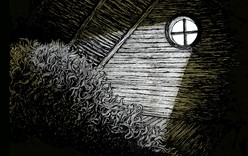
Throwback Thursday: The Handmaid’s Tale at 30

I recently discovered that all of the posts I wrote for the late, lamented B&N Science Fiction and Fantasy blog have been taken down. I’m going to repost the ones I think worth reposting.Written in early 2015, this was the second post I wrote for B&N SciFi and Fantasy — hilariously, the first was for one of Moning’s Fever novels — and I’m still very proud of it. I feels very strange reading this now, at a remove of more than a decade. My fellow citizens had yet to elect Trump — twice — and install one of the most hateful, white supremacist, eugenicist governments this country has seen since Reconstruction. (And indeed, the Roberts court is busy dismantling the Reconstruction amendments every chance they can.) Anyway, here’s some notes on a novel about a Christian nationalist government, written right before it came to pass. God save us all.

When Margaret Atwood’s The Handmaid’s Tale was first published 30 years ago, New York Times reviewer Mary McCarthy didn’t think much of it. She deemed it “readable,” that literary side-eye of yore, and said (albeit apologetically) that it “lacks imagination.” She finds the characters flat and the set-up unbelievable, and complains that it ” does not tell me what there is in our present morés that I ought to watch out for unless I want the United States of America to become a slave state something like the Republic of Gilead, whose outlines are here sketched out.”

I don’t mention this to engage in petty historical comeuppance, but to note how Atwood’s oral history of the repressive post-American country of Gilead, today considered a classic of dystopian—not to mention feminist—literature, was perceived upon publication. The society of The Handmaid’s Tale, with its theocratic enforcement of strict gender roles and reproduction, has become as recognized a metaphor as Big Brother or Soma, instantly recognizable even to people who haven’t read the book. It’s been translated into a gazillion languages and adapted as both a film and an opera(!). It hit a nerve, and continues to do so.

The tale is told from the perspective of Offred, a handmaid in the household of the Commander, one of Gilead’s architects and leaders. Due to declining white birthrates, the government has assigned women of childbearing age to infertile couples; these are the handmaids. Women’s roles are rigorously defined—wives, infertile serving women (called Marthas after the biblical story of Lazarus), disposable “unwomen.” In describing this horrific landscape, Offred is introspective and musing, her emotional responses almost muted. As she recounts in the moment her tightly prescribed movements in Gilead, she remembers, in broken, non-linear passages, the events of “before,” which is how she refers to what we would recognize as modern America.

I first read The Handmaid’s Tale at 15, and while I certainly identified with Offred, there was an edge to my feelings. There I was, at the cusp of making grownup decisions, confident no Commander was going to tell me what to do. Offred never particularly does anything: things happen to her. She’s an odd main character for a dystopia, not particularly rebellious or active. Fifteen-year-old me would have positively died for an arrow-wielding Katniss Everdeen to shoot up the place. Like Winston from 1984, her rebellions is largely in her head (or bed), though unlike Winston, hers is penned in further by her lack of writing (the manuscript we’re reading is said to be recorded on cassettes).

In order for a dystopia to be effective, it has to be plausible, but what we perceive as plausible (if not, strictly speaking, likely) changes through time. Any book set in the future becomes anachronistic as time goes by, but sometimes the futuristic novel can be eerily prescient. Every time someone interviews William Gibson, who coined the term “cyberspace” in the short story collection Burning Chrome, they hassle him for failing to foresee cell phones. By the same token, the saccharine tablets and Soviet cabbage in 1984 read as quaint, but the ever watchful eye of social media has added freight to his two-way televisions, conceived of well before the personal computer.

By my reckoning, using time cues from the novel, we should be about midway through Gilead’s early period, which is about when The Handmaid’s Tale takes place. It seems almost funny, then, to hear Offred remark that the elimination of paper money in lieu of electronic funds is one of the society’s proximal conditions. Credit is a serious problem for many, if not most Americans, though it has more to do with debt load than currency. The various nuclear and environmental disasters of pre-Gilead also feel familiar, if exaggerated. While Atwood’s California is hit with a nuclear meltdown after an earthquake—it was “nobody’s fault,” Offred deadpans—in our reality, we’ve weathered the Gulf oil spill, Katrina, even the Fukishima radiation that reached California’s shores sometime last year.

Reading it now, closer in age to the Marthas (infertile household servants) or Wives than the Handmaids, I see these women differently. In my youth, their motivations seemed theoretical, schematic: See the feminist and the anti-feminist advocate the same policies. While I’m not sure porn-burning feminists like Offred’s mom still exist, I think one needs only to read one of the thousands of op-eds about Miley Cyrus to see her spirit lives on. Serena Joy, the Commander’s wife, was a religious television star of some stripe, not unlike the reality tv stars and female politicians now who publicly advocate a world like Gilead, in sensibility if not particulars. In the book, she is an angry ghost, entrapped by a world she helped create. “How furious she must be,” Offred observes, “now that she’s been taken at her word.” All dystopias start as utopias to someone, ways of constructing society which will solve an intractable problem or eliminate some injustice. There is no random violence against women in The Handmaid’s Tale; all the violence is pointed, particular, sanctioned.

Closing the book as a teenager, I can’t remember what I thought of the epilogue, but this time around, it filled me with a demoralized resignation not dissimilar to Offred’s. The academics of post-Gilead treat her story so lightly—one-upping one another with cute literary references, cracking crude jokes—that I almost long for the earnestness of Gilead, its seriousness. I would never willingly exchange my intellectual freedom for physical safety, but in a post-9/11, post-Katrina, post-Ferguson, post-Charlie Hebdo world, I understand how willingness has little to do with it.

Are there any questions?

On the Beach: 9½ Apocalypses

I recently discovered that all of the posts I wrote for the late, lamented B&N Science Fiction and Fantasy blog have been taken down. I’m going to repost the ones I think worth reposting. This roundup was written in April of 2018, and it’s one of my favorites. What a weird idea for a listicle.

Though I’ve never lived near the ocean, I’ve had a long and personal relationship with the rocky shores of Lake Superior. Though it may not have tides, as North America’s largest body of fresh water, it has the moods and rages of an ocean: playful and quiet one day, murderous the next. My grandparents’ small beach on old Highway 61 (the same one immortalized in the Dylan song) would look entirely the same for seasons, until a brutal storm blew through, picking up a tonnage of rock and tossing it as easily as giants playing catch. The beach was the end of things, both immutable and changing at once, a punctuated equilibrium of geologic forces working themselves out on a day-to-day basis.

In the end, the changing constancy of the hard line between land and water makes a lovely metaphor for the end. Of everything. On the screen and on the page, it’s surprising to think of how many creators end their apocalypses on a beach. Here are nine (and possibly 10) novels that find themselves on the beach at the finale, starting from or working towards that rough edge.

On the Beach, by Nevil Shute
On the Beach takes place in Melbourne, the southernmost major city in Australia, maybe nine months after the Northern Hemisphere annihilated itself in a nuclear war. The deadly radiation has heretofore been kept north of the equator, but the seasonal weather patterns will change soon, dropping death like a curtain onto all of humanity huddled on the southern edge of things. The tone of this novel is strangely quiet. Various people maintain through serious delusion—a young wife with an infant, who worries over a garden that she will never see bloom; a British Navy man who persists in imagining his family alive in England—but no one much bothers them about it. Some drink; some farm; some hold to a chain of command. There’s a gentle humaneness to humanity’s last interactions, in sharp contrast with many other novels on this list.

Which is why it’s strange I found it so difficult to read: the commonplace feel of the interactions makes Schute’s end of it all feel that much more real, that much closer to my everyday, even at a 70-year remove. (One of the reasons even much older end times fictions feel timely is the stripped down technology.) When my mother was in college, during the Cuban Missile Crisis, scant years after On the Beach was published, students hung a banner that read “I’m all right, Jack,” which were words displayed on one of the beaches in this novel—a last testimony of a near-dead humanity, a nuclear age “Kilroy was here.” Oof.

Cat’s Cradle, by Kurt Vonnegut
I read most of Vonnegut in one year-long binge, so it all tends to run together in my mind. Even so, Cat’s Cradle stands out. The plot (insofar as there is one) follows the three children of Felix Hoenikker, a fictional member of the Manhattan Project, which developed the atomic bomb. In addition to shepherding in the atomic age, Hoenikker also, in his free time, engineered a scientific lark called ice-nine, a seed crystal that can convert water at room temperature to ice. The martial and apocalyptic applications of such a thing become obvious with just a moment of thought; consider dropping ice-nine in Lake Superior, or, heaven forbid, the ocean. Vonnegut’s style tends to something both funnier and bleaker than gallows humor: something like satire, but more surreal. It ends, as the world ends, on a beach, with our hapless narrator meeting up with the founder of an ironic religion and unironic Hoosiers both. Though not as explicitly anti-war as Slaughterhouse-Five, Cat’s Cradle nonetheless deals in the horrors of the arms race and technology’s inevitable devastation, right there on the edge.

Wittgenstein’s Mistress, by David Markson
While David Markson is better known as a post-modernist and philosophical writer—the title Wittgenstein’s Mistress being something of a post-modern joke, insofar as that’s a thing—this is explicitly a post-apocalyptic tale. The possibly unnamed narrator (maybe it’s Kate, but who’s to say) types Twitter-length paragraphs into a typewriter at intermittent moments. She’s living on a beach, in a beach house, in a world where all animal life, save for herself, is dead. It’s hard to say how long this has been so; long enough at least for her to circumnavigate the world, go mad, and come back to herself enough to write into the void. If you have a better background in philosophy than I (there’s a lovely introduction in some editions by David Foster Wallace, who has just that) you could find more intellectual delights in this book. Myself, I found it achingly lonely and weirdly prescient, a pseudonymous writer shouting into a faceless and possibly nonexistent void (if that’s not too much of a paradox). Who was your last follower on Twitter? Are they even real? Are you?

(Sidebar: Speaking of DFW, it’s possible Infinite Jest should be included in this list. The last line of Markson’s novel—“Someone is living on this beach”—stands as counterpoint to Wallace’s in Infinite Jest—“And when he came back to, he was flat on his back on the beach in the freezing sand, and it was raining out of a low sky, and the tide was way out.” Wallace’s novel is arguably science fictional, existing in a satirical late-capitalist corporatocracy. The nominal plot involves a video that cannot be looked away from once viewed; a lethally addictive media. You can argue amongst yourselves about the levels of post-modernism and apocalypse in these novels; what fun! Either way, be it apocalypse or not, Infinite Jest ends on that contemplative shore, watching the tides.)

The Wild Shore, by Kim Stanley Robinson
The Wild Shore is Kim Stanley Robinson’s first published novel. It is also the first in a trilogy that imagine possible futures of Orange County, California. (In this, the trilogy is like Ursula K. Le Guin’s Always Coming Home, about a people who “might be going to have lived a long, long time from now in Northern California.” I’ve always liked that complex future tense.) The Wild Shore takes place a half a century after the United States was mostly obliterated due to widespread nuclear detonations of unknown origins. The community of San Onofre is largely pastoral, though through the tutelage of local history-keeper Tom Barnard, its denizens understand something of what the country has lost. When they begin to treat with the more worldly city of San Diego, the real bildungsroman begins, following young Henry (and his fellow citizens) into childhood’s end, both societally and personally. Nobody much writes post-apocalyptic pastorals anymore, but The Wild Shore stands on a strange pivot between that lapsed genre and the later, bleaker version of ash and despair. It’s fitting that Robinson’s first novel starts on a shore, as he, more than any other science fiction writer around, is the writer of beaches: from the final, thrilling moments tumbling in the water at the end of Aurora, to the drowned city of New York 2140, his novels tend to seek out that liminal space.

Oryx and Crake, by Margaret Atwood
Oryx & Crake opens with the self-named Snowman, on a beach, surrounded by child-like primitive humans he calls Crakers. Humanity has been wiped out, replaced by these simple beings. As he hikes inland to the ruined corporate compound RejoovenEsence to forage for supplies, he meditates on how the world came to this state: peopled mostly by antediluvian innocents, except for a few, dirty scavengers who remember the world as it was, as our world, one of technology and literature. The novel moves from the beach inland, which is a notable reversal. Atwood sketches a pastoral that is anything but desirable, and walks the reader back through time to uncover how such a dubious utopia came to be. Leave it to Atwood to rip the pastoral form to pieces; the simple life is not simple at all.

The Pesthouse, by Jim Crace
The Pesthouse occupies a ruined America, half a millennia or more from when pestilence and geological and geological cataclysm toppled our technological society, and follows Margaret and Franklin through the shattered landscape, on their quest eastward to find the ocean, and there, to board a ship to some magically perfect Europe. It is in many ways the reversal of the typical American pioneer story, which heads westward to the promise of open land and new beginnings. (Which is not to say that, historically speaking, the land was either open nor the beginnings new, but this is the American Dream we’re talking about; Margaret and Franklin’s  apocalyptic quest is just as illusory.) They end on the shore after myriad trials, and there must make the choice to continue on to Solla Sollew, or turn back westward to the heart of America. As an American reader, I occasionally bridled at Crace’s use of dialect—that is not how we sound —but there are plenty of observations of the American temperament that simply could not be made by an American (Crace is British), and that I found fascinating. The beach in this one is a mirage, just there over the next hill, where all our American dreams can come true.

The Road, by Cormac McCarthy
We are introduced to the unnamed boy and father on The Road, heading toward the ocean. They’ve been living in a cabin in the wasteland the world has become; all life, down to the bacterial, appears to be dead. Their journey is a grotesque picaresque punctuated by all manner of horrors, but the dream of the sea and its redemption are forefront. The boy and his father are “the good guys.” But when they reach the sea, it’s just as dead as everything else, a slopping soup of iodine and salt. While the beach isn’t the place of salvation the two expect, it still gives the boy his next transition—maybe not precisely from boy to man, but something close and intimate, not unlike an adoption. “In the deep glens where they lived all things were older than man and they hummed of mystery,” McCarthy writes in the final lines. The image of trout in the water is a form of metonymy for the human spirit—cool and deep and hidden, less mercurial than the ocean, but just as vast.

The Forest of Hands and Teeth, by Carrie Ryan
This novel opens generations after the zombie apocalypse, in a society penned in by both the hungry dead and a rigid societal structure. It follows self-involved teen Mary on her bildungsroman, starting with her unlucky placement in her fenced society and traveling out into the wider world after the fences are breached. Mary is an intensely unlikeable protagonist, well more focused on finding the mythical ocean than on the well-being of anyone around her. She learned of the ocean from her mother, who told her fairy tales of water so vast you could never see the end. The one she finds isn’t anything she expected—less a dream than another place strewn with the dead. Her final moments on the beach have a stark, downbeat beauty, even while they lay waste to her childish dream.

The Space Between the Stars, by Anne Corlett
At the opening of The Space Between the Stars, we find Jamie Allenby shivering out the last fevers of a lethal plague that has annihilated 99.9 percent and then some of a human race far flung over dozens of inhabited planets. Jamie sets out on a journey through empty worlds,  attempting to get home to the Northumbrian coast of England, where she hopes her estranged lover still lives. The image of seaglass, tumbled smooth through the action of water and tides, wends its way through the novel, a metaphor for the grinding action of trauma and recovery on our protagonists, and everyone else left. The novel ends quite literally on a beach, alongside people quietly rock-picking their way through the end—and then on to a tentative beginning, putting together the broken pieces of the world.

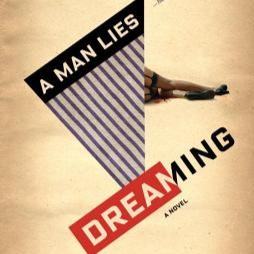
The Past is Twisted into Pulp in A Man Lies Dreaming

This review was originally posted on the Barnes & Noble SciFi & Fantasy blog on March 16, 2016. It has since been taken down, so I’m putting it back up.

Lavie Tidhar opens A Man Lies Dreaming with a familiar noir encounter: the buxom, well-heeled moll enters the downtrodden private dick’s office and hires him to find her lost sister. The detective is running from his past, one in which he let burgeoning power slip through his fingers, and the woman invokes his memories of that great mistake to needle him into accepting the job. Well, that, and the cash she casually rolls out, cash that he can’t say no to because he’s that close to the edge. His office is threadbare; the street below it is patrolled by prostitutes; he is days from eviction.

It’s 1939, and the communists have taken over Germany after the dissolution of the Reichstag. The detective is Adolf Hitler, now called Mr. Wolf, come to England after a five-year stint in a communist internment camp. The client is Isabella Rosenstein, whose sister was taken by human traffickers as she attempted to flee communist Germany. The culprits are likely old Nazi comrades of our piteous Wolf. “I do not associate with the old comrades anymore,” he tells her. “The past is the past.” But he shoulders his prodigious burden, and sets to finding the communist daughter of a Jewish industrialist.

There are echoes of the Faulkner quote in here—“The past is never dead. It’s not even past.”—and the adage is as true of the plot as it is the form. Mr. Wolf plays the flatfoot through lurid and increasingly pulpy machinations. He comes into contact with former Nazis, politicians, and filmmakers of all stripes, from the English fascist Oswald Mosley, to spy novelist Ian Fleming, to Nazi filmmaker Leni Riefenstahl. England is on the eve of an election, one that will likely see Mosley and his Blackshirts rise to power on a platform of xenophobia and isolationism. The German refugees have to go.

But a man lies dreaming throughout, a man named Shomer Aleichem, who is himself an inmate of the terribly real Auschwitz. His only chance to escape from the waiting, pointed violence of the concentration camp, is to imagine the pathetic, chaotic travails of a ruined would-be despot. Wolf lives through Shomer’s alternate history degradations while Shomer lives through Wolf’s. It’s an ouroboros of alternate history within real history within alternate history.  A Man Lies Dreaming is based on escapist fiction, and the man in the concentration camp is most in need of escape. They invoke one another.

Shomer is based on a Yiddish pulp writer—Fiddler on the Roof is based on a series of his novels—who wrote shund: popular, somewhat trashy novels at the turn of the 20th century. The necessity, or maybe more correctly, the inevitability of trash literature concerned with serious subjects is an unspoken theme in much of Tidhar’s work. Theodore Adorno once famously declared that, “To write poetry after Auschwitz is barbaric.” But can we write the barbaric, the comic, and the ironic? When my grandfather told stories of the war, they felt like riddles, with ironic, unfunny punchlines that had me laughing for no reason I could discern. Did I tell you the one time I almost ran the wrong way past enemy lines and into my inevitable death? It wasn’t funny, but, as the saying goes, if you don’t laugh, you cry.

A Man Lies Dreaming is brutally funny, the kind of thing that makes you squirm. The standard for Holocaust novels is seriousness, reverence. Tidhar stomps on all that with big ol’ lace-up boots, the kind you’ll find on the dominatrix antagonist from ’70s Nazi exploitation film. So many people have tried to pick apart Hitler, divine his motivations and sick predilections. In this book, we find chunks of his diary, filled with petty grousing and casual hatreds, interspersed with escalating violence and criminality. It’s the most savage irony, to see a man who based an entire genocide on his twisted notions of inborn criminality bereft of his sick principles, not to mention the power and position to play them out. He’s the foreigner that the rising fascist party in England wants to expel.

A Man Lies Dreaming is a vital, brilliant novel, almost assaultive in its pulp ornament. You have to account for the shund, for the popular and disposable, in a story predicated on the Modern era’s greatest calamity.

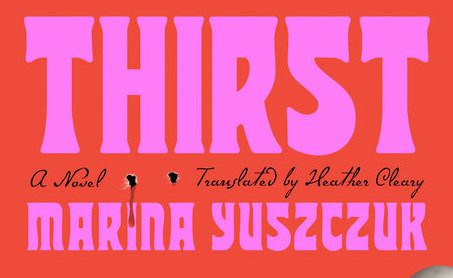
Book Review: Thirst Marina Yuszczuk

At some point during my time on Goodreads, I created a shelf called “tragic hair-brushing” for a certain kind of Gothic novel, the kind that likely has a sylph-like female character who haunts her habitation wearing diaphanous dresses. The first book to go on the list was Flowers in the Attic. I’m making a little fun, but also I love this so much; it’s an affectionate teasing. Thirst by Marina Yuszczuk is definitely a tragic hair-brushing book. 

The opening epigraph is a quote from The Bloody Countess: The Atrocities of Erzsebet Báthory by the surrealist poet Valentine Penrose, which details the depredations of Báthory not so much academically as emotionally. The old saw goes that a novel teaches you how to read it, and this epigraph definitely points to a rubric more psychosexual than historical. I’m a big believer that Gothic runs on vibes much more than other genres, so this is an auspicious opening.

Thirst almost feels like two novellas, both first-person accounts. The first is the story of our sylph-like vampire which begins with her origins in Europe somewhere and continues through to her emigration to Argentina and several decades of her life in Buenos Aires. This part of the story is very classic Gothic fiction, and the (largely) 19th century setting is complimented by prose that echoes contemporary Gothic stories.

There’s a long sequence during the last of the Yellow fever outbreaks that decimated Buenos Aires in 1971, which does an excellent job of invoking the stinking miasma of a city with no sanitation infrastructure and growing stacks of corpses who died vomiting black blood. I sort of apologize for the gooeyness of that description, but also if you don’t like that, you won’t like this book. Like many stories about the immortal, the vampire grows increasingly disconnected with a modernizing society, and she taps out of history in the early 20th century, retreating to a silk-lined coffin. Her hair, of course, continues to grow.

The second novella is set in contemporary Buenos Aires, and is also first person. Our narrator is classic sandwich generation. Her son is older than a toddler but not quite school age, which I know from experience is a time in your child’s life that feels very precarious: they’re capable enough to run out into the street, but not mature enough not to. Her mother is dying of something wasting — ALS, maybe, or MS — and I felt it in my bones the way each visit is also the last time her mother could do something basic like sit up, or talk, or smile, the way degenerative diseases close the doors on your agency until you are locked into a single, soundless space.

Our narrator’s dying mother gives her the key to the vampire’s mausoleum, handed down through the generations from one of the vampire’s familiars, for lack of a better word. But time has stripped the key of its meaning, so she ends up loosing the vampire without the understanding of what she’s doing. The vampire circles her for weeks, always just there, at the corner of the eye. Their relationship ends up being a strange, glancing, visceral thing, as quiet as her mother’s dying but also as furious.

I’m not sure I fully understand the ending, though I suspect that’s more that I finished reading today and haven’t had the requisite time to ruminate on the narrative as a whole. There’s a retrospective quality of both stories that makes me hungry for the parts of the story not told, the continuations and explications. It is fitting, in a way, for a novel called Thirst that the reader is never quite sated. 

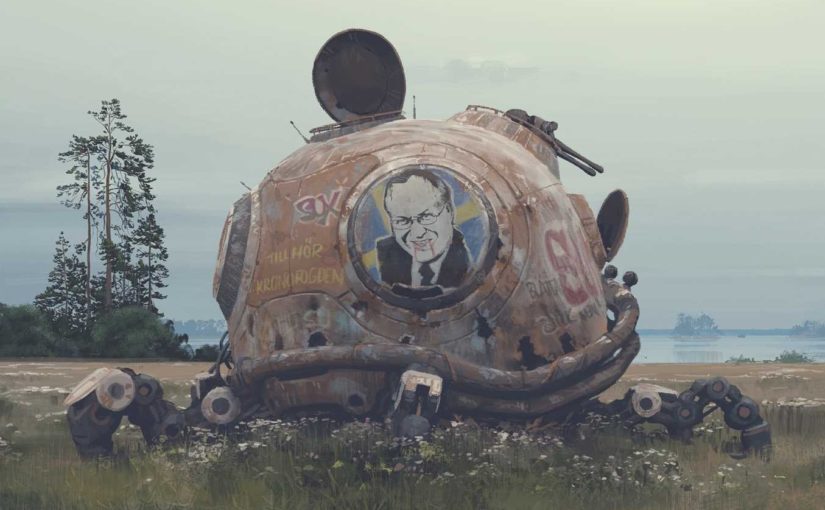
Sunset at Zero Point by Simon Stålenhag

I wish I could remember what exactly turned me onto the work of Simon Stålenhag, but when I did, I fell instantly and completely in love. I began with Tales from the Loop, the first in a loose trilogy, which is a lovely, grieving exploration of civic memory and imperfect nostalgia. The stories — more anecdotes really — are told in the vein of an oral history from the perspective of children who grew up around the titular Loop, a CERN-like installation on an island in Sweden. The text is interspersed with photorealistic painting of landscapes, often with something uncanny to skew the perspective: kids playing with a robot in a rye field, or a parking lot with an 80s Honda and a decaying industrial structure of some kind off in the distance. The technological marvels of the Loop are impossible for the reader to ignore, but to the kids in the stories, they’re just the backdrop of a childhood.

The stories are all ostensibly about the effects of the Loop’s occult science, but they include glancing details about the experience of childhood in ways that demonstrate the complexities of growing up. For example, there’s one story about a gadget that the speaker’s father brought home and what it did, but the anecdote opens with the father throwing his wedding ring into the yard due to a fight with his mother. It’s clear they eventually divorce. The emotional upheaval of living though one’s parents’ divorce ends up being submerged, a contrapuntal narrative that is just there, under the surface. Any story of one’s childhood carries this emotional substrate, a quantum foam of memory.

Tales from the Loop is shot through with nostalgia, but it’s not always a good nostalgia. This strange sense of bad nostalgia is the hook to Stålenhag’s work, for me. Nostalgia is often a perfecting emotion, stripping out the chaos and discomfort of one’s inchoate self and leaving a gauzy, indistinct sense of wonder. Stålenhag somehow somehow creates a reverie of childhood that captures both the awe and disquiet of growing up. And as the trilogy goes on, the disquiet deepens. By The Electric State, the sense of melancholy and grief is almost overwhelming, as our main character road trips across an apocalyptic America. (The less said about the execrable Netflix adaptation, the better.) Stålenhag’s books are beautiful and terrible, awesome and awful, in a quietly humane way.

Which brings me, somewhat long-windedly, to Sunset at Zero Point. Like Tales from the Loop or its darker sequel, Things from the Flood, the setting is a rural Swedish island community living in the strange gravity of cataclysmic scientific experimentation. Here, the test firing of a weapon prototype in the early 90s ended in almost Tunguska-level devastation. Something about the weapon rendered the affected landscape strange and often treacherous, and the area was sequestered into an exclusion zone. (Jeff VanderMeer’s Area X isn’t a bad analogy, though the vibes are different.) Also like Tales from the Loop trilogy, the perspective is from an adult looking back at their childhood.

But Sunset at Zero Point is considerably more intimate and personal. Both Tales from the Loop and Things from the Flood have almost collective narrators, as befits an oral history, and there’s no single narrative arc. (Which is probably why Tales from the Loop worked so well when adapted to an anthology series. I found that adaptation quietly lovely; it almost reverently recreated Stålenhag’s aesthetic.) The Electric State tightens its perspective to a pair of siblings, but the canvas is enormous, as is the cataclysm going on in the background. Sunset at Zero Point tightens the focus to two boys growing up together into young adults, but the story almost never leaves their hometown. It’s intimate in other ways: Sunset at Zero Point is a profoundly affecting queer coming of age and love story. I just about jumped out of my skin at that conclusion.

The narrative voice in Sunset at Zero Point is the form of second person that nonetheless has an I narrator: the now adult Linus addressing his childhood friend Valter. The perspective shifts from their adolescence to the now, and it’s sometimes all jumbled up, the way memories of someone you’ve known forever sometimes fuse and shift. Was this the time we went to the cabin and saw the northern lights, or the time when the spring peepers sang all night and kept us up? This puts the reader right in the middle of their relationship in so many ways, draws you in. The painting are quieter than some of his earlier works too; The Electric State, especially. You recognize the boys in most of them, something that is also unusual for Stålenhag’s landscapes. Typically his people are dwarfed by their surroundings, turned away so they’re almost faceless.

Now, I read an ARC, so I’m going to have to check against the published text — and I will be getting a paper copy the second it’s out — but there are two points in the story when the text gets all jumbled up, when events appear to happen out of order. The first time I encountered it, I assumed it was a formatting gaffe. You see this sometimes in advance copies, and you assume it’ll be cleaned up before the book goes to press. But the second time I encountered it, there had been some key exposition about the strange physics of the exclusion zone. Without getting too far into it, Valter describes the exclusion zone as a “non-Euclidean landscape”, a place where time and space have been fractured and out of joint. Straight lines don’t go straight; distance squiggles.

Which is what is happening in the recounting of those two moments: emotion bends memory on non-linear paths. Both moments are emotionally intense, key pivots in the boys’ relationship. By disordering the recounting of those events, Stålenhag forces the reader to go back and close read those moments over and over to understand what happened. This is fucking brilliant. You’re already deep in the relationship between the boys, and now, like Linus, you’re scrying the viscera of their relationship to put things into some kind of order, to make it make sense. This is just a perfect invocation of that sense of of spiraling that sometimes happens after emotionally devastating moments. If I can just put this in the right order, it’ll be alright.

I finished reading and floated around the house in a pleasant sense of ecstatic despair. I’ve felt this hard to define emotion after some of my favorite novels: The Age of Miracles by Karen Thompson Walker, The Mad Scientist’s Daughter by Cassandra Rose Clarke, or Composite Creatures by Caroline Hardaker. There’s something about stories of domestic upheaval foregrounded by intrusive technology that just utterly get to me. Sunset at Zero Point has everything that makes me freak out so hard about Stålenhag’s oeuvre: the lappingly memoirish sense of a place, of a community. But it’s so much more personal that his other works. I almost used the word smaller, but I think think that can have negative connotations. But it is smaller: the kind of intense relationship between two people that nevertheless encompasses the world.

I received a review copy from Netgalley and Saga Press. Sunset at Zero Point is out Dec 9, 2025.

Review: Storm Echo by Nalini Singh

Just recently, I learned there was a Psy-Changeling book by Nalini Singh — and another one coming this summer — that I hadn’t read. I tell you, I checked that shit out of the library with a swiftness. Coming off the high of Last Guard — which addressed some of my key criticisms of this series, on a meta level — I was hoping Storm Echo would sustain that peak. And while Singh does address some of my issues in this novel, the whole situation felt somewhat tired, like she was just going through the motions a bit. Singh has made use of this exact situation — uptight character, often Psy, faces inevitable death, until someone with a zest for life fucks them out of it — in more than a couple books in this series, e.g. Shield of Winter, Ocean Light. Also, the main characters met at some point in the past, forged an instant connection in some horrific trauma, and then lost each other again, e.g. Heart of Obsidian, Last Guard.

And look, I get it. Even with opening another island, so to speak, when Singh branched out to the Mercant family and the wolf and bear clans in Moscow, she’s written 20-odd full ass novels and myriad novellas, short stories, and epilogues set in this world. Recycling is inevitable, especially with the sort of themes Singh seems drawn to over and again, such as recovery from horrific trauma, both physical and psychic, and acceptance of the imperfectly healed self as worthy of both love and acceptance. Themes which are the reason I keep coming back, I might add, especially when paired with her focus on simple, physical pleasures like the heat of a cup of tea, or the soft fit of clothes that make you feel good to wear. Maybe that’s a weird thing to say, but I just love that beautiful life philosophy mixed with an unflinching acknowledgement that shit’s sometimes fucked.

We’ve seen Ivan Mercant before, most notably in Silver Silence and Last Guard, which both focus on members of the Mercant family, all of whom are the grandchildren of Ena Mercant. Silver is the heir apparent; Arwen is the clothes-horsey gay; Canto is the grouchy disabled guy; and Ivan is the assassin, question mark? Sometime just before the fall of Silence — notably, when the Psy were going nutso and murder-spreeing due to rot in the PsyNet — Ivan was training at some lunatic survivalist center run by wolf Changelings, when he ran across a woman called Leilei (a nickname for Soleil) in the woods. He’s all messed up from the insane training, and because she is a Changeling healer, she orders him to sit down and let her patch him up. He’s clearly smitten from the first, but doesn’t exactly understand what motivates him to keep seeking her out. They enact a quietly adorable courtship until some massively bad shit goes down, and he loses track of her. Most of the novel then catches up to them seven or so years later. Also some bullshit with the Scarabs is happening, but I’ll address that later.

Now, usually, I am not that into characters who fall into insta-love, but don’t know they’ve fallen into insta-love; what are these feelings I’m feeling; what agony; &c. But somehow it worked for me here. It’s funny to think of those early Psy-Changeling books and how clumsy and bizarre some of those courtships were — Lucas Hunter was a straight up stalker, for example — and compare it to the fragile, tenuous connection Ivan and Soleil forge in Storm Echo. Singh doesn’t put too much weight on their connection at first, but lets it build slowly as they circle closer and closer to one another. It’s aching. Frankly, I haven’t ever thought of Singh as adept at pining before — there’s usually at least one of a pairing who’s a big dumb dominant who’s going to big dumb dominate the other — but Storm Echo shows she’s added it to her repertoire. (Or maybe expanded it? You could probably argue that Aden and Zaira from Shards of Hope have some successful pining too.) After their meet-cute and nascent courtship, Soleil is grievously and almost mortally injured in one of those Psy attacks that were happening when the PsyNet was rotting. Because of some football-hiding, Ivan didn’t know her legal name, and assumed she didn’t come to meet him because she just wasn’t that into him. When he learns about the attack, he tries to track her down, but in the ensuing chaos, a lot of records were incomplete or lost.

Which brings me to something I love to see in Psy-Changeling novels: a shitty predatory Changeling pack. Soleil is part of the SkyElm pack, which was originally run by her asshole of a grandfather. He was mad her mom ran off with a human, and only accepted Soleil back into SkyElm when her parents were killed in a car accident. Despite Soleil being a healer — which is a structurally important part of the pack — her grandfather was a huge dick to her, a cruelty which is continued by Monroe, the pack alpha after her grandfather. After the Psy massacre — which only Monroe, Soleil, and a handful of other pack members survive — Monroe throws her out of the pack. Not long after this, Monroe makes the strategically fatal blunder of fucking around with Lucas Hunter, leader of DarkRiver and all around badass, after which he fatally finds out. The remaining SkyElm members are folded into DarkRiver, but because Soleil was packless and drifting, she doesn’t know that they’re still alive. She thinks Hunter has killed them all.

I’ve said this before, but I’m going to hum a few bars because I believe it: Both mate-bonding and pack-bonding are emotional mechanisms which often cast Changelings as incapable of hurting children or bullying others, which can make them hard to relate to and more than a little high-handed. One could argue — and I have — the duality of the Psy and Changelings coming together is the ultimate thrust of the series: the Psy, who are all too capable of horrific abuse and sociopathy must learn from the Changelings, who are almost constitutionally incapable of it. Packs like SkyElm show us Changelings can be just a venal, small-minded, and racist as the rest of us fumblers. For instance, Soleil’s grandfather limited the pack to ocelot Changelings only, something Monroe continued, which lead to structural insufficiency, i.e. not enough dominants. I think this explanation is kind of garbage, but this is explicitly the in-world argument for why SkyElm sucked and got itself wiped out of existence: there weren’t enough cop-types around when shit went down, so everyone got murdered.

I have some trouble with this, a little because it allows DarkRiver to get up on a high horse and ride around on it foreverrrr, and a lot because ultimately SkyElm didn’t get all murdered because of bad leadership, but because a bunch of Psy randomly started killing folk. The outbreak of Psy violence and its horrific effects were not natural consequences of SkyElm’s bad leadership, except obliquely. Be that as it may, I still appreciate examples of the benevolent Changelings not being so benevolent. The trajectory of much of the book is about both Soleil and Ivan — who have been loners either by choice or circumstance for much of their adult lives — coming to accept the love and affection of their families — found or otherwise. I continue to enjoy how the Mercants kept an emotional core to their family, even under Silence, and I completely loved how Ivan was folded into the Mercant family after the death of his mother. (There’s a spoiler here involving his mother’s parentage, so I’m not going to get into it, but suffice it to say: Ena Mercant is a GOAT.)

I found Ivan’s backstory particularly moving, partially because I don’t feel like Singh has been especially kind to addicts in this series. I recently reread Caressed by Ice, which is only the third in the series, and the sneering dismissal of addicts as “weak” really stood out for me. Ivan’s mother was a hot mess and did unforgivable things — such as taking the Psy drug Jax why she was pregnant — but she is afforded a little compassion and understanding, even if it goes almost completely unsaid. Many, many of the Psy protagonists in this series are subject to just horrific abuse, either by parents or people acting in loco parentis. Ivan certainly suffered under his mother’s indifferent care. I even think the way Singh shows how the good times — when Ivan’s mom is on a good high and telling tales about how they’re going to live in a nice apartment and she’s going to have a job, etc — are sometimes worse than the hungry, dark moments, because it’s the hope that gets you.

Eventually, we learn who Ivan’s mother’s mother is, and, while it’s never dramatized, that had to have been a truly traumatic childhood. I think we can understand why she decided to check out, even if obviously that’s not a great thing to do, and with a child, worse. I’m not entirely sanguine about Ivan deciding not to extra-judicially murder dealers because it makes Soleil have a sad, because he shouldn’t have been extra-judicially murdering dealers in the first place, but baby steps on accepting that addiction is an illness, and literally, by definition, outside of someone’s control. So. The things I enjoyed about Storm Echo ended up being more meta than specific, more about the texture of the world than this specific pairing. Both Ivan and Soleil are a little basic, with basic problems. And you know what? I’m mostly fine with it. With a series this long, I’m ok with installments that just edge the mythology forward.

Which reminds me! I was going to talk about the Scarabs. The Scarabs, and the Scarab Queen (or Architect) have been the antagonist for most, if not all, of the Psy-Changeling Trinity books (which is kind of Psy-Changeling, Season 2, starting at the fall of Silence.) Tbh, none of the Scarab mythology has interested me at all, so I have only the most tenuous grasp on what even is going on. Maybe some Psy have their powers go nuts and then their heads explode? I have zero idea why they’re even called Scarabs. This evolving mythology gets a lot of page time in Storm Echo, enough that it made me want to either wiki wtf is happening, or figure out the last book with a major mythology dump and reread. I’m definitely going to reread Last Guard, because I know I freaking loved that one, and I never wrote about it at all. If I measured success solely by how engaged I am with a series, all other considerations be damned, Psy-Changeling is crazy successful. It’s a decent metric in the end, because I love how into this series I am, and I love how Singh just keeps sinking the hook, again and again.

The Cold Commands by Richard K. Morgan

I reviewed this ages ago, but have just gotten around to re-posting.

If what you feel has been missing from your average Tolkien-clone is hot, gay sex, then this is the book for you.

No, j/k, I’m being immature, and I’ve never been one to let a one-liner lie. What I have been missing from your average Tolkien-clone is hot, gay sex. While I love Tolkien, his far-reaching over-shadowing influence on later fantasists results in an awful lot of heraldic bullshit and courtly fol-de-rol, with wide-eyed teenage boys who are Ken-like from the waist down pining for perfect gfs and bloodlessly questing for the Sparkly McGuffin. Oh, the Sparkly McGuffin! Forged in the fires of Mount Plot by the Great Evil Tautology!

Richard K. Morgan strides in with his great swinging dick – I mean dirk – and knocks all this stuff over. Smash! Smash! Wheee! This sounds like it could be a lot of fun – and there certainly is fun to be had – but as Morgan’s first foray into fantasy, he seems to fall into some common fantasy traps. The world building is painfully slow, clearly designed to be nuanced enough to cover another couple of books, but I wonder how much of this could have been contracted or excised completely. (I can’t believe I’m bitching about nuance.) The names are all annoyingly polysyllabic and oddly similar, meaning lazy readers such as myself are often confused and lost. I get why people in fantasy can’t be named “Steve” and “Bob,” but the names seemed tin-earish. (Also, why does everything have to start with a G or a K? What is it about these letters that says “sword and sorcery” to English speakers? C’mon, linguists, I need to know.)

At about halfway, I was ready to give up, so I came on bookface and got a little pep-talk from Mike’s review — unfortunately no longer extant —  which reminded me why I tend to dig Morgan’s stuff: the snarling misanthropy, the unbelievably brutal violence that is neither precious nor glorified, the biting political invective. The later half of the book rapidly picks up steam; the almost tedious details of the earlier half of the novel coalescing into textured history – and one that doesn’t feel the need to name every damn rock and twig in remembrance of some heroic act a millennium ago, but one that has a dirty, lived-in feel. All the f-bombs, drug use, whores – and believe me, I’m sick to death of authors using whores to make their fantasy worlds seem “real” – mesh convincingly into a world that values character over genre conventions. I actually lol’d when, late in the novel, one of the principles meets with what is functionally an elf princess, the sister of his new lover, and they have one of those standard heraldic-I-can’t-really-speak-your-language meet-cutes full of ye gads forthwith forsooths, at the end of which she says, “Fuck with my brother, and I’ll kill you” in roughly that phrasing. Ha! Good times.

And did I mention the gay sex? Mostly, I think sex scenes in non-romance novels fail because they do not do work to push the narrative along. (Romance novels tend to understand the importance of the physical mirroring the emotional.) Like Morgan’s fight scenes, the sex is embodied and explicit, and discomforting to read. The protagonist’s homosexuality isn’t something pasted on, theoretical, but a fledged desire. Morgan’s got himself some running themes about how the powers that be build an artifice of morality that they hide behind, using your “sins” – the ones they created for you – as a lever to make you perpetrate real crimes, institutional crimes like war, the kind of crimes you never really come back from. There’s a running gag where characters ask one another “Have you ever killed a child?” Invariably, the answer was, “I was in the war, wasn’t I?” It would almost be funny, if it weren’t so damn sad, that a lot of reviews I’ve read (here and elsewhere) spill more ink about the man-on-man-elf action than they do about the explicit horror of the violence – the thing with the heads in the third act I’m not going to be able to scrub out for a while – and I think this is Morgan’s point. An institutional morality that justifies war while squealing like a bunch of faux-prissy voyeurs over a private, consensual act creates institutions, and moralities, that I find distasteful, to say the least.

Burn it, burn it all, might be Morgan’s take-home message, one that I’m not comfortable with either, but one for which I have no easy retort. Morgan explicitly takes on the “consider the children” argument and tears it to shreds. I’ve often joked about finding nihilism sexy, but it’s mostly because I’m afraid of it, and desire and danger like to hold hands and skip together. I wasn’t sure I wanted to continue reading this trilogy – and Morgan earns my respect for tying this one off in a way that I could end it here – but in writing my review, I’ve talked myself into it. The dark lord is rising. Let’s see what he does next.

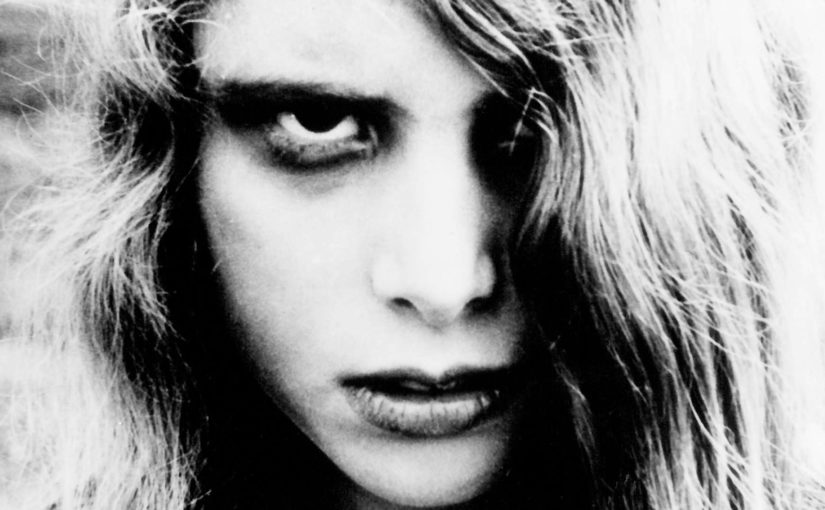
Book review: Love, Lust and Zombies

I’ve been doing a crap job of keeping up with ye olde blogge. Some of it is the way the pandemic screwed up my reading, sending me straight to historical romance and lighter fantasy. Fantasy I could have probably pulled out some bullshitting about: it’s close enough to my wheelhouse, if not in it entirely. Romance, less so. I don’t want to be that dilettante dabbler in a genre talking out my ass, like every Valentine’s Day column of “romantic books which aren’t romance novels because cooties” which includes motherfucking Lolita. I’m better versed now, but, judging from how often I’m out of step with other readers when I check bookface reviews, I just don’t want the grief. Sometimes reading for pleasure is just that, and I’m not going to assign myself homework out of some misbegotten sense of staying current or whatever.

That said, I’ve recently been sidling back up to my old love, horror fiction, specifically zombie fiction. I reread both Severance by Ling Ma and Zone One by Colson Whitehead. They both only get better with a reread. They’re both the kind of lapping retrospective memoirishly close-third-person which doesn’t tell their stories linear-like, so during a second pass (or third), you already have the shape of things, and can really marinate on the details.

Like my experience with rereading World War Z at the beginning of the pandemic, it was kind of alarming how prescient they were, Severance especially. Also because I’d reread Severance after watching the series of the same name (no relation), I definitely took home some millennial ruminating about the nature of work that, while I’d noticed it before, became much more foregrounded this time. Even the indefatigable Mark Spitz from Zone One, whose musings cover that storied island, New York City, more than the workaday, presses his attention to the nature of work:

Hard to believe that reconstruction had progressed so far that clock-watching had returned, the slacker’s code, the concept of weekend. It had been a humdrum couple of days, reaffirming his belief in reincarnation: everything was so boring that this could not be the first time he’d experienced it.

Colson Whitehead, Zone One

Then I started reading an anthology of zombie short stories called Zombies! Tales of the Walking Dead edited by one Stephen Jones. (Not, as I’d mistakenly thought, Stephen Graham Jones, who is a very different writer.) After reading the introduction, I was afeared Zombies! was going to be a snore-fest. I was initially rebuked by a rollicking short story by Clive Barker called “Sex, Death and Starshine”, which was both sick and delightful. But then as I trudged on, my initial fears came true. Zombies! takes a kitchen sink approach to inclusion in the collection.

While this can be sort of fun for the completist — hey I didn’t know Edgar Allan Poe wrote a zombie-ish story! called “The Facts in the Case of M. Valdemar” — so many of the stories I encountered were dated, clumsy, or only peripherally about zombies, more in the vein of cosmic horror than the living dead. (Look, I get that arguing genre is a losing game, so I’m not going to do it, but things are about what they are about, and not other things, and cosmic horror has decidedly different concerns.) Anyway, I’ll probably hack my way through this eventually, as a completist, but it’ll be homework and not any fun.

Which brings me rather long-windedly to Love, Lust and Zombies, edited by Mitzi Szereto. I was poking around in the library catalog because I was looking for this book I know is about a thinking zombie, but couldn’t remember the name of. (It ended up being Dust by Joan Frances Turner, fyi.) My ears perked up when I saw Szereto’s name. She’s the author of The Wilde Passions of Dorian Gray, which I read a while back when I was into a bunch of literary monster mash-ups and continuations. Most of the continuations I read were kind of ok to fucking bad, but Szereto’s take on Oscar Wilde’s only novel was actually inspired. Wilde Passions is a catalog of the literary erotic, running from the Belle Epoch’s class warfare to Thomas Mann’s monastery to Anne Rice’s New Orleans, and while I don’t think it works, entirely, it’s definitely some of the most thoughtful sex writing I’ve seen in the genre.

Now, I’ve said this more than a couple times, but: my sister’s quip about vampire fiction is that “vampires are high-functioning zombies.” Which, if you read any vampire romance, feels accurate. There’s a lot of breathless description of cold, white flesh out there in vampire romance, about the intractability and immutability of the body of the immortal lover. On some level, I think this invokes deep-structure cultural ideas about the incorruptibility of sainthood. Flesh and spirit are one, and both flesh and spirit are perfectly and eternally static. Or to put it crudely, these vampiric love stories are literally about banging Jesus, the original risen dead man. Drink of my blood, eat of my flesh, &c.

After the success of Twilight and roughly one million iterations, it wasn’t a huge surprise when urban fantasy and paranormal romance trained its libido on angels and devils, beings who make this theological passion explicit. (Lest we not forget, the word passion can refer to the suffering and death of Jesus, not only sexual passion.) Since then, paranormal romance has taken on all manner of unsexy beasts, everything from ghosts to orcs to dinosaurs, but largely writers stay away from the humble zombie as a source of pants feelings. I think this is a notable lacuna — the lack of sex writing about zombies even in the gleeful perversity of monsterotica — and indicates something intractably unsexy about the walking dead, both metaphorically and physically.

I can think of two novels which attempt a romance between a living person and a zombie: Warm Bodies and Dearly, Departed. Warm Bodies ended up setting my back with its incorrect reading of Romeo & Juliet –and look I know I’m supposed to pretend that there aren’t incorrect readings, but I have something of A Thing about R&J, and I cannot listen to reason — but it’s decent, if a little dippy. Dearly, Departed is messy — it’s clearly a first novel — but it’s energetic and exuberant, which counts for a lot in my book. Obviously this worked for other people, but I could not get over the thought of these heroines making out with a decaying or desiccated corpse. And, to be fair, the courtship between the living girl and undead soldier in Dearly, Departed takes place through a wall, Paramus and Thisbe style, and is honestly emotionally affecting. Ultimately, neither novel really addresses sex anyway, maybe because of their YA designation, maybe because it’s too gross to contemplate. Which is why Love, Lust and Zombies is so fascinating: it’s dealing with sex and zombies head on.

While I joked earlier about vampires just being high-functioning zombies, that’s not actually the case, either metaphorically or practically. A zombie is characterized by its degradation, by its lack of personality and agency. By contrast, vampires are defined by the very opposite. They may both be undead, but the vampire is incorruptible, while the zombie corrupts everything it can get its teeth into. And while the rotting flesh angle may be a hard bar to clear when sex writing about zombies, the lack of agency makes actual zombie romance doubly difficult to pull off. Appetite is appetite, sure, but its tough to build sexual tension when at least one of the lovers is mindless carrion. I can think of a couple movies which feature the living fucking the dead, and it’s never the good guys wetting their wicks.

So. I checked out Love, Lust and Zombies with a swiftness, because all of this is in my wheelhouse, and hard. I’m not going to get up and ride my hobby horse about zombies, violence and domesticity just yet, but let it be read into the record that an anthology of short fiction which involves conflating the little death with the big one is right up my godamn alley. I read through the forward by Mark Onspaugh, which is good, trotting around both art history and psychology which manages a breezy profundity — no mean feat — and Szereto’s introduction, which is less good, more cringe-y Boomer joking than anything.

Without further ado, to the individual stories.

“Vanilla” by Janice Eidus

My first reaction was that I hated this fucking story, which seems to enact a bunch of stupid romance tropes in a way I find distasteful. But with some thought, it might actually be subverting said stupid romance tropes, so maybe I don’t hate its guts. A young woman who works as a librarian and characterizes herself as “vanilla” sexually falls into a relationship with a man who is surely the walking dead. He comes into the library and orders her around like an alphole, which makes her wet and compliant. By the end he announces “Vanilla is my favorite flavor” and she understands “that once he licks my vanilla clean, I will be a librarian no more”.

The librarian is a cliché romance profession, and our heroine’s protestations of vanillaness are entirely a doth protest too much situation. While it may be culturally common, I think the sexualization of dead flesh which one finds all over vampire romance is pretty freaking kinky. “Vanilla” taking that one step further and making the love interest a straight up zombie might be a cool commentary, but then it might just be an accident. Just structurally, this fetishization of dead flesh is almost inevitable when zombies and sex writing collide, and it’ll show up in a number of other stories in this anthology. Honestly, I can’t tell from the prose, which seems kinda weak, tbh. Shrug emoticon.

“In the Red Light” by A. M. Hartnett

The set-up is kind of like Romero’s third zombie movie, Day of the Dead, in which mad scientists and military personnel ‘speriment on some zombies to try to reawaken their humanity or whatever. There’s a mad scientist, a lady soldier, and a zombie called Bub. Being Romero, the zombie called Bud is basically the only character with identifiable human emotions in the whole mess; humans are the real monsters, &c. The zombie in this story is more fully cognizant than Bub, and considerably less decayed: He was a death row inmate bitten when the prison warden released the undead into the prison. There’s some kind of chip in his head to keep him from zombiing out. The lady scientist (this time a shrink) is tasked with seeing to his mental state when they’re not hacking him open to see how his guts work.

There is potentially a lot here to unpack in this scenario about the treatment of institutionalized people, how they are dehumanized by systems which see them as resources, not persons. Alas, I don’t think any of that was more than cursorily touched on. I doubly don’t think the writer fully considered the consent issues involving a therapist sleeping with someone who is both her incarcerated patient and an experimental subject. The writer avoids the usual consent problems with zombies by making the zombie fully cognizant of himself, then screws that all up by having a therapist bang her patient. Like, I get that in the zombie apocalypse, probably there’s no board to revoke her license and/or bring her up on charges, but that crosses alllll kinds of ethical lines. Not great, Bob.

“Smile” by Laura Huntley

Honestly, I don’t even get it. A young woman in the zombie apocalypse goes rambling around outside every day instead of staying holed up with other survivors. She thinks they’re a bunch of emotionally stunted losers. She’s sad she lost a sister, finds a hot zombie dude at the park who lost a daughter. They bang it out. He smiles. I think I’m supposed to take home some message about how living isn’t just surviving or somesuch, but it’s not particularly well drawn. I also have serious questions about zombie physiology, specifically how they get boners and ejaculate. It’s fine though, just a situation and not really a story. That can be ok too.

“Dead from the Waist Down” by August Kent

This one does address the boner issue! Thank the Lord. This story is kind of goofy and cute, set in a sort of monster high school attended by ghosts, zombies, vampires, harpies, and whatnot. Our zombie protagonist, Nicholas, has been pining for a vamp girl called Dani. Vamps appear to be the top of the heap, socially speaking, so Nicholas is dragged by other vamps for even looking her way. Dani is a MPDG though, so they get together at a party sort of. He’s not actually capable of getting it up, but she’s unfazed, and eventually announces to the party that they’re dating. Pretty cute little scenario, and I laughed every time the zombie narrator slagged harpies for no apparent reason. Good stuff.

“Sweeter Than to Wake” by Thana Niveau

Another strangely sweet one. A man takes his bitten, frozen wife and removes all of her internal organs, sews her mouth shut, and embalms her. Zombies (or the Woken, as they are styled here) break down just like any dead body, and he’s trying to draw out their last days together as long as he can. I’m not going to spoil the ending, but this is easily the most heartfelt, poetic, and romantic conclusion to any story in this collection. This is one of a number of stories in this collection which deal with couples where one is a zombie and one isn’t, which is probably the most emotionally fruitful scenario involving Romero-style or post-Romero zombies.

“The Wild Ones” by Erin O’Riordan

Oddball little story about a love triangle of sorts playing out in an enclave of living humans protected from the undead by a bunch of ghosts. The main pair is the community leader and her wife. The community leader wants the wife to have a baby with another survivor called Steven, so they can give hope to a demoralized and dejected community. This one felt like the kind of situation where the world-building took a back seat to the interpersonal scenario, because I have close to zero understanding of how anything works in this world, especially i/r/t ghosts. Maybe there was something there about living for the memory of the dead or something, but it wasn’t clear.

“So You Want to Date a Zombie” by Shane Vaughn

Repellent story about an unlikable asshole who goes on a dating show, and ends up getting paired with an old girlfriend, only she’s undead this time. Either misogynist or so jaundiced that I’m misreading a hatred for humanity for a hatred of women.

“Still” by Delilah Devlin

Another husband and wife trying to navigate what happens when one becomes a zombie and the other doesn’t. Felt like real emotional stakes and a legitimate dilemma. The way the couple had to evade the authorities because the husband was zombifying also felt like maybe you could read the couple as LGBT or other identities who can sometimes “pass”, but I admit it’s something of a stretch.

“The Dying Time” by E.C. Myers

Probably the stand out of the collection, as it is utterly unlike any of the other stories, its own little sealed world of strange magic. A loner blows into town just as they are are battening down for a kind of winter. He develops a tendre for the town sex worker, which she numbly thinks is naïve, sweet, and stupid as hell. This might sound bitcher than I mean it, but: This is maybe the only story in this collection which fully uses the stiletto sharpness of a short story. We are given just enough to think we understand both the world and characters: insular town, drifter, town whore. Then the very end of the story rearranges how we understand everything: world, plot, and character. It’s deftly done, almost like a fairy tale, the Grimm kind, where folk die and live on a whim, and the moral of the story is survival.

“My Zombie, My Lover” by Mitzi Szereto

I’ve generally found it to be true that if an editor contributes fiction to a collection they are editing, the story is going to be not great, and that’s the case here. The narrator lives a solitary existence in the Appalachian hills. She has a distasteful tendency to sneer at the community around her. Someone starts breaking into her house and eating her leftovers; it’s a zombie; they bang. It’s a situation, not a story, which is fine, but it’s not an interesting situation, which is not.

“Come Back to Me” by Chantal Noordeloos

Another real standout, just deeply alarming. This story deals with your old school zombie reanimated and directed by Vodoun magic, not the Romero kind which is a member of a mindless mob. A young woman whose grandmother is a Bokor (which the internet informs me is a practitioner of dark sorcery) has her heart broken by a feckless summer person (or whatever seasonal tourists are called in Louisiana.) Her grandmother gives her the means to compel his death and reanimation, with the admonishment to release him from her magic once specific conditions occur. (This is what we call in folklore a “narrative lack”, when the writer introduces conditions which will precipitate action. “Don’t feed them after midnight,” the man says, which, narratively speaking, means they will inevitably be fed after midnight.) Inevitably, she does not release her lover, and some super bad shit happens.

Like “The Dying Time, “Come Back to Me” absolutely gets right into the viscera of what animates the zombie, culturally and metaphorically speaking. I feel like a number of these stories try to tart up zombies so much they’re not even zombies anymore — there’s no guts — while these two revel in paradox of the zombie’s curious detachment and their voraciousness. Fucking great.

“Not Ready to Let Go” by Deanna K. Deavers

Another story about a couple, this time from the point of view of the dying partner spending her last moments with the man she loves, and then into her reanimation and the hungers that provokes. There was something unsettling to me about this scenario, something deeper than the obvious fucked-upedness of the situation. Maybe it was that the story was told from the zombie’s point of view? A common theme of zombie stories is the horror of the loved ones transformation from lover to killer. This can work well as a metaphor for how traumatizing it is to watch a loved one waste and die, and how our bodies ultimately betray us unto death. Death reaching out from the death bed to consume the living freaks me out, apparently. Nice.

“Night of the Lovin’ Dead” by Ashley Lister

A young woman goes with the elders of her village to perform a ritual which will conjure an undead army to protect them from a living one. She’s not sure what the ritual will be, but she’s been told it will be pleasurable, so she’s all in. Both the living and the undead end up pulling a train on her, which she’s super into. Honestly, while I was reading, I kept thinking of Men Write Women, which details the worst examples of dudes writing how women boob breastily. Like this line: “From the periphery of her vision she could see the rigid thrust of her erect nipples.” I think I speak for most breast-havers that I only notice my nips when I’m specifically checking to make sure I’m presentable. I sure as shit don’t see them from the periphery of my vision — however that’s supposed to work — while I’m walking in forest so dark I can barely see the ground I’m walking on. The entire situation was priapic male gaze nonsense, and the girl’s characterization ridiculous. No.

“Under a Perfect Sun” by Zander Vyne

“Under a Perfect Sun” concerns a group of people riding out the zombie apocalypse in the biosphere in Arizona. Before the inhabitants of the biodome figured out what was going on, one of the men is bitten. Before he turns, he locks himself in a closet and writes out detailed instructions on how to stretch food and power within the dome for as long as possible. Later, his wife has to decide whether to sleep with her zombified husband to get pregnant — apparently he’s technically still alive; it’s more of a rage virus — and if she’ll allow the other women to do the same, repopulating the planet-style. This one is the most stylistically interesting of the bunch — it skips through time and characters’ perspectives, including some epistolary passages.

This is one of two stories in this collection which deals with survivor communities grappling with questions of procreation. (“The Dying Time” also deals with pregnancy, but that is in a very different scenario.) On some level, I think this goes back to the fact that we’re kind of living through a slow-moving apocalypse right now, so an isolated community deciding whether to continue existing is going to resonate. I mean, have you seen millennial birth rates? But I think the thing to note about these stories is that both place the question of procreation solidly on the woman. Zombie stories often trade in questions of how to build and defend domesticity, but mostly it’s about how men are supposed to use violence to keep their families “safe”. (Rick Grimes is the absolute avatar of this.) So it was pretty dope to see a less 2A approach to society’s survival.

Anyway! So this was a fun little read because I have some feelings about zombies and domesticity, but this collection didn’t knock my socks off or anything. Mostly I’m glad it exists, because it’s cool to see that other people have the same dumb obsessions I do, even if we do our dumb obsessions in different ways.
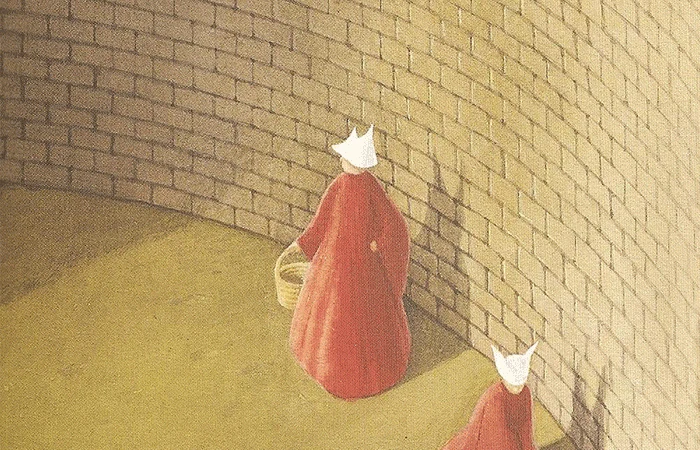
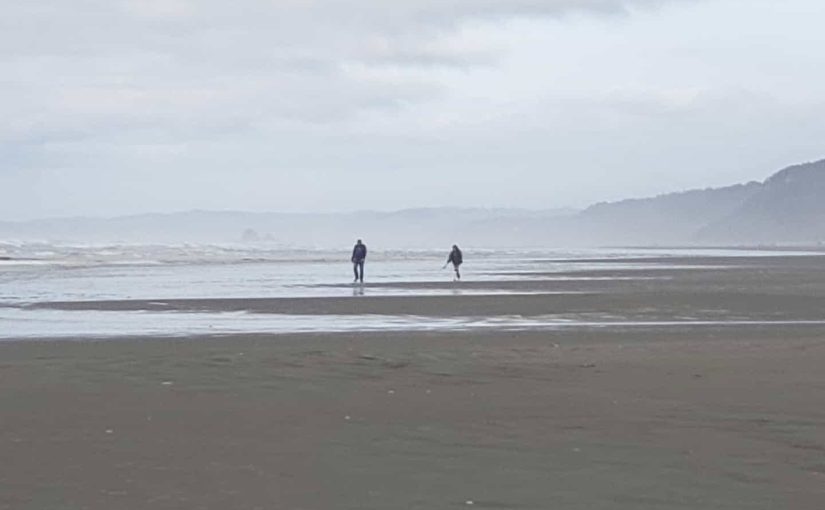
Book Review: Composite Creatures by Caroline Hardaker

Composite Creatures by Caroline Hardaker is the kind of book, and reading experience, I find very difficult to talk about. I know that, theoretically, I am capable of actual criticism of the book — like, maybe it’s not great how Hardaker keeps the reveal for the last pages, and then the coda is kind of a retroactive infodump — but then none of that actually matters. This book set me wailing around the house, absolutely distraught for no reason I could identify with precision. It’s like my interior state became too large, too full with the proceedings, and I end up this inchoate mess who has lost language.

I’ve had this experience a handful of other times, where I have this paralyzed, almost jealous feeling about a novel. Notably, they all tend to be debut or early novels by women in often claustrophobic environments: The Mad Scientist’s Daughter by Cassandra Rose Clarke, Under the Pendulum Sun by Jeannette Ng, Severance by Ling Ma, even God’s War by Kameron Hurley, even though that’s a bit of an outlier in terms of tone. They’re all a little messy, but have the viscera of an artist’s early work.

I’ve always been a fan of the Gothic, which can sometimes be almost cartoonishly large, in both literal and emotional spaces. Degenerate, aristocratic families rot in their crumbling manses, dead wives haunt the folly in diaphanous dresses, and hulking, Byronic figures silhouette themselves on the mountaintop, in the sheeting rain. The trappings of the hardcore, Victorian Gothic are so outsized they verge on comedy, if not deliberately, then in that blinking naiveté which is hard to discern from actual irony. Sometimes the satire can’t be told apart from its object, and Gothics often play with that ambiguity. I’ve been reading the Gormenghast books, for example, and that has both the gravidity and comedy of Gothic fiction in spades.

But Gothic that goes small — that details a cozy bungalow in some suburb, and the inconsequential denizens therein — absolutely catches me where I live. I’m completely susceptible to narratives of women locked in domestic environments which have been rendered inexorably, permanently strange. My outsized reactions might seem easy to psychoanalyze — look at mom, mommishly momming — though I think my affinities are probably at least as messy as the works that provoke them.

We meet Norah on a first date with Art, and everything about it feels jumbled and and wrong-footed. Their relationship with each other has been mediated by an ominous medical corporation called Easton Grove for inscrutble reasons. Though their first date feels no better than average, they are overly congratulatory of how well they got on, and seemingly rush into a cohabitation and marriage. Their first holiday party, to which Norah invites friends from her Life Before, is a master class in social anxiety and dangerous subterranean fault lines. The conversation always dances around some essential violation or transgression of Norah’s, one which must be worse than that Art is boring and American. Norah shies constantly from thinking of her previous lover, the one the friends knew, and this avoidance is a central lacuna, both in terms of narrative, and her personality.

Into this void, Easton Grove sends Nut, a mysterious creature who feels, at least in the beginning, like cross between a cat and an infant. They’re not supposed to name her, nor are they supposed to give her run of the house, but both things happen inexorably, even as these encroachments upend their lives. Art is a midlist writer of crime novels of some success, and Nut’s (and to a lesser extent, Norah’s) intrusion into his writing space disorders his ability to write. Norah more wholly embraces Nut, going against the edicts of Easton Grove, and her everyday companionship with the creature is shot through with anxiety and transgression. Norah often feels to me like Kat from The Mad Scientist’s Daughter: Both live with this inexplicable being in a cozy home in a dying world. Because the world is dying, quite literally, outside the windows of their small domestic spaces.

Norah’s relationship to art is all over this novel, and it would probably be easy to make some pat announcement about domesticity and its impact on creatively or whatnot. For one, her husband’s name is Art, and he is, indeed, an artist (though there’s a lowkey but constant denigration of his crime novels as unserious or lower order, both self-deprecatingly from him, and from others.) More importantly, Norah came into some money — the money that made it possible for her to enter into her relationship with Easton Grove, Nut, and Art him/itself — because of her artist mother. Her mother was locally influential painter, and after her death, her paintings acquired a posthumous cache, and sold for much more than they could have while she was living. Norah, by contrast, works some sort of corporate drone job, and even with Easton Grove’s meddling, is content largely to languish in the middle of the org chart. A large part of her emotional energies go to Nut, and though I think it could be possible to read this as the ways women are lanced of creative purpose by child minding — a sort of A Room of One’s Own where the room contains a fucking baby — but that’s too simple a reading.

I have two children — teenagers — on the cusp of becoming. I live in a comfortable house occasionally uncomfortably. Outside of our domesticity, the oceans literally burn. While I may (and do) struggle with my creativity — maybe some day I’ll finish that novel of Gothic spaces — I am absolutely paralyzed by how fucked up the world is, how terrifying it is to have brought people into this world, who then have to survive the coming cataclysm. Norah’s crisis is both creative and procreative, and I feel in my guts how they both consume and create one another. The old saw about both art and children is that they are a form of immortality. When the world dies around us, neither feels permanent, which is the whole point of immortality, n’est pas?

There feels like a line out from Composite Creatures to Wittgenstein’s Mistress in a weird and winding way. I know my appreciation of Markson’s po-mo novel is all ass-backwards — like, I couldn’t care less about whatever bullshit he’s going on about i/r/t philosophy, but I am gutted — gutted — by the overt plot of the novel. In Wittgenstein’s Mistress, a woman possibly named Kate is the only living animal left on earth. She writes Twitter-length missives on a typewriter in the basement of a house she’s occasionally inhabiting, about what she’s doing and Classic literature and only very rarely her past. It is a record that will be read by no one, not even the narrator, who eschews retrospection. Of course, it’s fiction, so it is read, and by thousands, but that’s not the point.

The point is a dead and dying world inhabited by a being self aware enough to worry about the future, and self-involved enough to cannibalize whatever is at hand to survive. Kate pulls down a house on a beach and burns it for warmth. Norah, well. Her response is what happens in Composite Creatures, isn’t it?

And you know what? I can’t even blame her, even if much of what she does is unforgivable. There but for the grace go I.

Review: His Lordship’s Last Wager by Miranda Davis

A million years ago, I picked up The Duke’s Tattoo by Miranda Davis because I read some sniggering reviews about it: get a load of this. And it’s true, and funny, that the opening action is one of the heroine sedating and then permanently inking a certain peer’s unmentionables, and then how their rivalry and his revenge turns into love, &c &c. Oh, and all of this takes place in a Regency romance, I believe in Bath. It’s pretty much the best. Sure, whatever, none of that is likely, but neither is getting lucky in a barouche, and that happens in Regency romances all the freaking time. 

a four wheeled horse drawn carriage which seats two, open, but with a sort of umbrella over the passengers

Seriously, you’re not getting laid in this comfortably even in modern clothing, let alone the yards of fabric those poor assholes had to wear in the Regency. 

Anyway, Davis’s almost overblown prose — she has an excellent vocabulary and isn’t afraid to use it — and sideways sense of humor completely won me over.

But then came the The Baron’s Betrothal, which, while written in the same winsome prose, was a tiresome will-they-won’t-they that I didn’t appreciate. Admittedly, I almost never appreciate a will-they-won’t-they, but then The Baron’s Betrothal also was thin with the humor that so radiated from The Duke’s Tattoo, so I don’t think it wasn’t just my predilections talking. Fast forward several years, and Davis’s newest book, His Lordship’s Last Wager, pops up on one of my if-you’ve-read-this-then situations, and I figured I’d give her another go. I mean, even the book I didn’t like wasn’t bad, just not to my tastes.

Boy, but I found His Lordship’s Last Wager charming. The set up is ludicrous, again: a zesty young woman gulls a lord-type into helping her transport a trained bear to Ireland. Look, I’m not going to explain how such a situation comes to be, partially because I can’t remember exactly. Like the lord-type, the reader finds herself wondering what the hell happened to result in a trip through the aqueducts and canals of England of yore. I was super into it, because, wait, lemme tell you a story. 

My great-grandmother, the one I’m named after, was born in the US just months after her parents stepped off the boat. (I think assholes would call her an anchor baby.) Though we don’t know for sure, my family suspects that great-great-grandpa knocked up the neighbor girl in a small town in Wales, and due to the fact that he was an inveterate alcoholic (ah, the Welsh), the families sent them on their way to America. She managed to have another child, a boy, before she succumbed to Industrial Revolution Pittsburgh. Great-grandma and her brother were settled into an orphanage — her father being too drunk to care for them — but not after the family in Wales entreated her and her brother to “come home”. The trans-Atlantic voyage was too scary for a young girl, so they stayed.

Fast forward many moons, and my mother took that faded correspondence, and tried to find our living relatives in Wales. Several things hampered this: the family names were Jones and Edwards, which are about as common as you can get; the family wasn’t Church of Wales, which would be the establishment church, but Baptist; and the Baptist church in the area burned down in the early 70s, so all the records were ash. We found the house on a trip to Froncysyllte when I was a teenager, and the current owners were kind enough to let us look at the deeds (which corroborated pretty much all of the family lore), but it was a dead end.

But we were in the area, so we touristed around for a while. One of our more memorable visits was to the Pontcysyllte Aqueduct, which is still functional, a crazy waterway strung between high Welsh hills. Observe: 

a black and white photo of a large aqueduct being drained

Though I don’t think our intrepid Regency lovers plied this waterway, much of the action of the novel takes place on the canals that crisscrossed Britain, moving goods and people just like the railroads. Davis notes that there is little contemporary description of the canals in their heyday in the 1800s, as they were largely commercial. Who writes stories about truck stops or container ships? So too, back then. But they’re fascinating places, and it was entirely enjoyable to read a Recency romance that took place on the rough waterfront instead of the cultivated lawn.

Obviously, this is still a romance, so it’s not going to get too icky or realz. And that’s fine. I’m not usually reading Regency romance for the articles, and I don’t need some big bummer to prove the situation serious. That said, this novel was charming and lively, funny and unusual, and totally worth it for the reverie about my lost family alone.