Zombies Vs. Unicorns

Zombies vs. Unicorns is a solid collection of zombie or unicorn themed short-stories. Sadly, there was only one story that featured both, which let me down a little. Of course, when I think about it, a bunch of stories that only were about zombies fighting unicorns would have gotten old fast, but I really would have liked to see just one zed/uni battle. Just one. Somebody write this for me, please? I did not like the “humorous” “banter” between the two “Teams” – it felt like semi-witty Internet banter which is hilarious when it’s happening, but doesn’t read well when you come back to the thread a month later. Certainly the editors Holly Black and Justine Larbalestier had a really good time though, and that is nothing to sneeze at. Go Team(s).

So, to the individual stories:

“The Highest Justice” by Garth Nix: Aw, Garth, man, you know I love you, but this story was not a success. It displays his typically good writing, but the story doesn’t go anywhere. It felt like the beginning of something interesting about the source of power, of rule, of justice, something that could have developed but it strangled off way too short. Shame, really. (Points for being the only story with both a zombie and a unicorn.)

“Love Will Tear Us Apart” by Alaya Dawn Johnson: I liked this one a good deal. A zombie story, but with a novel explanation for the zombie protagonist, who is not a shamber or a groaner, but instead an emo teenage serial killer with a prion disease. God help me, it’s also a love story, one that was surprisingly effective. (The zombie kid’s not really dead though, so I didn’t have to freak out. Necrophilia = gross.) The zombie metaphor usually comes down to the whole mass consumerism/inevitability of death thing, but this twisted the drive of hunger with desire, along with some Oedipal fun. The romance is between two boys, and I know there’s something here about coming out and passing and all that, but I haven’t sorted all of that out yet, which makes the story surprisingly layered for a short story. I also really enjoyed how the characters talked about music and art, not in a topical name-dropping way, but in the obsessive enthusiasm and status-displaying name-dropping way that captured something really perfect about adolescent courtship rituals. Yup, I am a dork and grown-up for writing that sentence that way.

“Purity Test” by Naomi Novik: Urban smartass meets smartass unicorn. I don’t know, this didn’t really work for me, but I think it’s really more me than it, and the smartassery was pretty solid. There was something tonally off for me between the hungover runaway teen sleeping in a park set-up, and the bubbly, cheeky froth that was the dialogue. But, I give it tons of points for a solid Leia reference.

“Bougainvillea” by Carrie Ryan: Yeesh. Very effective and beautiful story about the daughter of an island dictator after the zombie apocalypse. The story ripples with nostalgia, which gets its throat slit in the final pages. Tears the hell out of wish-fulfillment narratives.

“A Thousand Flowers” by Margo Lanagan: Now, this is the stand-out in this collection, no contest. I didn’t expect a unicorn story to creep the freaking stuffing out of me, but this does. I really expected something different from the set-up: a peasant boy finds a ravaged noblewoman in the forest. You can almost write it from there: his tender ministrations, blooming love, whatever. No. Reminded me strongly of one of Angela Carter‘s wolf stories, the way it plays with narrative voice, the creation of folklore, bestiality (!), a bunch of other stuff. My word. Forbidden love never seemed so wrong.

“The Children of the Revolution” by Maureen Johnson: Maybe I’ve read too many zombie short stories, but this hit a lot of marks I’ve seen in the zombie dance before, but a lot less effectively. I just didn’t like the barely coded references to certain actresses, her rainbow tribe, and her hot actor boyfriend. (No, not Josephine Baker.) Felt lazy. Points for creepy kids though, even though creepifying kids is maybe too easy too.

“The Care and Feeding of Your Baby Unicorn” by Diana Peterfreund: This is another one where my disinterest is probably more personal than objective. I found myself shimming a lot, because there seemed like a ton of extraneous information, which in a short story seems weird. I found the concept of the venomous unicorn silly beyond the telling of it, and I thought the set-up of the religious household and their weird ideas about the return of venomous unicorns (seriously, it makes me laugh to write that) both underdeveloped and overdetermined.

“Inoculata” by Scott Westerfeld: Hmm, liked this, but it felt like an opening act, and I wanted the ideas explored more fully. So it’s pretty great as a teaser, but fails a bit as a short story, because it’s certainly not self-contained. Maybe that’s a bs thing to complain about – wanting more – but sometimes I think not enough credit is given the the form of the short story, its conventions and expectations. I’m not a short story aficionado or anything, but it bugs me when the thrust of the story can be spoilered in a short sentence in the editorial opening.

“Princess Prettypants” by Meg Cabot: My affection for this story is certainly beyond its literary merit, because it’s going to be dated in 15 minutes, and might be overly teen-y for some. A girl is given a unicorn by an aunt who always gets the gifts wrong – you know the aunt, the one giving you teddy bears in your mid-twenties – a unicorn who farts rainbows – literally! But then, date rape! sexting! the boy next door! Super fun to read though, and you go, girl!

“Cold Hands” by Cassandra Clare: Fail. I’ve heard tell of this Cassandra Clare from all the flaming and whatnot on the bookblogoverse, but I’ve never read anything by her. I think I’ll leave at this. Other than a bunch of other niggling nitpicks, my biggest problem was where the eff is this taking place? It’s all medieval whatever Dukes and public hangings, but then there’s CDs and pop cultural references, and the set-up is all, hey this one sorcerer cursed the town, and I’m like, okay, then, we’re in England? Wait, just kidding, England doesn’t actually have magic, and the monarchy is constitutional these days, so, seriously, where and when are we? Plus, everyone sounds like Americans. It’s a frustrating lack of coherence, one that started me picking the threads, and then the whole story fell apart. The more I think about it, the more this story fails – seriously, why don’t they just burn the dead – curse over! – and rrrromantic stories with zombies grrrrrosssss me ooooouutt.

“The Third Virgin” by Kathleen Duey: Another metaphor that I did not expect to be explored through unicorns, this time centering on their healing powers, but I don’t think this one worked as well for me. It’s told through the voice of unicorn, a voice which is pretty boring and overly expository, and would probably be better served through a third person narration. Good though; not perfect.

“Prom Night” by Libba Bray: A really nice sucker punch of an ending on this collection. The zombie apocalypse takes the adults first, leaving a town of traumatized teens aping adulthood. They play at jobs, take drugs, try to reenact the rituals that mark the movements from one stage of life to another. Yeah, right. Here it comes.
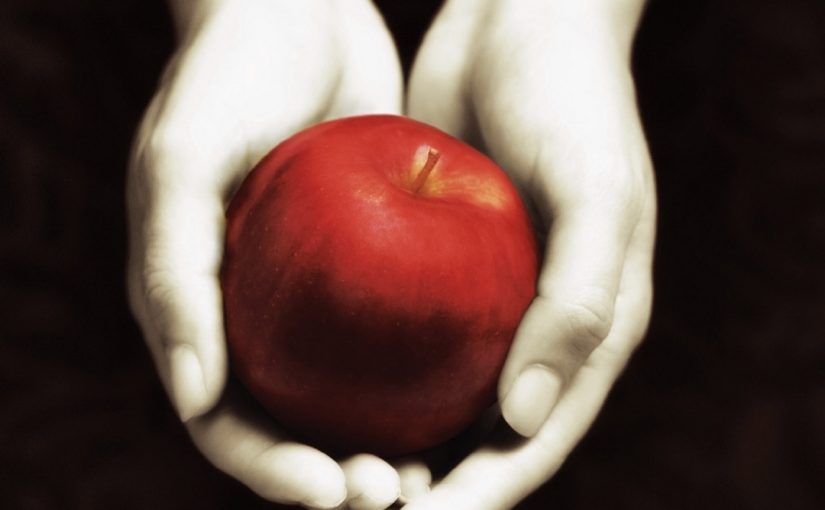
The Twilight of Girlhood

Two things happened in my household, shortly after I started reading it, that seem germane to a discussion of this book. First, I was in the kitchen, dealing with the endless in-and-out of the dishwasher, and I became aware of a small, soft, wet noise coming from the back bathroom. This made my mom-ears perk up, and I went back to find my daughter, who is about 2 ½, tearing off strips of toilet paper, wadding them neatly, throwing them into the toilet, and then flushing. She looked up at me with her deceptively cherubic face and said, “Here Mum, this is for you.” She held out a tp wad. I tossed it in, and flushed, and then we went to find less futile pursuits. Second, in the same back bathroom, my dog was in there diving for tootsie rolls in the cat-box. The litter tray has one of those detachable tops, with an opening in the front so the cat can go in there and do her business without sending litter all over the freaking room, theoretically. The dog, in her lust to eat cat shit, got her head stuck in the opening and the topper thing lodged on her neck. She freaked out, the way only largish dogs in smallish bathrooms with a litter topper on her head can freak out, and there was all manner of howling, skittering and general mayhem, until I went in and rescued her from herself.

I’ve been known to let my metaphors run away from me, but let’s see if I can pull this off. We all have stuff that we do that’s stupid, futile or disgusting, or all of these things at once: eating cat shit, flushing wads of toilet paper down the toilet, smoking cigarettes, polka, embroidery, reading Twilight, etc. There’s nothing wrong with these pursuits, exactly (although I would give consuming feces a miss if you aren’t a border collie) but to the non-enthusiast, they seem inexplicable. But that’s the thing: eating cat shit is a source of pure, whole body pleasure for my dog; that, barking at kids on bikes and sleeping on the couch. While I may grumble at the mess and unintended comedy these activities generate, I really can’t criticize her joie de vivre. So, reading Twilight was like eating cat shit for me, but I mean this in an understanding way. You may not love smoking. The thought of the smoke hitting your lungs and the buzzing sensation you get in your fingertips may turn your stomach, but man if just typing these words doesn’t make me want to go out on the back porch and pound down a heater.

So I get it, I get the whole Twilight thing, on some level. But then there’s the girl thing. I’m not exactly the intended audience for Twilight, because I’m not a teenage girl. But I keep having to account for my not reading Twilight, as I will now have to account for disliking Twilight, because I live in a community of women who were once girls, because I was once a girl. I’m fascinated by how many women I know who love this book, women I love and respect, women who are not laughable, stupid or thoughtless. They may express chagrin or embarrassment, as though they just were busted for smoking on the back porch, but they love it just the same. Hating on Twilight, for guys, is easy, because it doesn’t betray their essential guyness; in fact, probably the opposite. (Yes, yes, girls are gross, now back to the clubhouse!) Hating on Twilight, as a woman, is essentially a betrayal of girlness, an erasure of that awkward adolescence many of us share. One can easily, oh so easily, enumerate the literary failings of this book. One can easily, oh so easily, parse the religious messages and sexual politics into something monstrous and ugly. This is all fine; go for it; I will be on the sidelines with pom-poms. But what I keep coming back to is the true, earnest and deeply felt pleasure this book provokes in so many women. Pleasure that is real and not deserving of scorn.

That community of women thing is what sent to reading Twilight in the first place. My sister was reading Twilight at the urgings of one of her co-workers. She has had an uneasy relationship with this other women, which had recently been patched up into something resembling friendliness. In their water-cooler conversations, the co-worker began extolling the merits of Meyer’s book, and pushed it into my sister’s hands. She knew what she was in for – how could she not given total cultural saturation at this point – but found herself unwilling and unable to actually finish reading the book. How was she going to explain this to the co-worker? We all know (or maybe we don’t) how quickly this sort of thing can get personal. It gets especially personal with books of this nature, that slip into the female hind-brain and coil around our unspoken (unspeakable?) drives and desires.

One of the reasons I hated this book (and I mean that word emotionally, not critically, if you know what I mean) was that Meyer was far far too damn evocative of the strange alienated horror that is adolescence. Bella is never easy; there are very few unqualified pleasures for her; every single action, especially the ones that occur within the bewildering sucking chest wound that is her social scene, is considered for its effect on everyone else, her status, her placement in the group, her precarious self esteem. It gave me vivid and lingering flashbacks, and not in a wheee-I-see-trails kind of way, but in the countless shaming episodes way. The only real source of pleasure for her is her time with Edward. And while it’s probably not original to point this out, Edward is the externalization of her desire, an embodiment of the girl-fic wish fulfillment of both desire and fear, the shaming female libido that goes bump in the night. He can’t read her mind because he’s an extension of her mind. Which brings me to the creamy ironic center of this review. On some levels, this book is a morality tale about female pleasure, and I was unable to take much pleasure in that. Gods, but I love me some irony though, so it the book evoked entirely unintended pleasures.

Never is this more apparent than in the scene in which Bella is menaced by some would-be rapists. She’s been mooning all day about Edward, which in very concrete terms gets her cut off from her female companions and their consumerist escapades. She ends up surrounded by threatening male desire, which she has provoked by her dreaming thoughtlessness. Edward appears, the sort of flip side of this desire, and rescues her. When I was working on my Feminist Merit Badge, there was much talk about the virgin/whore thing, and then also romance novels and other mass-produced fantasies for women. Too much of this kind of talk can make me really really tired, but I’ll try to keep it brief, for all our sakes. Although I don’t think I’ve heard about a boy version of the madonna/slut thing, I think one is at work here, as one is at work in many female wish-fulfillment exercises. Men are conjured, neutered and domesticated, and that process of domestication both justifies and condemns female desire. Bella simply cannot help herself: her mooning attraction to Edward gets externalized into her scent, which makes him unable to help himself, makes him an animal, reminds us she’s an animal, a sort of endless mirroring. That scent also ribbons through the air, cartoon-like, bringing horribly unlikely rapists wafting in by their noses. Desire is a dangerous thing, girls. Here’s a Ken doll for you, his smooth, cold, inhuman man-parts stamped carefully into place.

I’m bringing up Ken deliberately. In her Goodreads review, Elizabeth describes this book as a Barbie doll, which pretty much nails the whole thing for me. Barbie is the embodied consumer. She teaches girls how to accessorize their lives: boys, friends, dresses, houses, all neatly displayed in little consumable packages. Barbie teaches the values of consumerism, of consumption, while simultaneously being completely immune to its effects. Barbie cannot get old, fat, or overdose on heroin. She is the bulimic model of perfection. By many yardsticks, one could say that Edward is an anorexic. A vegetarian vampire is a contradiction in terms. While not personally a sufferer of an eating disorder, I have a number of very close people in my life that I’ve watched go through that mangle. I get it too: I was demographically ripe for this sort of thing: a white, middle-class overachiever. The anorexic, as it has been explained to me by people I love, craves control over the uncontrollable, over her needs and ambitions. That Edward cannot or will not eat is especially troubling when he’s viewed as Bella’s externalized desire. It’s a closed loop: food equals death, desire equals death. Bella can’t see Edward in a mirror (in a dream) because he’s not really there; he’s wasted away. That the book ends with Bella begging Edward to “change” her – this is not a spoiler, everyone in the world could see this one coming – means that she is begging for death, the way any girl who expresses desire is begging for death.

I’d like to finish with a craft project, if you don’t mind. Please, warm up your glue guns. There’s a paper store near my house that hosts classes every month, and I keep thinking about attending the one about altered books. I’m not entirely clear on the idea, but it seems you take old books, and cut-and-paste alternate text and pictures as commentary or whatever. I haven’t done this yet for three reasons: a) lazy b) somewhat uncomfortable with the idea of cutting up books, even in the service of making cool, new books c) don’t want to be caught dead anywhere near something that even remotely has a chance of being associated with scrap-booking, even kinda sorta. I can’t emphasize this last one enough.

This is my idea for the altered book of Twilight. If I weren’t a squeamish girl, I’d march right down to Sex World in the warehouse district, and I’d buy up a bunch of pornography. Not just any pornography, but pornography with people with normal body hair having enthusiastic sex, cheerful happy sex. (Does such a thing exist?) No smoothies allowed, no shaved, pre-adolescent vaginas, but big furry bushes and armpit hair a la the 70s edition of The Joy of Sex. This would get pasted over every description of Edward’s cold and marble-like skin, because Stephenie Meyer’s ossification of the human body bums me out.

I’d toss in photos of Michelangelo’s David and Christ on the Cross, just to show how the nude male body has been depicted over time. (Women can certainly complain about the female nude, but since the rise of Christianity in the West, the most predominate male nude is Jesus’ broken body on the Cross. The primary visual representation of the male body is one of torture.) In would go some stills of the pretty blond-haired girl who has just devoured her bickering parents in Romero’s Night of the Living Dead because zombies freak me the hell out the way vampires never did. Also, because in the ongoing conversation I’ve had about this book with my sister, which ended in the double dog dare that I read it, she expressed bewilderment as to how anyone could love a dead thing. Quothe she: “Vampires are just high-functioning zombies.” More than the crap prose, the endless adverbs, the discouragingly accurate portrayal of adolescent discomfort, this may have done the book in for me. Zombies man, brrr.

I’d put in wads of tp, to represent for my daughter, who some day may find this book appealing. But also for another reason: I recently had occasion to be in one of the local high schools, not the one I graduated from. I went into the bathroom, had some good times reading the graffiti: various people are bitches, etc. Then I looked up, and the ceiling was dotted with wads of dried tp, stuck to the ceiling after some industrious young women had spent what I know from personal experience is a very long time getting those suckers to stick. Throw too soft, and they won’t even hit the ceiling. Throw too hard, and they’ll bounce back. You’ve got to get them wet enough to stick, but not so wet they just fall apart. Stupid, futile and possibly disgusting, but emblematic of times spend with other girls doing the useless and possibly damaging things that made adolescence so enjoyable. I think I’ll do without the cat shit. I’d douse the book in the cologne my first boyfriend wore, that, the smell of cigarettes and leather jackets. Mmmm, smell-o-vision. Then, I’d cover it with the brown paper bag covers we all put over our text-books in school to protect the actual covers. I’d draw all manner of doodles, phone numbers, one liners, hearts and bunnies all over the outside. Finally, I would affix a picture of Spider Jerusalem on the title page, and dot it with pink nail-polish blobs in a heart shape around the picture. Then I’d put the book away and try very hard never to think of it again.